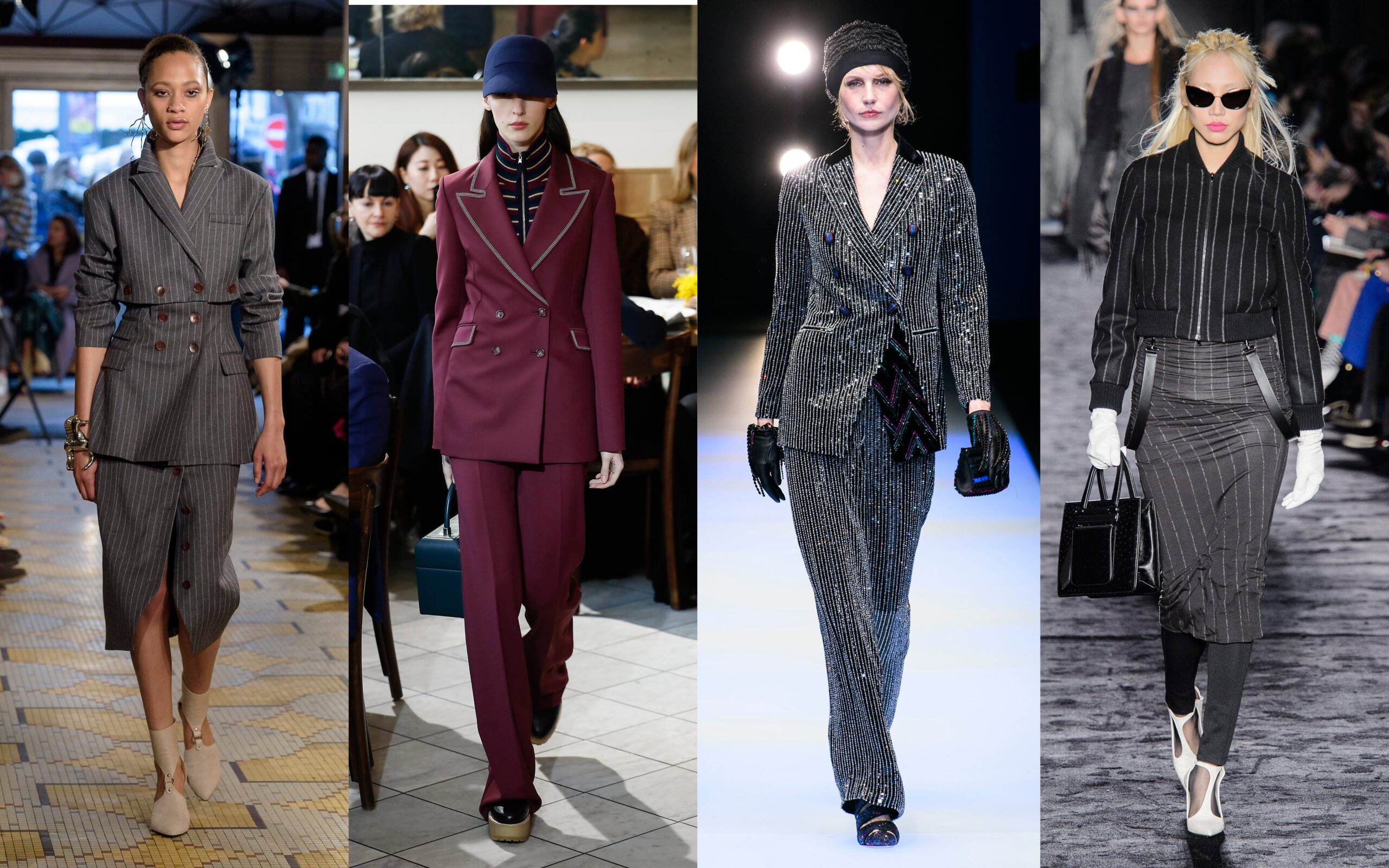
The 1980s. A decade painted in broad strokes of neon, big hair, and even bigger ambitions. But beneath the glitz and glamour, a seismic shift was underway, a recalibration of power, identity, and the very definition of feminism. This was an era where the personal became ruthlessly political, where stilettos clicked in defiance against the glass ceiling, and where the power suit emerged not just as apparel, but as a declaration of war against patriarchal norms.
Imagine the zeitgeist. The second wave of feminism, having crashed upon the shores of societal consciousness, left behind both fertile ground and entrenched resistance. The Equal Rights Amendment, a promise of constitutional equality, lay gasping for air, ultimately failing ratification. This failure, a sting to the feminist heart, fueled a new urgency, a need to redefine strategies and reclaim lost momentum. The 1980s demanded a new sartorial language, a visual code that screamed, “We are here, we are powerful, and we are not going away.”
So, what was this new vernacular? It was the power suit. But not just any suit. This was a meticulously crafted weapon, tailored to subvert expectations. Shoulders padded to Olympian proportions, a direct challenge to the male monopoly on physical dominance. Skirts, often pencil-thin, daring to reclaim femininity while simultaneously demanding respect. The power suit became an armor, a shield against objectification, and a symbol of unapologetic ambition.
The Architecture of Empowerment: Deconstructing the Power Suit
Let’s delve into the anatomy of this iconic garment, dissecting its individual components and their symbolic weight.
- The Shoulders: Exaggerated, angular, defiant. These were not the soft, yielding shoulders of the stereotypical “woman.” These were the shoulders of leaders, of innovators, of individuals ready to carry the weight of the world and smash through any obstacle in their path. Think of it as sartorial scaffolding, constructing a new framework for feminine strength.
- The Silhouette: Sharp lines, a nipped-in waist, a commanding presence. The silhouette spoke volumes about control, discipline, and a refusal to be marginalized. It was a declaration of self-possession, a visual embodiment of the burgeoning “girl boss” archetype.
- The Fabric: Wool, tweed, sometimes even leather. The choice of materials was deliberate, emphasizing durability, seriousness, and a departure from traditionally “feminine” fabrics like silk or lace. This was about presenting a façade of unyielding strength, projecting an aura of competence and unwavering resolve.
- The Colors: Navy, gray, black, occasionally a bold red. These were the colors of authority, of sophistication, of power brokers. They were designed to command attention, to exude confidence, and to blend seamlessly into the male-dominated landscapes of corporate boardrooms and political arenas.
The power suit, therefore, was more than just a collection of fabric and stitches. It was a carefully constructed message, a visual manifesto that challenged ingrained societal biases and asserted a woman’s right to occupy space, both literally and figuratively.
Beyond the Boardroom: The Power Suit as a Cultural Disruptor
The influence of the power suit extended far beyond the confines of the corporate world. It permeated popular culture, influencing fashion trends, film portrayals, and even the way women perceived themselves. Think of characters like Alexis Carrington in “Dynasty,” a ruthless businesswoman who wielded power suits like a weapon, or Sigourney Weaver in “Working Girl,” a secretary who dared to dream of climbing the corporate ladder, clad in her own version of the empowered ensemble.
These depictions, while sometimes stereotypical, played a crucial role in normalizing the idea of women in positions of authority. They challenged the prevailing narrative of female passivity and dependence, offering alternative role models who were ambitious, assertive, and unapologetically driven. The power suit, in this context, became a symbol of aspiration, a tangible representation of the possibility of upward mobility and professional success. But was it truly liberating, or simply an assimilation into patriarchal structures? This is the crux of the debate.
The Double-Edged Sword: Critiques and Complications
The rise of the power suit was not without its detractors. Some critics argued that it represented a capitulation to patriarchal norms, a forced adoption of masculine styles in order to gain acceptance in a male-dominated world. Was feminism truly about achieving equality by mimicking men, or was it about dismantling the very systems that privileged masculinity in the first place?
Moreover, the power suit often came with a hefty price tag, making it inaccessible to many women, particularly those from marginalized communities. This raised questions about inclusivity and the potential for the power suit to become a symbol of elitism, further exacerbating existing inequalities. Was the pursuit of power, as defined by the corporate world, truly serving the interests of all women, or only a select few?
Furthermore, the emphasis on appearance and professionalism placed an immense pressure on women to conform to unrealistic beauty standards. The power suit, in some ways, became another form of surveillance, another way for women to be judged and scrutinized based on their physical presentation. The feminist movement risked getting bogged down in appearances, losing sight of the deeper systemic changes that were needed to achieve true equality. The danger was becoming trapped in the very system it sought to overturn, valuing assimilation over genuine transformation.
Identity and Intersectionality: Beyond the Binary
The 1980s also witnessed a growing awareness of intersectionality, the understanding that gender intersects with other forms of identity, such as race, class, and sexuality, to create unique experiences of oppression. This realization challenged the homogenous view of feminism, forcing a reevaluation of priorities and strategies. The power suit, in this context, became a site of contestation, a symbol that could be interpreted in different ways depending on the individual’s lived experience.
For women of color, the power suit could represent a rejection of stereotypes and a claim to professional legitimacy in a world that often devalued their contributions. For lesbian women, it could be a way to defy heteronormative expectations and assert their presence in spaces that were often hostile or exclusionary. For working-class women, it could be a symbol of aspiration and upward mobility, a chance to break free from the constraints of poverty and limited opportunities.
However, the power suit could also reinforce existing power structures, perpetuating the marginalization of those who did not fit the mold. The challenge, therefore, was to reclaim the power suit as a tool for empowerment, while simultaneously acknowledging its limitations and working to dismantle the systemic barriers that prevented true equality.
The Legacy of the Power Suit: A Tapestry of Contradictions
The power suit of the 1980s remains a complex and contradictory symbol, a testament to the evolving nature of feminism and the ongoing struggle for gender equality. It represents both progress and compromise, empowerment and assimilation, inclusion and exclusion. It is a reminder that the pursuit of power is never straightforward, and that the symbols we use to represent ourselves can be both liberating and limiting.
Today, the power suit has evolved, taking on new forms and interpretations. It is no longer simply a uniform for the corporate world, but a versatile garment that can be adapted to a wide range of styles and occasions. But the underlying message remains the same: women are powerful, capable, and deserving of respect. The power suit, in all its iterations, continues to serve as a visual reminder of the battles fought and the victories won, and as a symbol of the ongoing struggle for a more just and equitable world. It is a sartorial palimpsest, layered with meaning, a constant negotiation between self-expression and societal expectations. The power suit, then, is not just a garment, but a continuous conversation, a visual dialogue about the ever-evolving landscape of feminism. It’s a legacy etched in tailored lines and padded shoulders, a defiant whisper turned into a resounding roar.











Leave a Comment