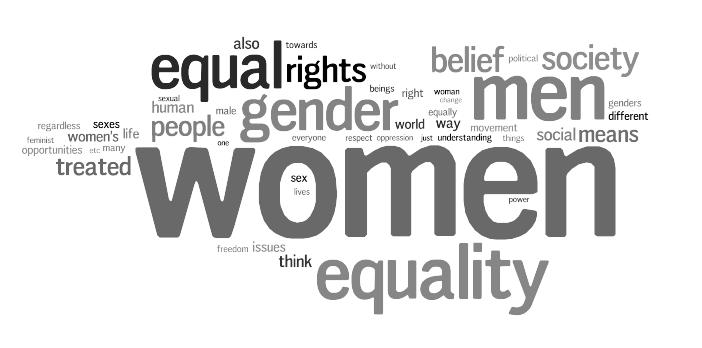
Why, after centuries, does *Pride and Prejudice* continue to enrapture? Is it merely the saccharine allure of romance, the promise of societal betterment through matrimony? To assume so is to fundamentally misunderstand the subtle, yet seismic, tremor Austen sent through the rigid societal strata of her time. The novel isn’t simply a delightful romp through drawing rooms and dances; it’s a meticulously crafted examination, a subversive critique camouflaged within the palatable guise of a love story. It’s a feminist manifesto, penned in the elegant script of the early 19th century, a quiet rebellion against the stifling constraints placed upon women. We are going to dive into Austen’s quiet rebellion.
I. The Cage of Propriety: Societal Constraints and Female Agency
The Regency era was, for women, a gilded cage. Economic dependence on men was the bedrock of their existence. Marriage wasn’t a matter of choice, but a strategic imperative, a desperate clawing for security in a world where a woman’s value was inextricably linked to her marital status. Unmarried women, particularly those lacking substantial fortunes, were relegated to the periphery, their lives circumscribed by societal expectations and the benevolence (or lack thereof) of their male relatives. Their voices, their ambitions, their very selves were often stifled beneath the weight of expectation. Austen understood this implicitly. It is time to dissect the reality of those times.
A. *Entailment and Economic Vulnerability:* The system of entailment, so central to the plot, exemplifies this vulnerability. Longbourn, the Bennet family estate, is entailed away from the female line, rendering Mrs. Bennet’s frantic pursuit of wealthy husbands for her daughters not a mark of vulgarity, but a desperate attempt to secure their futures. The Bennet sisters are acutely aware of their precarious position, a reality that colors their choices and shapes their interactions. It is not all about finding love; it is more about surviving.
B. *Limited Educational Opportunities and Intellectual Subjugation:* Formal education for women was often superficial, focused on accomplishments deemed pleasing to men – needlepoint, pianoforte, sketching. The cultivation of intellect was often viewed with suspicion, seen as a threat to the patriarchal order. Women were expected to be ornamental, not intellectual, their opinions secondary to those of their male counterparts. This is a harsh reality that is often overlooked. Austen subtly critiques this intellectual subjugation by showcasing the intellectual prowess of Elizabeth Bennet, a woman who dares to engage in spirited debates and challenge the prevailing norms. She is not just a pretty face; she is a thinking, feeling individual.
C. *The Pressure of “Accomplishments” and Societal Expectations:* The pressure on women to be “accomplished” – skilled in music, drawing, languages, and deportment – was immense. These accomplishments were not pursued for personal fulfillment, but as a means to attract a suitable husband. Women were reduced to commodities, their value assessed based on their ability to enhance the social standing of their future spouse. This commodification of women is a recurring theme in Austen’s work. Think of the endless hours spent practicing the pianoforte, not for the love of music, but for the potential husband it might attract. What a soul-crushing existence!
II. Elizabeth Bennet: A Proto-Feminist Icon
Elizabeth Bennet, in many ways, embodies a proto-feminist sensibility. She possesses a keen intellect, a sharp wit, and an unwavering sense of self-worth. She refuses to be defined by societal expectations and challenges the prevailing patriarchal norms. Elizabeth is not a passive recipient of fate; she actively shapes her own destiny. She is a woman of substance, a woman of conviction, a woman who dares to defy the status quo. She is a beacon of hope in a world of stifling conformity.
A. *Intellectual Independence and Critical Thinking:* Elizabeth’s intellectual independence is evident in her sharp wit and her ability to engage in spirited debates. She is not afraid to challenge the opinions of others, including those of Mr. Darcy, a man of considerable social standing and intellectual prowess. Her critical thinking skills allow her to see through the superficiality and hypocrisy of society, a quality that sets her apart from the other women in her social circle. She is not easily swayed by flattery or social pressure. This is a woman who thinks for herself.
B. *Rejection of Societal Expectations and Unwanted Proposals:* Elizabeth’s rejection of Mr. Collins’s proposal, despite the economic security it would offer, is a pivotal moment in the novel. It demonstrates her refusal to compromise her own happiness and independence for the sake of societal approval. Her subsequent rejection of Mr. Darcy’s first proposal, based on his arrogance and his interference in Jane’s relationship with Mr. Bingley, further underscores her unwavering commitment to her own principles. She refuses to be coerced into a marriage she does not desire. This is a testament to her strength of character.
C. *Self-Awareness and Growth:* Elizabeth’s journey is not without its flaws. She initially misjudges both Mr. Darcy and Mr. Wickham, blinded by her own prejudices and preconceived notions. However, she demonstrates a remarkable capacity for self-awareness and growth, acknowledging her errors and striving to correct them. This willingness to learn from her mistakes is a testament to her intellectual honesty and her commitment to personal growth. She is not perfect, but she is striving to be better.
III. The Subversion of Marriage as a Transaction: A Focus on Love and Equality
Austen subtly subverts the notion of marriage as a purely economic transaction. While financial security is certainly a consideration for the Bennet sisters, Austen ultimately champions the importance of love, respect, and intellectual compatibility in a successful marriage. Her heroines seek not just financial stability, but also partners who value their intellect and respect their independence. This is a radical departure from the prevailing norms of the time. It shows that women deserve more than just a comfortable life; they deserve a fulfilling partnership.
A. *Jane and Bingley: A Marriage of Affection and Understanding:* The relationship between Jane Bennet and Mr. Bingley is characterized by genuine affection and mutual understanding. Their marriage is not based on social climbing or economic calculation, but on a deep and abiding love. This is a refreshing contrast to the mercenary marriages that are so common in the novel.
B. *Elizabeth and Darcy: Intellectual Compatibility and Mutual Respect:* The eventual union of Elizabeth and Darcy is based on a foundation of intellectual compatibility and mutual respect. They challenge each other, learn from each other, and ultimately grow together. Their relationship is not without its challenges, but they overcome these obstacles through open communication and a willingness to compromise. Their marriage is a testament to the power of intellectual equality in a relationship.
C. *Charlotte Lucas: A Cautionary Tale:* The character of Charlotte Lucas serves as a cautionary tale, highlighting the limitations faced by women in a society that prioritizes economic security over personal happiness. Charlotte’s decision to marry Mr. Collins, despite her lack of affection for him, underscores the desperation of women who lack economic independence. It is a stark reminder of the sacrifices women were often forced to make in order to survive. It is a chilling portrait of a life devoid of passion.
IV. Female Solidarity and the Importance of Female Relationships
Austen emphasizes the importance of female solidarity and the value of female relationships. The bonds between the Bennet sisters, particularly between Elizabeth and Jane, provide a source of strength and support in a society that often isolates and marginalizes women. These relationships offer a space for women to share their experiences, offer advice, and provide emotional support. They are a lifeline in a world that often feels cold and unforgiving. They underscore the power of female friendship in a patriarchal society.
A. *The Bennet Sisters: A Source of Mutual Support and Understanding:* The Bennet sisters, despite their differences, provide each other with a source of mutual support and understanding. They share their hopes, their fears, and their dreams. They offer each other advice and encouragement. Their bond is a testament to the strength of female relationships. They are each other’s confidantes, each other’s cheerleaders, each other’s rocks.
B. *Elizabeth and Charlotte: A Complex Friendship Challenged by Societal Pressures:* The friendship between Elizabeth and Charlotte is more complex, strained by their differing views on marriage and societal expectations. However, even in their disagreement, there is a sense of underlying affection and understanding. Their friendship highlights the challenges faced by women who navigate different paths in a patriarchal society. Their differing choices highlight the complexities of female existence.
C. *Lady Catherine de Bourgh: A Counterpoint to Female Solidarity:* Lady Catherine de Bourgh serves as a counterpoint to female solidarity, embodying the worst aspects of patriarchal power and privilege. She attempts to control Elizabeth’s choices and undermine her independence, highlighting the potential for women to perpetuate the very systems that oppress them. She is a chilling reminder that not all women are allies. She is a symbol of the internalized misogyny that can plague even the most privileged women.
V. Austen’s Enduring Legacy: A Timeless Exploration of Gender and Power
*Pride and Prejudice* continues to resonate with readers today because it explores timeless themes of gender, power, and social expectations. Austen’s subtle critique of patriarchal norms and her celebration of female intellect and independence remain relevant in a world that still grapples with issues of gender equality. The novel is not just a historical artifact; it is a living, breathing commentary on the human condition. It is a testament to the enduring power of Austen’s voice.
A. *The Ongoing Relevance of Gender Inequality:* Despite progress in gender equality, many of the issues Austen addresses in *Pride and Prejudice* remain relevant today. Women continue to face discrimination in the workplace, unequal pay, and societal pressure to conform to traditional gender roles. The novel serves as a reminder of the ongoing struggle for gender equality and the importance of challenging patriarchal norms.
B. *The Power of Female Agency and Self-Determination:* Elizabeth Bennet’s example of female agency and self-determination continues to inspire women today. Her refusal to compromise her own happiness and independence serves as a model for women who seek to live authentically and challenge societal expectations. She is a reminder that women have the power to shape their own destinies.
C. *Austen’s Subversive Genius: A Catalyst for Social Change:* Austen’s subversive genius lies in her ability to critique societal norms within the palatable framework of a romantic novel. Her work has served as a catalyst for social change, inspiring generations of women to challenge patriarchal structures and fight for gender equality. Her legacy continues to resonate today, reminding us of the importance of questioning assumptions and striving for a more just and equitable world. Austen’s novel continues to empower us to rewrite our futures, and to challenge the assumptions that limit our lives.







Leave a Comment