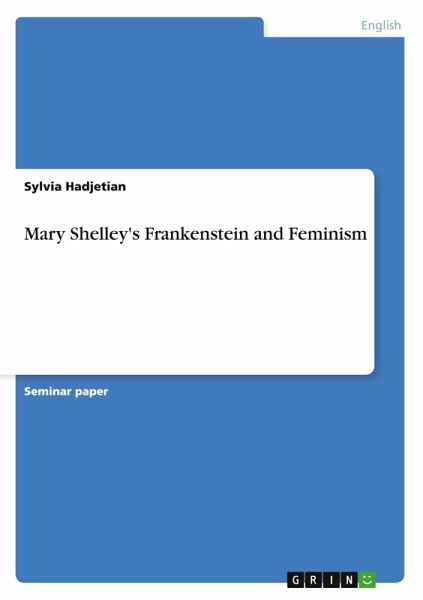
Mary Shelley’s Frankenstein, often relegated to the dusty shelves of gothic horror, is, in fact, a blazing indictment of patriarchal hubris, a prescient exploration of the monstrous feminine, and a foundational text for understanding the anxieties surrounding female agency in a rapidly modernizing world. To dismiss it as merely a cautionary tale about scientific overreach is to fundamentally misunderstand its profound engagement with nascent feminist thought. Let us dissect this literary leviathan and exhume the radical feminist undercurrents that pulse within its narrative arteries.
I. The Barren Womb of Scientific Creation: Subverting Patriarchal Procreation
The very genesis of the monster, Victor Frankenstein’s audacious attempt to usurp the biological prerogative of women, is a violent assault on the feminine principle. He seeks to become a creator, a life-giver, without any recourse to the womb, the traditional source of creation. This is not merely scientific ambition; it is a deeply misogynistic drive to erase the feminine role in reproduction, to prove male intellectual dominance over the biological imperative. The act itself can be viewed as a form of male birthing envy, a grotesque manifestation of the desire to circumvent the necessity of the female body.
Consider the implications: Frankenstein, consumed by his Promethean ambition, bypasses the natural process of gestation and childbirth. He assembles his creature from disparate body parts, a macabre collage devoid of maternal connection or the organic unity of a naturally conceived being. The result? A being inherently alienated, deprived of the primal bond with a mother figure, a fundamental connection that shapes identity and fosters empathy. This lack of maternal imprinting is arguably the root of the monster’s rage and isolation, a direct consequence of Frankenstein’s patriarchal transgression.
Furthermore, the sheer repugnance Frankenstein feels towards his creation immediately after its animation speaks volumes. It’s not just the creature’s physical appearance; it’s the realization of his hubris, the terrifying manifestation of his attempt to usurp the feminine role. He is horrified by the “success” of his endeavor, unable to reconcile his ambition with the monstrous reality it has birthed.
II. The Subjugation of Female Characters: A Microcosm of Societal Oppression
Shelley’s female characters, often relegated to passive roles, are not merely decorative figures; they are potent symbols of the societal constraints imposed upon women in the 19th century. Elizabeth Lavenza, Victor’s adopted sister and eventual wife, is the embodiment of idealized femininity: virtuous, docile, and entirely defined by her relationship to men. She exists solely to support and nurture the male characters, her own desires and aspirations completely subsumed by their needs.
Her eventual demise, murdered on her wedding night, is not simply a tragic plot point; it is a brutal illustration of the fragility of female existence in a patriarchal society. Elizabeth is sacrificed, quite literally, to the consequences of Victor’s actions, a casualty of his unchecked ambition and his failure to acknowledge the responsibility that comes with creation. Her death serves as a stark warning: female vulnerability is directly linked to male recklessness.
Justine Moritz, the unfortunate servant falsely accused of William’s murder, is another example of female victimization. Accused of a crime she did not commit, she is condemned based on circumstantial evidence and societal prejudice. Her confession, coerced under pressure from religious authority, underscores the powerlessness of women in the face of patriarchal institutions. She is a scapegoat, a convenient target for blame in a world where women are routinely marginalized and disbelieved.
Even more tragic is the unfulfilled potential of the female creature. Victor, momentarily moved by the monster’s pleas for companionship, initially agrees to create a female companion. However, he ultimately destroys her before animation, fearing the consequences of creating a race of monsters. This act of preemptive destruction is a profound statement about male anxieties surrounding female sexuality and autonomy. The fear that a female creature, capable of independent thought and action, might challenge male dominance proves too terrifying for Victor to contemplate. He chooses to maintain the status quo, even at the cost of condemning the monster to eternal solitude.
III. The Monster as a Metaphor for the Monstrous-Feminine: Challenging Societal Norms
The monster himself, often interpreted as a symbol of the dangers of unchecked scientific ambition, can also be read as a representation of the “monstrous-feminine” – a concept explored by feminist theorists to describe the ways in which women who deviate from societal norms are often demonized and labeled as monstrous. The monster, ostracized and rejected by society due to his appearance and origins, embodies the alienation and marginalization experienced by women who challenge patriarchal expectations.
His intellectual curiosity, his desire for knowledge and understanding, mirrors the intellectual aspirations often suppressed in women. His rage and violence, while undeniably destructive, can be interpreted as a response to the systemic oppression he faces, a desperate attempt to assert his existence in a world that denies him humanity. In this light, the monster’s monstrousness is not inherent but rather a product of societal rejection, a consequence of being denied the basic rights and dignities afforded to others.
Furthermore, the monster’s creation, pieced together from disparate body parts, can be seen as a metaphor for the fragmented and dismembered representation of women in patriarchal culture. Women are often reduced to their physical attributes, their bodies objectified and dissected by the male gaze. The monster, a literal assemblage of body parts, embodies this fragmentation, highlighting the ways in which women are often defined and controlled by their physical form.
IV. The Narrative Structure as Feminist Critique: Exposing the Limitations of Male Perspective
Shelley’s use of nested narratives, with multiple narrators relaying the story from different perspectives, further enhances the feminist critique. The story is primarily told through the male gaze – Victor Frankenstein, Robert Walton, and even the monster himself, filtered through male interpretations. This narrative structure highlights the limitations of male perspective and exposes the biases inherent in patriarchal storytelling.
We never hear directly from Elizabeth or Justine; their stories are filtered through the male characters, their voices silenced and their experiences interpreted through a male lens. This narrative silencing is itself a powerful critique of the ways in which women’s voices are often marginalized and dismissed in patriarchal societies. By giving voice to the monster, while simultaneously denying agency to the female characters, Shelley forces us to confront the complexities of power and representation. She compels us to question whose stories are being told and whose voices are being heard.
V. Beyond the Gothic: A Call for Empathy and Social Justice
Frankenstein transcends the confines of gothic horror; it is a profound meditation on the ethical responsibilities of creation, the dangers of unchecked ambition, and the devastating consequences of societal prejudice. But beyond these broader themes, the novel serves as a powerful indictment of patriarchal structures and a poignant plea for empathy and social justice. It compels us to question the ways in which societal norms and expectations shape individual identities and contribute to systems of oppression. Shelley’s revolutionary vision lies in her ability to expose the insidious nature of patriarchal power and to imagine a world where marginalized voices are heard and valued.
The enduring relevance of Frankenstein stems from its unwavering exploration of these fundamental human issues. It continues to resonate with contemporary audiences because it challenges us to confront our own biases and to strive for a more just and equitable world. We must heed Shelley’s warning and recognize that true progress requires not only scientific advancement but also a fundamental shift in societal attitudes towards gender, power, and the very definition of humanity.







Leave a Comment