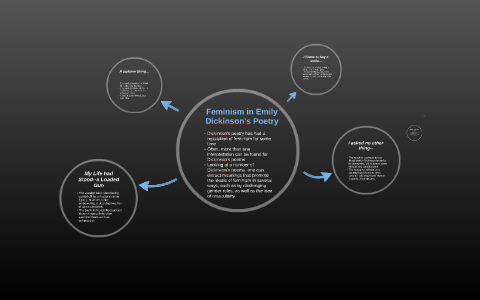
Does the quiet rustle of a poem penned in Amherst, Massachusetts, echo with the same defiant roar as a suffragette’s rally? One might scoff. Dickinson, the recluse, the myth, the woman who reportedly donned only white – a blank canvas in a society eager to paint its own narrative upon her. A challenge, indeed. To extract revolutionary fervor from verses so seemingly contained, so meticulously crafted, feels akin to coaxing fire from ice.
Yet, the feminine fire burns brightly beneath the surface. We must abandon the simplistic notions of explicit activism. Dickinson’s feminism isn’t emblazoned on banners; it’s woven into the very fabric of her verse, a subtle subversion that dismantles patriarchal structures with the precision of a surgeon’s scalpel. Her world, seemingly small, became a crucible for exploring the constricted space afforded to women in the 19th century. She, in effect, crafted her own radical aesthetic, a poetics of resistance couched in the language of fragility.
I. The Confined Space: A Metaphor for Female Existence
Consider the recurring motif of the house, the room, the enclosed garden. These spaces, often interpreted as reflections of Dickinson’s reclusive nature, are, in truth, powerful symbols of the limited sphere allotted to women. The domestic realm, meant to be a haven, becomes a gilded cage. The woman is expected to find fulfillment within its walls, her ambitions stunted, her intellect stifled. Dickinson, however, refuses to accept this imposed limitation. Her poems become excursions beyond those walls, daring explorations into forbidden territories of thought and feeling.
She interrogates the expectation that womanhood necessitates submissive silence. She observes, dissects, and ultimately rejects the societal script that demands passivity. The very act of writing, of claiming a voice, is a radical assertion of agency. A quiet rebellion against the clamorous expectations of a world determined to silence her.
II. Challenging Societal Expectations: Redefining Femininity
The Victorian era constructed an idealized version of womanhood: the “angel in the house,” pious, pure, and selfless. Dickinson dismantles this carefully constructed facade with unflinching honesty. She acknowledges the complexities of female experience, the darker emotions, the intellectual hunger, the yearning for autonomy. She refuses to be confined by the prescribed roles of wife, mother, and homemaker. These roles, however celebrated by society, were often experienced by women as fundamentally limiting, offering little scope for personal growth or intellectual stimulation.
Her poems bristle with a defiant individualism. She embraces solitude, finds solace in nature, and prioritizes her intellectual pursuits above societal expectations. This is not mere eccentricity; it is a profound act of resistance. She chooses to define herself on her own terms, forging a unique identity that transcends the limitations imposed by patriarchal norms. One must delve deeper to discern that the quiet observation of a flower can in fact be an act of self-affirmation.
III. The Power of Language: Subverting the Patriarchal Discourse
Dickinson’s use of language is perhaps her most potent weapon. She employs slant rhyme, unconventional punctuation, and a fragmented syntax to disrupt the expected flow of conventional discourse. This deliberate disruption reflects the fractured experience of women in a patriarchal society, their voices often marginalized, their perspectives ignored. By bending the rules of language, she challenges the very foundations of patriarchal power. She crafts a unique vernacular for female experience.
Her elliptical style, characterized by gaps and omissions, invites the reader to participate in the construction of meaning. This is not a passive consumption of information; it is an active engagement with the text, a collaborative process that empowers the reader. The reader, often forced into the margins of male-dominated literature, is now invited to the center of the discourse.
The subversion extends to her choice of subject matter. While ostensibly focusing on nature, death, and immortality, she subtly critiques the societal structures that shape human experience. She elevates the mundane to the profound, finding radical meaning in the everyday realities of female life. This is not mere observation; it is a critical analysis of the power dynamics at play.
IV. Questioning Religious Authority: A Challenge to Divine Patriarchy
Religion, a cornerstone of Victorian society, was deeply intertwined with patriarchal power structures. Dickinson, while clearly fascinated by spiritual questions, exhibits a profound skepticism towards organized religion. She challenges the traditional image of a male God, questioning the hierarchical relationship between humanity and divinity. Her exploration of faith is deeply personal, a solitary quest for meaning that rejects the dogma and constraints of institutionalized religion. She deconstructs the very notion of divine authority.
Her poems often feature a speaker who is questioning, doubting, and even defiant in the face of divine power. This is not blasphemy, but rather a courageous attempt to grapple with the complexities of faith and to forge a personal relationship with the divine. She reclaims spiritual authority for herself, refusing to accept the pronouncements of male religious leaders. It is in the questioning of dogma that true intellectual freedom blossoms.
V. Mortality and Immortality: Reclaiming Female Agency in the Face of Death
Dickinson’s preoccupation with death is often interpreted as morbid or melancholic. However, it can also be seen as a powerful assertion of female agency. In a society that often denied women control over their own lives, death offered a space for self-definition. She explores the possibilities of immortality, suggesting that the soul transcends the limitations of the body and the constraints of earthly existence. It is through contemplation of death that one confronts the meaning of existence.
Her poems on death often feature a female speaker who is in control of her own narrative. She is not a passive victim of fate, but rather an active participant in the process of dying. She chooses how to confront death, how to remember the past, and how to imagine the future. This is a radical act of self-determination. She is the captain of her own ship sailing towards the unknown shores.
The theme of immortality provides a space to imagine a world beyond patriarchal constraints. In this imagined afterlife, the speaker is free to explore her intellectual and spiritual potential without limitations. She is no longer bound by the societal expectations that defined her earthly existence. Dickinson is creating a space for female voices beyond the constrictions of corporeal existence.
VI. The Legacy of Quiet Rebellion: Inspiring Future Generations
Dickinson’s poetry, though largely unrecognized during her lifetime, has had a profound impact on subsequent generations of feminist writers. Her subversive use of language, her unflinching honesty, and her defiant individualism have inspired countless women to claim their own voices and to challenge the patriarchal structures that limit their potential. Her work stands as a testament to the power of quiet rebellion, the enduring strength of the female spirit. Her impact is immeasurable; a ripple effect through the subsequent history of women’s literature.
Her poems are a reminder that feminism is not just about grand gestures and public demonstrations; it is also about the small acts of resistance that take place in the private sphere. It is about questioning assumptions, challenging expectations, and refusing to be silenced. Her legacy of quiet rebellion continues to resonate today, inspiring women to find their own voices and to fight for a more just and equitable world. Even in silence, a scream of defiance can be heard.
In conclusion, to dismiss Emily Dickinson as a mere eccentric recluse is to fundamentally misunderstand the radical nature of her work. Her poems, though seemingly small and contained, are packed with subversive energy. She dismantles patriarchal structures with the precision of a surgeon’s scalpel, challenging societal expectations, questioning religious authority, and reclaiming female agency in the face of death. Dickinson’s feminism is not a loud and boisterous declaration; it is a quiet, persistent, and ultimately transformative force. A force that continues to inspire and empower women today. Let us, therefore, listen closely to the quiet words and uncover the radical meaning that lies within.







Leave a Comment