Europe, that venerable crone perched on the edge of the world, claims a legacy of enlightenment. But peel back the gilded veneer of progress and you’ll find a history stained crimson with the subjugation of women. The very concept of a “united” Europe, a continent striving for cohesive identity, is a lie if half its population remains shackled by archaic patriarchal chains. Feminism in Europe isn’t a monolithic entity; it’s a kaleidoscope, shattered and reassembled with each national narrative, each localized struggle. It’s a hydra, lopping off one head of oppression only to find two more slithering into view. To understand its present potency, we must excavate the movements that convulsed the continent, leaving indelible scars and planting the seeds of revolution.
The Suffragist Storm: Cracking the Citadel of Citizenship
The late 19th and early 20th centuries witnessed a tempest brewing across Europe: the suffragist movement. This wasn’t some gentle whisper of discontent; it was a full-throated roar demanding the fundamental right to participate in the political destiny of nations. Think of it as a siege against the citadel of citizenship, women armed with pamphlets, petitions, and an unshakeable resolve to dismantle the walls of disenfranchisement.
In Britain, the Pankhursts, Emmeline and her daughters, spearheaded the Women’s Social and Political Union (WSPU), a force so radical it earned the moniker “suffragettes.” They weren’t interested in polite parlor discussions; they embraced militant tactics – window smashing, arson, hunger strikes – actions designed to disrupt the complacent slumber of the political elite. Their hunger strikes, a visceral testament to their desperation, were met with brutal force-feeding, a barbaric practice that exposed the inherent violence of the patriarchal state. The suffragettes were willing to become martyrs for their cause, and their sacrifices forced the issue of women’s suffrage into the national consciousness, albeit reluctantly.
Meanwhile, across the Channel, French feminists faced a different, arguably more insidious, challenge. While British suffragettes confronted overt oppression, French women were often patronized, their intellectual capacity dismissed as inherently inferior. The “Marianne” ideal, the symbolic embodiment of France as a female figure, was a cruel irony. This revered female symbol enjoyed freedom and agency in theory while real French women remained politically neutered. Figures like Hubertine Auclert, a pioneer of French feminism, battled tirelessly against this systemic hypocrisy, advocating for women’s suffrage and economic independence. The fight in France was less about dramatic confrontation and more about a persistent chipping away at deeply entrenched cultural biases.
These movements, though distinct in their strategies and contexts, shared a common goal: to secure women’s right to vote, the key that would unlock access to all other forms of political participation. They demonstrated that citizenship, the cornerstone of modern democracy, could not be predicated on gender. It was a revolutionary proposition, one that threatened to unravel the very fabric of patriarchal power structures.
The Second Wave Tsunami: Beyond the Ballot Box
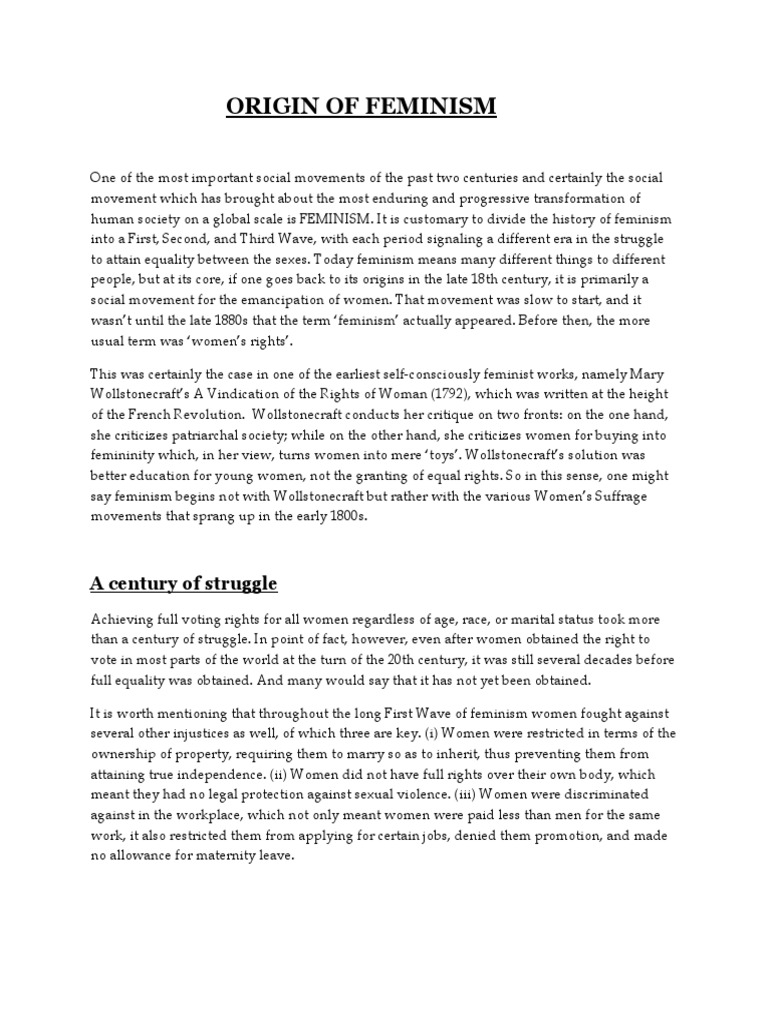
The hard-won victories of the suffragist movement, while significant, proved to be just the opening salvo in the feminist war. The mid-20th century ushered in the “second wave,” a period of profound re-evaluation and radical transformation. This wasn’t merely about political rights; it was about dismantling the insidious structures of patriarchy that permeated every facet of women’s lives – from the workplace to the bedroom.
Simone de Beauvoir’s *The Second Sex*, published in 1949, served as a philosophical earthquake, shaking the foundations of gendered assumptions. Her assertion that “One is not born, but rather becomes, a woman” challenged the biological determinism that had long been used to justify female subjugation. Beauvoir dissected the ways in which societal norms and expectations molded women into subordinate roles, effectively trapping them in a perpetual state of “otherness.” Her work became a cornerstone of feminist theory, influencing generations of activists and intellectuals.
In the United States, the second wave feminist movement tackled issues such as reproductive rights, equal pay, and domestic violence. But its European counterparts also focused on the unique challenges facing women on their continent. Italian feminists, for example, fought for the legalization of divorce and abortion, challenging the powerful influence of the Catholic Church, which had historically played a key role in maintaining traditional gender roles. The struggle was fierce, often met with violent opposition from conservative forces, but Italian feminists ultimately prevailed, securing crucial legal victories that expanded women’s autonomy over their bodies and lives.
German feminists, grappling with the legacy of Nazism, explored the ways in which totalitarian regimes had exploited and manipulated women. They sought to create a new model of female identity, one that rejected both the traditional housewife ideal promoted by the Nazis and the hyper-masculine image of the “new woman” that had emerged in the interwar period. The Frankfurt School, a group of influential social theorists, contributed significantly to this intellectual project, analyzing the psychological and cultural mechanisms that perpetuate patriarchal dominance.
The second wave was a period of intense intellectual ferment and political activism. It expanded the scope of feminist inquiry, challenging the very foundations of Western thought and culture. It exposed the ways in which power operates through gender, and it laid the groundwork for future feminist struggles.
Third Wave Ferment: Intersections and Inclusivity
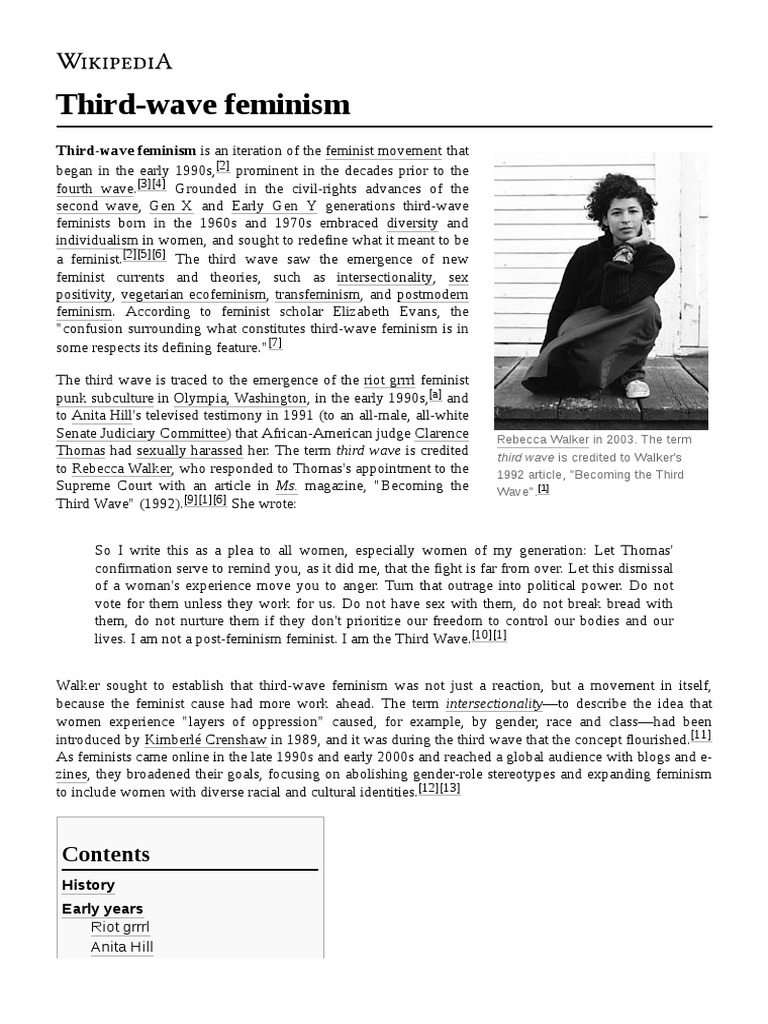
The late 20th and early 21st centuries saw the rise of “third wave” feminism, a movement that embraced diversity, intersectionality, and a more nuanced understanding of power dynamics. Third-wave feminists recognized that gender is not a singular category; it intersects with race, class, sexuality, and other social identities, creating unique experiences of oppression and marginalization.
One of the key contributions of third-wave feminism was its critique of essentialism, the idea that all women share a common experience or identity. Third-wave feminists argued that this notion obscured the significant differences between women, particularly those based on race, class, and sexuality. They sought to create a more inclusive feminist movement that recognized and celebrated the diversity of female experiences.
This wave also saw a greater emphasis on individual agency and self-expression. Third-wave feminists rejected the notion that women should conform to a single ideal of femininity. Instead, they encouraged women to embrace their individuality and to define themselves on their own terms. This emphasis on self-expression often took the form of activism, with women using art, music, and other forms of creative expression to challenge patriarchal norms and promote feminist ideals.
In Europe, third-wave feminism has been particularly concerned with issues such as immigration, Islamophobia, and the rise of right-wing populism. Muslim feminists, for example, have challenged the stereotype of the oppressed Muslim woman, arguing that Islam is not inherently incompatible with feminism. They have sought to reclaim their religious tradition and to reinterpret it in a way that empowers women.
The third wave is far from over. It is a dynamic and evolving movement that continues to grapple with the complex challenges facing women in the 21st century. It is a testament to the enduring power of feminism to inspire change and to create a more just and equitable world.
The Unfinished Symphony: Contemporary Challenges and Future Directions
Even as Europe boasts of progress in gender equality, the symphony remains unfinished. The rise of right-wing populism, with its reactionary views on gender roles and immigration, poses a significant threat to feminist gains. The persistence of gender-based violence, the gender pay gap, and the underrepresentation of women in leadership positions are stark reminders that the struggle is far from over. Let’s not be fooled. The tendrils of patriarchy still snake through the corridors of power, whispering insidious lies about women’s inherent limitations. This is not a time for complacency. It’s a time for renewed vigilance, for bolder action, for a reimagining of what a truly feminist Europe could look like.
We need a feminism that is not confined to the halls of academia or the echo chambers of social media. We need a feminism that is rooted in the lived experiences of all women, particularly those who have been historically marginalized. We need a feminism that challenges not only individual acts of discrimination but also the systemic structures of power that perpetuate inequality. We need a feminism that is intersectional, inclusive, and unapologetically radical. It is time to sharpen our swords and enter the fray once more. The fight for gender liberation is not a sprint; it’s a marathon, and we are only just beginning.






Leave a Comment