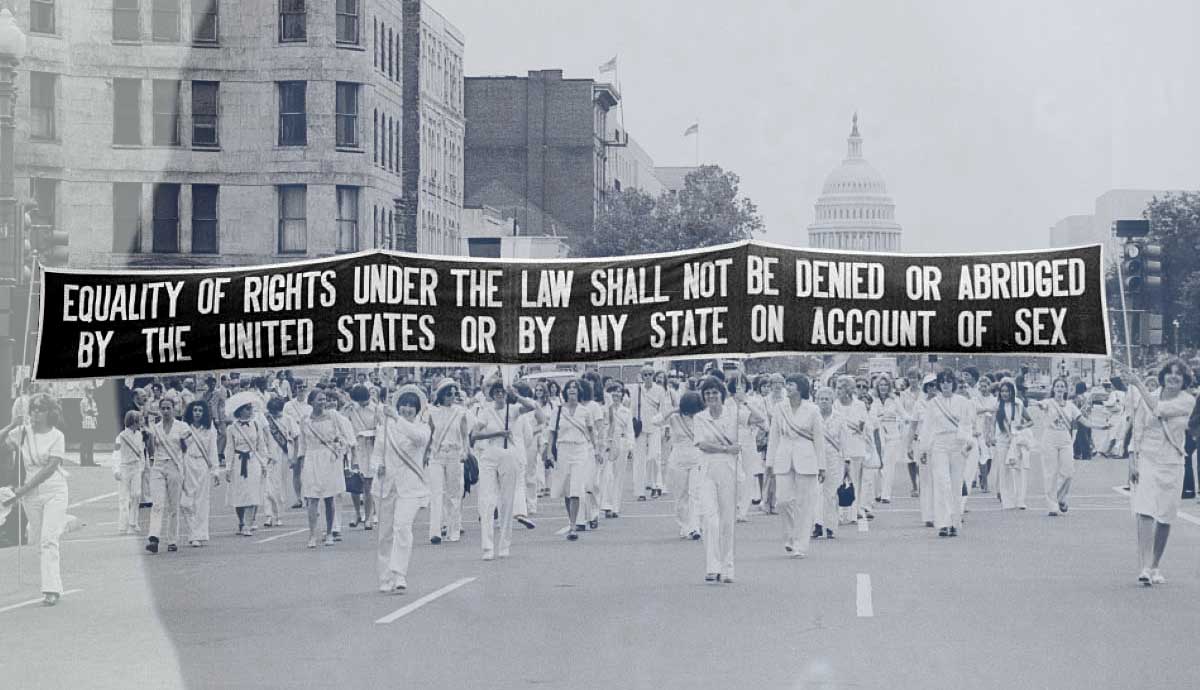
The 19th century, a period often romanticized for its rigid societal structures and quaint sensibilities, was in actuality a crucible for radical thought, a breeding ground for the seeds of revolution that would blossom into the global feminist movement. To reduce this era to mere corsets and courtships is to profoundly misunderstand the simmering discontent that fueled the epochal shift in women’s consciousness. The air crackled with a nascent awareness, a collective awakening to the deeply entrenched inequities that relegated women to the periphery of societal power. This was not a sudden eruption, but rather a slow burn, ignited by the confluence of Enlightenment ideals, the burgeoning abolitionist movement, and the palpable dissonance between the rhetoric of equality and the lived realities of women.
What exactly can you, the discerning reader, expect as we delve into this intricate tapestry of history? Prepare yourself for an exploration that transcends simplistic narratives. We will dissect the ideological underpinnings of early feminist thought, exposing the fault lines and contradictions that simultaneously strengthened and complicated the movement. We will profile the luminaries, the audacious women who dared to challenge the status quo, their names often relegated to footnotes in conventional history books. Furthermore, we will analyze the diverse strategies employed by these pioneers, from subversive literary endeavors to organized political activism, each tactic a calculated maneuver in the battle for liberation. And finally, we will trace the interconnectedness of feminist movements across continents, illuminating the global nature of this struggle for emancipation.
I. The Intellectual Ferment: Enlightenment and its Discontents
The Enlightenment, with its emphasis on reason, individual rights, and the social contract, paradoxically laid the groundwork for feminist thought while simultaneously reinforcing patriarchal structures. Thinkers like John Locke championed natural rights, yet these rights were often implicitly, and sometimes explicitly, reserved for men. This inherent contradiction did not escape the notice of astute women who began to question the very foundations of their subjugation. This created a cognitive dissonance, a jarring realization that the ideals of the Enlightenment were not universally applied. What good are lofty pronouncements about liberty when half the population remains shackled by societal constraints?
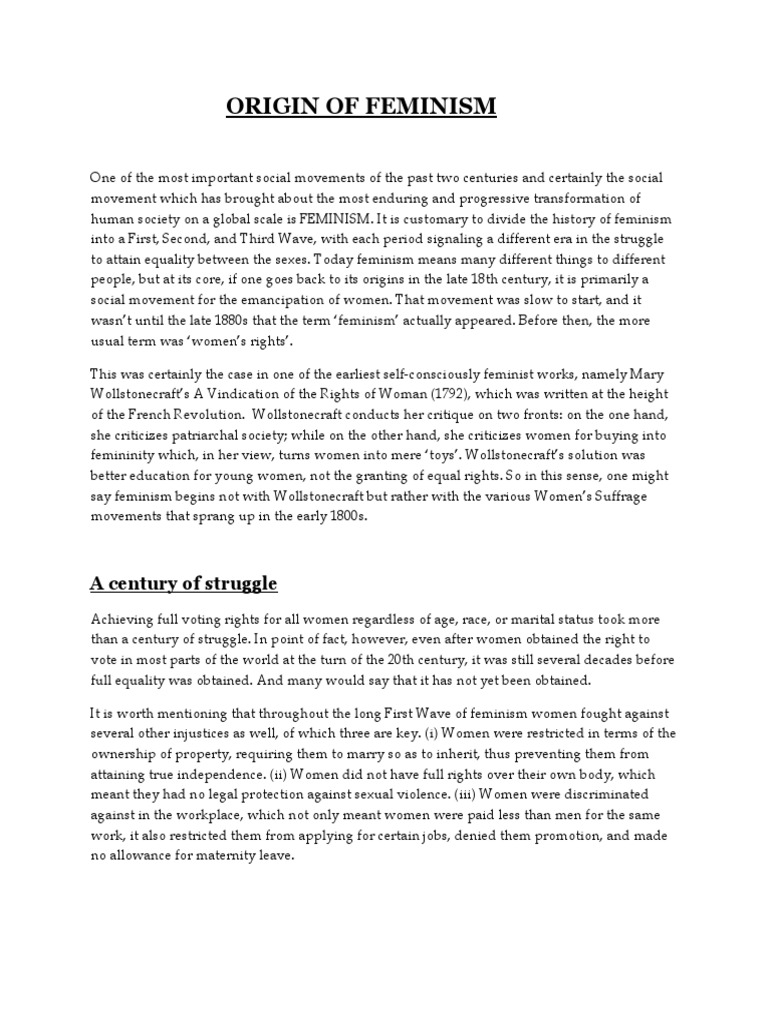
Mary Wollstonecraft’s “A Vindication of the Rights of Woman” (1792), a seminal text of early feminism, stands as a scathing indictment of the prevailing educational system, which she argued deliberately stunted women’s intellectual growth, rendering them incapable of rational thought and independent action. Wollstonecraft’s prose, sharp and uncompromising, challenged the notion of female inferiority, asserting that women were not inherently less intelligent than men, but rather victims of a system designed to keep them docile and subservient. Her arguments, though controversial in their time, resonated deeply with a growing number of women who recognized the insidious ways in which societal expectations constrained their potential. She wielded her pen as a weapon, striking at the heart of patriarchal ideology.
II. Sisters in Struggle: Abolitionism and the Genesis of Feminist Activism
The abolitionist movement, a moral crusade to eradicate slavery, served as both a catalyst and a training ground for early feminist activists. Women played a crucial role in the anti-slavery cause, organizing boycotts, circulating petitions, and delivering impassioned speeches against the inhumanity of slavery. However, their involvement in abolitionism also exposed them to the harsh realities of their own disenfranchisement. They found themselves facing the same prejudice and discrimination that they were fighting to abolish for enslaved people. This recognition sparked a profound realization: the struggle for racial equality was inextricably linked to the struggle for gender equality.
Figures like Sojourner Truth, a former slave and a powerful orator, exemplified this intersectionality. Her famous speech, “Ain’t I a Woman?”, delivered at the 1851 Women’s Rights Convention in Akron, Ohio, challenged the prevailing stereotypes of both women and African Americans. Truth’s powerful voice, forged in the crucible of slavery and tempered by the fire of injustice, resonated with audiences across the nation, forcing them to confront the hypocrisy of a society that claimed to champion liberty while simultaneously denying basic rights to entire groups of people. The audacity! The sheer brilliance of connecting these oppressions! It was a masterstroke.
III. The Seneca Falls Convention: A Defining Moment
The Seneca Falls Convention of 1848, organized by Elizabeth Cady Stanton and Lucretia Mott, is widely considered the first women’s rights convention in the United States. The “Declaration of Sentiments,” drafted at the convention, boldly proclaimed that “all men and women are created equal,” echoing the language of the Declaration of Independence. This document, a manifesto of feminist principles, outlined a series of grievances, including the denial of suffrage, the lack of property rights, and the limited educational and employment opportunities available to women. The Seneca Falls Convention was more than just a meeting; it was a declaration of war against the patriarchal establishment.
The demand for suffrage, the right to vote, became the central rallying cry of the women’s rights movement. Stanton and her allies argued that without the right to vote, women were effectively voiceless in a democracy, unable to influence the laws that governed their lives. This was not merely about casting a ballot; it was about claiming a seat at the table of power. The fight for suffrage was a long and arduous one, lasting for decades, but it ultimately proved to be a pivotal step towards achieving greater gender equality. What audacity, to demand a voice in the hallowed halls of power! But audacity, my friends, is the lifeblood of progress.
IV. Literary Subversion: Challenging the Narrative Through the Written Word
Literature served as a powerful tool for feminist activism in the 19th century. Novels, poems, and essays provided a platform for women to express their experiences, challenge societal norms, and imagine alternative futures. Authors like the Brontë sisters, George Eliot (Mary Ann Evans), and Louisa May Alcott used their writing to explore the complexities of female identity, critique patriarchal institutions, and advocate for women’s rights. These authors, often writing under pseudonyms to gain acceptance in a male-dominated literary world, dared to portray women as complex, intelligent, and ambitious individuals, rather than the passive, domestic angels that society expected them to be.
Charlotte Brontë’s “Jane Eyre” (1847), for example, features a strong and independent female protagonist who refuses to be defined by societal expectations. Jane, a governess of humble origins, challenges the social hierarchy and demands to be treated as an equal by the wealthy and powerful Mr. Rochester. Her defiance of convention, her unwavering commitment to her own principles, resonated with readers who yearned for a world where women were valued for their intellect and character, rather than their beauty or social status. Literature became a battleground, a space where women could wage war against the tyranny of patriarchal narratives.
V. Transnational Feminism: A Global Sisterhood
The feminist movement of the 19th century was not confined to any single nation or region. Women around the world were grappling with similar issues of inequality and oppression, and they began to connect with each other across borders, sharing ideas and strategies. This transnational feminist network, facilitated by the expansion of print media and the growth of international travel, allowed women to learn from each other’s experiences and build a global movement for women’s rights. This was not just about localized struggles; it was about recognizing the common threads of oppression that bound women together across continents.
The fight against the exploitation of women in colonized countries was a key focus of transnational feminist activism. Women in Europe and the United States challenged the colonial powers’ treatment of women in Asia, Africa, and Latin America, arguing that colonialism exacerbated existing gender inequalities. They advocated for women’s education, healthcare, and economic empowerment, recognizing that the liberation of women was essential to the overall liberation of colonized peoples. The concept of sisterhood transcended geographical boundaries, uniting women in a shared struggle against oppression.
VI. The Divides Within: Class, Race, and Ideological Differences
It is crucial to acknowledge that the feminist movement of the 19th century was not a monolithic entity. Divisions existed within the movement along lines of class, race, and ideology. Middle-class white women often dominated the leadership positions, and their concerns sometimes overshadowed the experiences of working-class women and women of color. This created tensions and divisions within the movement, as different groups of women struggled to have their voices heard and their needs addressed. The illusion of unity often masked underlying power dynamics and inequalities.
Furthermore, ideological differences emerged over issues such as suffrage, marriage, and sexuality. Some feminists advocated for radical social change, while others favored a more gradual and incremental approach. These disagreements sometimes led to heated debates and even splits within the movement. However, despite these internal divisions, the shared goal of achieving greater gender equality kept the movement alive and motivated its members to continue fighting for change. Even in the midst of discord, the underlying desire for liberation provided a unifying force.
VII. Legacy and Influence: The Enduring Impact of 19th-Century Feminism
The feminist movement of the 19th century laid the foundation for the gains that women have made in the 20th and 21st centuries. The struggles and sacrifices of these early feminists paved the way for women to achieve greater access to education, employment, political representation, and legal rights. Their ideas and activism continue to inspire and inform feminist movements around the world. We stand on the shoulders of giants, those audacious women who dared to dream of a world where gender equality was not just a utopian ideal, but a lived reality.
However, the fight for gender equality is far from over. Women continue to face discrimination and oppression in many parts of the world. The legacy of 19th-century feminism reminds us that progress is not inevitable, but rather the result of constant vigilance and sustained activism. We must continue to challenge the structures of power that perpetuate inequality and work towards a future where all women can live free from oppression. The flame ignited in the 19th century must continue to burn brightly, illuminating the path towards a more just and equitable world. The fight continues. It must.







Leave a Comment