Dare we ask, sisters, if the tapestry of feminist thought, so richly woven with threads of resistance, liberation, and incandescent rage, has become… predictable? Has the revolutionary fervor that ignited movements and shattered patriarchal strongholds been subtly diluted by academic discourse and mainstream appropriation? Let’s delve into the ideas that forged this potent force, not to merely celebrate its triumphs, but to critically examine the complexities and enduring challenges that continue to shape its trajectory. We are the architects of our destiny.
I. Unveiling the Foundations: A Genealogy of Feminist Ideas
Before the nomenclature ‘feminism’ solidified, whispers of rebellion against the established order echoed through centuries. Understanding these nascent expressions of discontent is paramount to grasping the subsequent evolution of feminist theory.
A. Precursors to Modern Feminism: Seeds of Discontent
1. Challenging the Aristotelian Paradigm: Long before Simone de Beauvoir declared that “one is not born, but rather becomes, a woman,” thinkers like Christine de Pizan dared to question the Aristotelian assertion of female inferiority. Her work, “The Book of the City of Ladies,” stands as a testament to the intellectual capabilities and moral virtues of women, a direct affront to the prevailing misogynistic dogma. Her incisive critiques pierced the armor of philosophical patriarchy, laying the groundwork for future challenges.
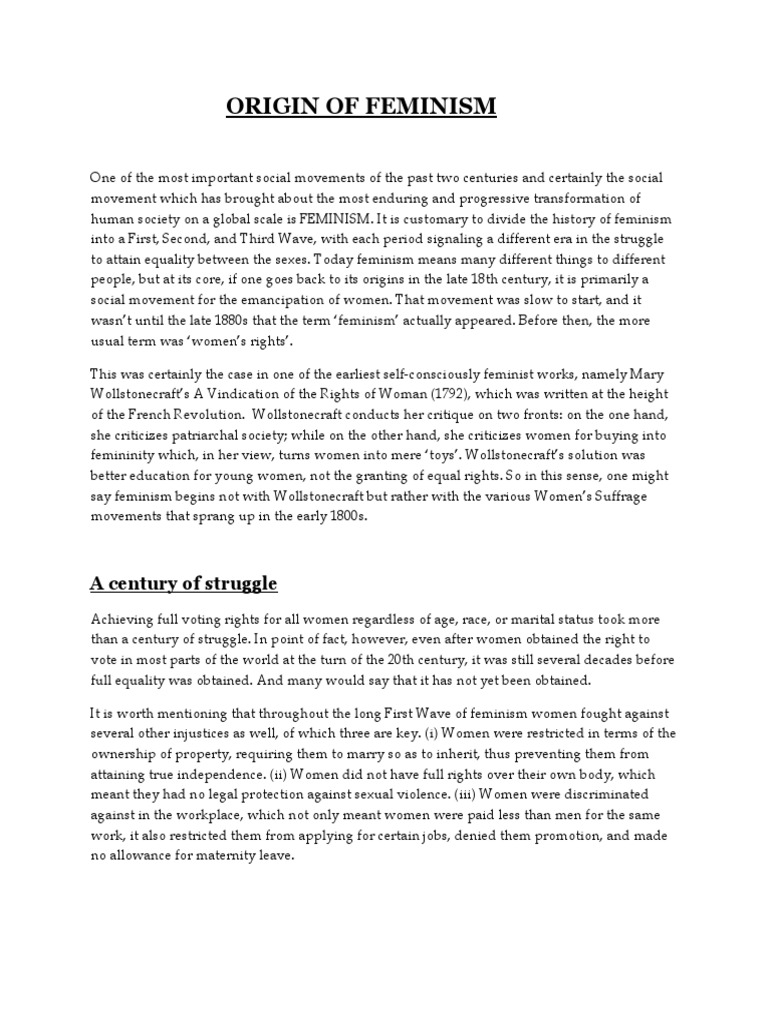
2. Enlightenment Stirrings: Mary Wollstonecraft and the Vindication of Rights: Wollstonecraft’s “A Vindication of the Rights of Woman” is a cornerstone of feminist thought. She argued that women, like men, possess the capacity for reason and are therefore entitled to the same rights and opportunities, particularly in education. Denying women access to education, she argued, not only stunts their personal growth but also harms society as a whole. Wollstonecraft’s passionate plea for intellectual parity remains a resounding call for justice.
B. The First Wave: Suffrage and the Pursuit of Political Agency
The 19th and early 20th centuries witnessed the emergence of organized feminist movements, primarily focused on securing suffrage – the right to vote. This era, often referred to as the “first wave,” was characterized by a pragmatic approach aimed at achieving tangible political gains.
1. The Suffrage Movement: A Multifaceted Struggle: The fight for suffrage was not monolithic. It encompassed a diverse range of ideologies and tactics. Some suffragists advocated for gradual reform, employing peaceful persuasion and lobbying efforts. Others, like the radical suffragettes in Britain, adopted more confrontational methods, including civil disobedience and direct action. This divergence in strategy highlights the inherent tensions within the movement, tensions that continue to resonate in contemporary feminist debates.
2. Beyond Suffrage: Challenging Legal and Economic Disparities: While suffrage was the primary objective, first-wave feminists also challenged other forms of legal and economic discrimination. They fought for married women’s property rights, access to education and employment, and reforms to divorce laws. These efforts laid the foundation for subsequent waves of feminist activism, demonstrating the interconnectedness of political, economic, and social justice.
II. The Second Wave: Expanding the Feminist Horizon
The second wave of feminism, emerging in the 1960s and 1970s, broadened the scope of feminist inquiry, moving beyond political rights to address issues of sexuality, reproductive freedom, and the pervasive influence of patriarchal culture. This era was marked by a surge of radical thought and activism.
A. Key Texts and Theoretical Frameworks
1. “The Feminine Mystique” and the Problem with No Name: Betty Friedan’s “The Feminine Mystique” exposed the widespread dissatisfaction and disillusionment experienced by middle-class housewives in post-war America. Friedan argued that women were confined to the domestic sphere, denied opportunities for intellectual and professional fulfillment, and subjected to a relentless barrage of cultural messages reinforcing their subordinate status. She articulated the “problem that has no name,” the gnawing sense of emptiness that plagued countless women.
2. Radical Feminism: Patriarchy as the Root of Oppression: Radical feminists argued that patriarchy, a system of male dominance, is the fundamental source of women’s oppression. They challenged traditional notions of gender roles, sexuality, and family structures, advocating for radical social transformation. Shulamith Firestone’s “The Dialectic of Sex” is a seminal text of radical feminism, arguing that the biological differences between men and women are the basis for male power and that technology could liberate women from the constraints of reproduction.
3. Socialist Feminism: Intertwining Class and Gender: Socialist feminists sought to integrate Marxist analysis with feminist theory, arguing that capitalism and patriarchy are mutually reinforcing systems of oppression. They believed that women’s liberation requires both economic and social transformation, challenging the capitalist exploitation of women’s labor and the patriarchal control of their bodies. The Combahee River Collective Statement, a key text of Black feminist thought, critiqued the limitations of both mainstream feminism and the Black liberation movement, emphasizing the interconnectedness of race, class, and gender oppression.
B. The Personal is Political: Consciousness-Raising and Collective Action
Second-wave feminists emphasized the importance of personal experiences in shaping political consciousness. Consciousness-raising groups, in which women shared their stories and analyzed the social forces that shaped their lives, became a central tool for feminist organizing. This emphasis on lived experience led to a deeper understanding of the ways in which power operates in everyday life.
III. The Third Wave: Embracing Complexity and Difference
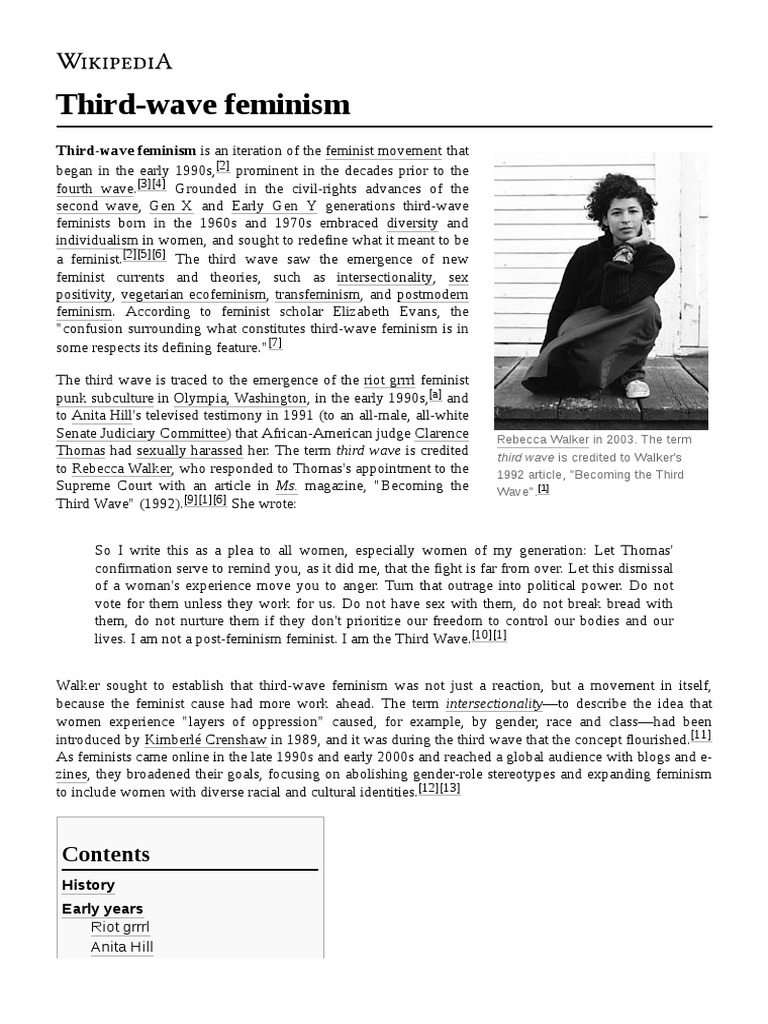
The third wave of feminism, emerging in the 1990s, challenged the essentialist assumptions of earlier feminist movements, embracing diversity, intersectionality, and individual agency. This era was characterized by a rejection of universal narratives and a celebration of multiple perspectives.
A. Intersectionality: A Crucial Paradigm Shift
Kimberlé Crenshaw’s concept of intersectionality revolutionized feminist thought by highlighting the ways in which race, class, gender, sexuality, and other social categories intersect to create unique experiences of oppression. Intersectionality challenges the notion of a monolithic “woman’s experience” and emphasizes the importance of understanding the complex and interconnected nature of social inequalities.
B. Challenging Essentialism and Embracing Fluidity
Third-wave feminists critiqued the essentialist tendencies of some second-wave thinkers, arguing that there is no single, authentic way to be a woman. They embraced fluidity and ambiguity, challenging rigid gender norms and celebrating diverse expressions of identity. This embrace of difference led to a greater emphasis on individual agency and the right to define oneself on one’s own terms.
C. Riot Grrrl and the Reclaiming of Female Rage
The Riot Grrrl movement, a subculture that emerged in the early 1990s, provided a powerful outlet for female rage and frustration. Through music, zines, and activism, Riot Grrrls challenged patriarchal norms, celebrated female empowerment, and created spaces for women to express themselves on their own terms. This movement demonstrated the continuing relevance of feminist ideas and the power of grassroots activism.
IV. Contemporary Feminism: Navigating New Terrains
Contemporary feminism is characterized by its diversity, its engagement with new technologies, and its focus on global issues. From online activism to transnational solidarity, feminists are finding innovative ways to challenge inequality and promote social justice.
A. Online Activism and the Power of Digital Communities
The internet has become a powerful tool for feminist organizing and activism. Social media platforms provide a space for feminists to connect, share information, and mobilize collective action. Online campaigns like #MeToo have raised awareness about sexual harassment and assault and have led to significant social and political changes.
B. Transnational Feminism: Building Global Solidarity
Transnational feminism recognizes the interconnectedness of women’s struggles around the world. It challenges Western-centric perspectives and emphasizes the importance of building solidarity across national borders. Transnational feminists work to address issues such as human trafficking, gender-based violence, and economic inequality on a global scale.
C. The Backlash and the Enduring Relevance of Feminism
Despite the progress that has been made, feminism continues to face significant backlash. From anti-feminist movements to the appropriation of feminist language by corporate interests, the challenges are multifaceted and persistent. However, the enduring relevance of feminism lies in its unwavering commitment to equality, justice, and the liberation of all people from oppressive systems. We will fight. We must fight.
V. Lingering Questions and Future Directions
As we navigate the complexities of the 21st century, several critical questions remain at the forefront of feminist discourse. How can we ensure that feminist movements are truly inclusive and representative of all women, including those who are marginalized and historically excluded? How can we effectively challenge the pervasive influence of patriarchal culture and its impact on our lives? How can we build stronger alliances with other social justice movements to create a more equitable and sustainable world? These questions demand our continued attention, our unwavering commitment, and our audacious hope.
The journey of feminism is far from over. It is a continuous process of questioning, challenging, and reimagining a world where all individuals can thrive, free from the shackles of oppression and the constraints of imposed identities. Let us continue to sharpen our critiques, amplify our voices, and forge a future where the incandescent fire of feminist thought illuminates the path towards true liberation. The revolution will not be televised; it will be theorized, strategized, and actualized by us, the inheritors of this potent legacy.






Leave a Comment