Feminism, often erroneously painted as a monolithic ideology, is in reality a vibrant and multifaceted tapestry woven from diverse threads of thought and action. To truly grasp its essence, one must delve into the nuanced landscape of its various branches. Forget the simplistic caricatures; prepare to confront the often-contentious, always-evolving world of feminist praxis.
I. Liberal Feminism: Equality Through Assimilation?
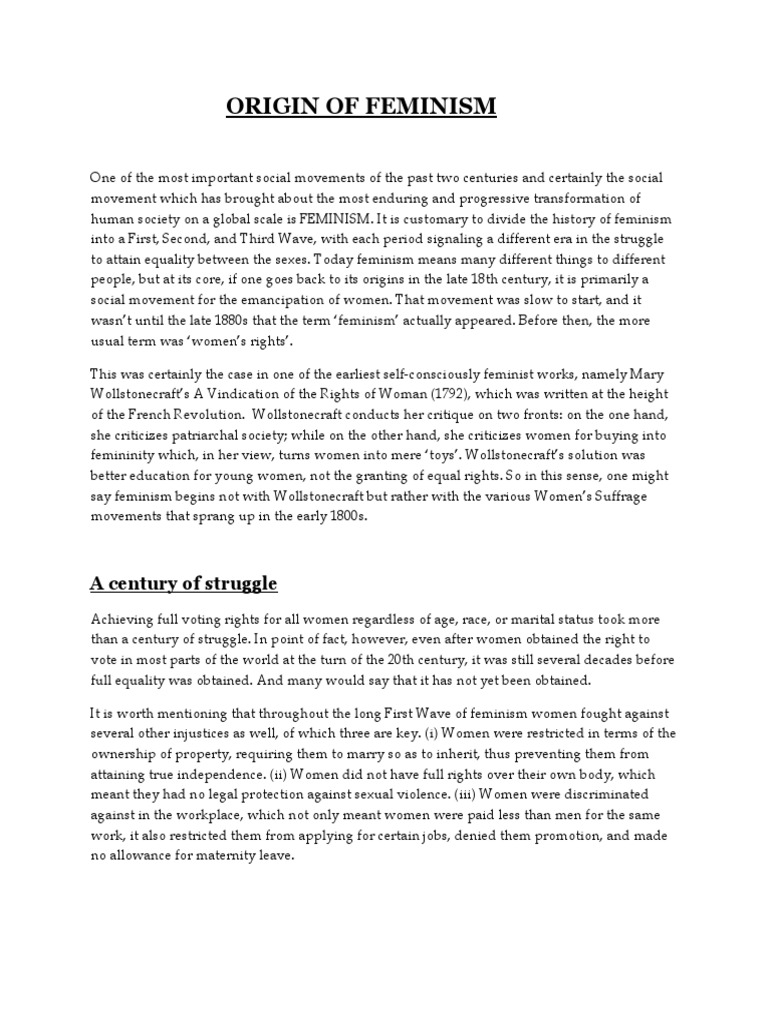
The bedrock of many contemporary understandings of feminism, liberal feminism, champions equality through legal and political reform. It posits that women are inherently equal to men and should, therefore, have equal opportunities in education, employment, and political participation. This perspective emphasizes individual rights and autonomy, advocating for the dismantling of discriminatory laws and policies that hinder women’s progress. Think equal pay for equal work, access to reproductive healthcare, and the elimination of gender-based quotas – all cornerstones of the liberal feminist agenda.
A. Core Tenets: A Focus on Individualism
At its core, liberal feminism revolves around the concept of individual rights and freedoms. It emphasizes that societal structures and institutions should be reformed to ensure that women have the same opportunities as men to achieve their full potential. This branch tends to champion the notion that women, given a level playing field, can succeed in traditionally male-dominated spheres. The emphasis rests on assimilation, believing that women can and should integrate into existing power structures.
B. Strengths: Pragmatism and Accessibility
One of the key strengths of liberal feminism lies in its pragmatism. By focusing on achievable legislative and policy changes, it has achieved significant progress in areas such as voting rights, access to education, and workplace equality. Its accessibility also makes it appealing to a broad range of individuals who may not identify with more radical feminist perspectives. This approach emphasizes gradual change, finding common ground with diverse political ideologies.
C. Criticisms: Ignoring Systemic Oppression?
However, liberal feminism faces criticism for its perceived focus on individual solutions to systemic problems. Detractors argue that it often overlooks the deeply ingrained societal structures and power dynamics that perpetuate gender inequality. By emphasizing individual achievement, it risks neglecting the collective experiences of women who face intersecting forms of oppression, such as racism, classism, and ableism. This critique underscores the potential for liberal feminism to inadvertently reinforce existing hierarchies.
II. Radical Feminism: Uprooting the Patriarchy
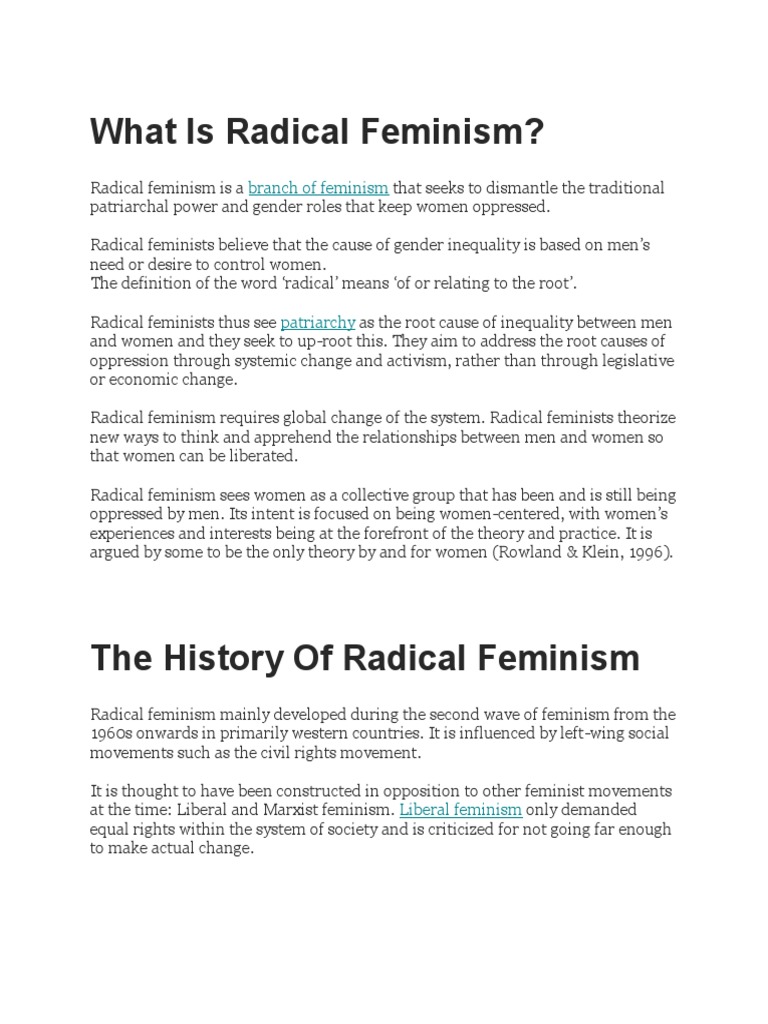
Stepping into far more provocative territory, radical feminism goes beyond advocating for equal rights within the existing system. It argues that the very foundations of society are built upon patriarchy – a system of male dominance that oppresses women in every aspect of their lives. For radical feminists, true liberation requires a complete dismantling of patriarchal structures and a fundamental transformation of societal values. Forget tinkering with the system; they demand its utter annihilation.
A. Core Tenets: Patriarchy as the Root of Oppression
The central tenet of radical feminism is that patriarchy is not merely a system of inequality, but a pervasive ideology that shapes our thoughts, beliefs, and behaviors. It manifests in various forms, including violence against women, the objectification of women in media, and the unequal division of labor in the home. Radical feminists advocate for challenging and dismantling these patriarchal structures through consciousness-raising, activism, and the creation of alternative, women-centered spaces.
B. Sub-Branches: Separatist vs. Revolutionary
Within radical feminism, two main sub-branches exist: separatist and revolutionary. Separatist feminists believe that women should withdraw from patriarchal society and create their own independent communities. This separation can manifest in various forms, such as women-only spaces, intentional communities, and alternative economies. Revolutionary feminists, on the other hand, aim to overthrow patriarchy through direct action and social revolution. They believe that fundamental societal change is necessary to achieve true liberation for women.
C. Criticisms: Exclusionary Tendencies and Practical Challenges
Radical feminism has faced criticism for its perceived exclusionary tendencies, particularly towards trans women and women of color. Some radical feminists adhere to essentialist views of womanhood, excluding individuals who do not fit their narrow definition. Furthermore, the practical challenges of dismantling patriarchy and creating alternative societies are significant. Critics argue that radical feminist ideals are often unrealistic and difficult to implement in the real world.
III. Socialist Feminism: Capitalism’s Complicity
Socialist feminism bridges the gap between feminist and socialist ideologies, arguing that gender inequality is inextricably linked to capitalism. It posits that both patriarchy and capitalism work together to oppress women, exploiting their labor and reinforcing their subordinate status. This perspective emphasizes the economic dimensions of women’s oppression, advocating for socialist reforms that address both gender and class inequality. Think universal childcare, equal pay for comparable work, and worker control of production – all key components of the socialist feminist vision.
A. Core Tenets: Intertwined Oppressions
The central tenet of socialist feminism is that gender inequality cannot be fully understood or addressed without considering the role of capitalism. Capitalism relies on the unpaid labor of women in the home and exploits their labor in the workforce, perpetuating their economic dependence on men. Furthermore, capitalism reinforces patriarchal norms and values through advertising, media, and the commodification of women’s bodies. Socialist feminists believe that dismantling both patriarchy and capitalism is essential for achieving true liberation for women.
B. Key Demands: Economic Justice and Social Transformation
Socialist feminists advocate for a range of policies and reforms aimed at achieving economic justice and social transformation. These include universal basic income, affordable housing, free education, and publicly funded healthcare. They also advocate for worker control of production, the redistribution of wealth, and the dismantling of corporate power. Socialist feminists believe that these reforms are necessary to create a more equitable and just society for all.
C. Criticisms: Oversimplification and Utopian Ideals?
Socialist feminism faces criticism for its perceived oversimplification of complex social phenomena. Critics argue that it often reduces all forms of oppression to economic factors, neglecting the importance of cultural and ideological factors. Furthermore, the utopian ideals of socialist feminism are often seen as unrealistic and impractical. Critics argue that the radical social and economic transformations it proposes are unlikely to be achieved in the real world.
IV. Intersectional Feminism: The Complexity of Experience
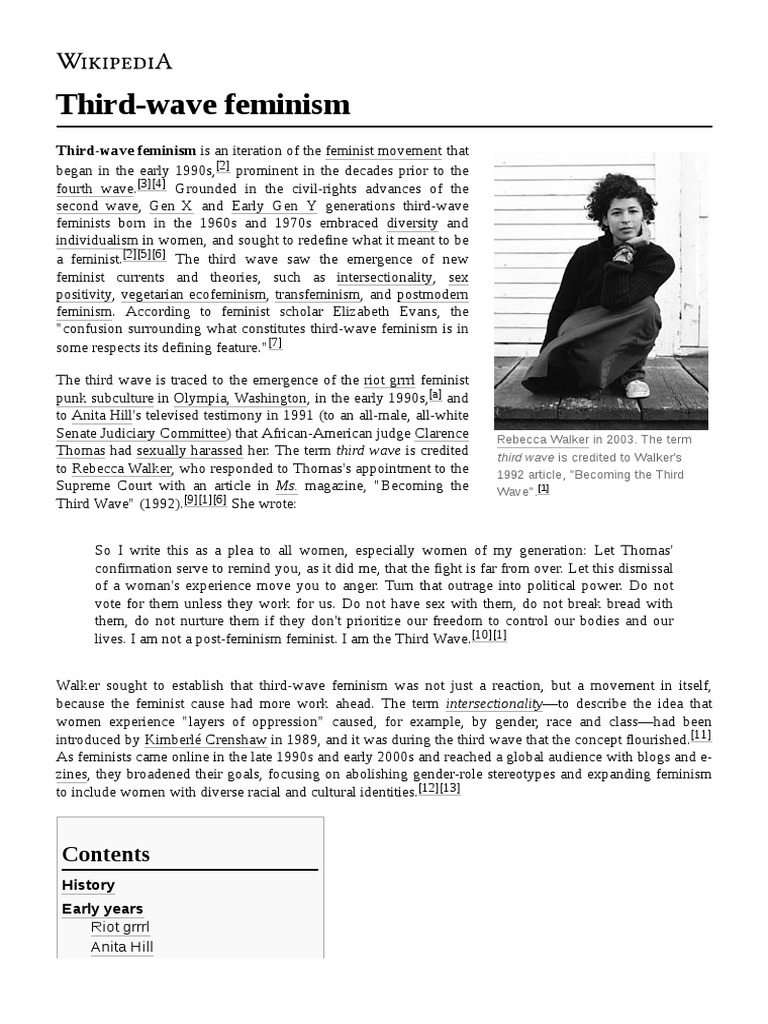
Intersectional feminism, perhaps the most crucial and frequently misunderstood branch, recognizes that gender is not a singular, monolithic category. It acknowledges that women’s experiences are shaped by a complex interplay of factors, including race, class, sexual orientation, disability, and immigration status. This perspective challenges the notion of a universal “woman’s experience” and emphasizes the importance of understanding and addressing the unique challenges faced by women who experience multiple forms of oppression. It is a rejection of the “one-size-fits-all” approach, demanding a nuanced and inclusive understanding of gender inequality.
A. Core Tenets: Multiple, Interlocking Oppressions
The core tenet of intersectional feminism is that women experience oppression in unique and complex ways depending on their social identities. A Black woman, for example, faces both racism and sexism, and her experiences of oppression are distinct from those of a white woman or a Black man. Intersectional feminism recognizes that these forms of oppression are not additive, but rather interact and reinforce one another, creating unique forms of disadvantage.
B. Praxis: Amplifying Marginalized Voices
Intersectional feminism emphasizes the importance of amplifying the voices of marginalized women and centering their experiences in feminist discourse. This involves actively seeking out and listening to the perspectives of women of color, LGBTQ+ women, disabled women, and other marginalized groups. It also involves challenging dominant narratives that erase or marginalize these experiences. The goal is to create a more inclusive and equitable feminist movement that addresses the needs of all women.
C. Criticisms: Fragmentation and Identity Politics?
Intersectional feminism has faced criticism for its perceived fragmentation of the feminist movement. Critics argue that its emphasis on identity politics can lead to division and conflict, making it difficult to build a unified movement for change. Furthermore, some critics argue that intersectional feminism can become overly focused on individual experiences, neglecting the importance of collective action and systemic change. However, proponents of intersectional feminism argue that acknowledging the complexity of women’s experiences is essential for building a truly inclusive and effective movement.
V. Conclusion: A Kaleidoscope of Perspectives
Feminism is not a fixed dogma but a dynamic and ever-evolving conversation. Each branch offers a unique lens through which to examine gender inequality and propose solutions. Understanding the nuances of liberal, radical, socialist, and intersectional feminism is crucial for engaging in meaningful dialogue and building a more just and equitable world. Embrace the complexity, challenge your assumptions, and recognize that the fight for gender equality is a multifaceted endeavor that requires a diverse range of perspectives and approaches. Only through a critical and inclusive engagement with these varying strands can we hope to weave a future free from patriarchal shackles.






Leave a Comment