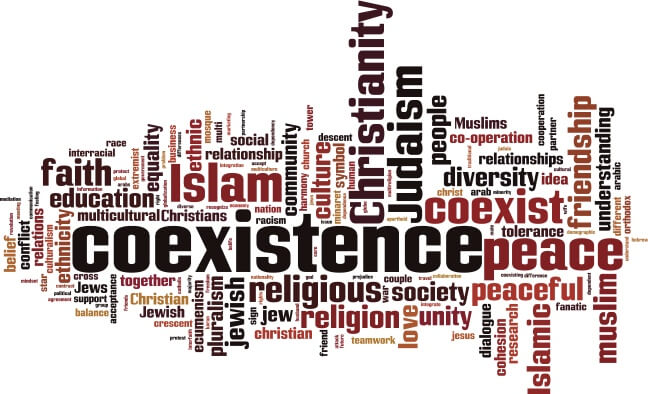
The sacred and the secular. Often, they’re presented as warring factions, eternally locked in a zero-sum game. But what happens when we dare to imagine a synthesis? When we pry open the ossified dogma and unearth the radical, world-altering potential nestled within the world’s diverse faiths? Today, let’s delve into a potent, often-overlooked force: feminism fueled by religion. This isn’t about meekly accepting the status quo draped in pious platitudes. This is about wielding faith as a crowbar to dismantle patriarchal structures, brick by insidious brick.
The notion itself might seem paradoxical, a clash of irreconcilable opposites. After all, organized religion, throughout history, has often served as a powerful tool for subjugating women, enshrining their second-class status in divine pronouncements and immutable traditions. The very language used to describe the divine – “He,” “Father,” “King” – reinforces a patriarchal worldview. But to dismiss religion as inherently anti-feminist is to fall into a dangerous trap, to concede the entire terrain to those who would weaponize it against us.
Instead, let’s excavate the heretical heart of each faith, the revolutionary potential that lies dormant within its sacred texts and traditions. We must seek the narratives of female empowerment, the instances where women defied societal norms and claimed their agency, the interpretations that prioritize justice, compassion, and equality. We must become theological spelunkers, venturing into the deepest caverns of religious thought to unearth the shimmering veins of feminist possibility.
I. Abrahamic Faiths: Reclaiming Eve’s Agency and Decoding the Divine Feminine
Consider the Abrahamic faiths – Judaism, Christianity, and Islam. These religions, often criticized for their patriarchal leanings, also contain within them the seeds of their own feminist revolution. In Judaism, we can reclaim the figure of Lilith, traditionally demonized as Adam’s rebellious first wife. Lilith, who refused to submit to Adam’s dominance, can be reimagined as a symbol of female autonomy and resistance against patriarchal control. Her story, though marginalized, offers a powerful counter-narrative to the submissive Eve.
Furthermore, Kabbalah, Jewish mysticism, offers intriguing perspectives on the Divine Feminine, the Shekhinah. The Shekhinah is the immanent presence of God, the feminine aspect of the divine that dwells within the world. By emphasizing the Shekhinah, Kabbalah challenges the exclusively male portrayal of God and invites us to recognize the feminine principle as an integral part of the divine whole. This shifts the paradigm, allowing for a more balanced and inclusive understanding of the divine.
Christianity, too, can be reinterpreted through a feminist lens. The figure of Mary Magdalene, often portrayed as a repentant sinner, can be reclaimed as a key disciple of Jesus, perhaps even his closest confidante. This re-evaluation of Mary Magdalene challenges traditional interpretations of her role and highlights the importance of female leadership within the early Christian community. Furthermore, liberation theology, originating in Latin America, emphasizes social justice and the preferential option for the poor, principles that resonate deeply with feminist concerns about economic inequality and systemic oppression.
In Islam, the Quran itself offers surprising avenues for feminist interpretation. While traditional interpretations often emphasize male authority, feminist scholars argue that the Quran actually grants women significant rights and protections. For example, the Quran allows women to own property, inherit wealth, and enter into contracts independently of their husbands. Islamic feminism seeks to reclaim these rights and challenge patriarchal interpretations that have historically limited women’s opportunities. The concept of *ijtihad*, independent reasoning and interpretation of Islamic law, is crucial in this endeavor. It allows Muslim feminists to re-examine traditional interpretations and develop new understandings that are more aligned with principles of gender equality.
II. Eastern Religions: Shakti, Dharma, and the Path to Liberation
Moving eastward, we encounter religions with rich traditions of female deities and spiritual practices that can be empowering for women. Hinduism, with its vast pantheon of gods and goddesses, offers a particularly compelling example. The concept of Shakti, the divine feminine energy, is central to Hindu cosmology. Shakti is the dynamic, creative force that animates the universe, and she is embodied in goddesses like Durga, Kali, and Lakshmi. These goddesses represent different aspects of female power, from fierce protection to nurturing abundance.
Durga, for instance, is often depicted riding a lion and wielding multiple weapons, symbolizing her ability to overcome evil and protect her devotees. Kali, with her wild hair and garland of skulls, represents the destructive and transformative aspects of the divine feminine. Lakshmi, the goddess of wealth and prosperity, embodies abundance and generosity. By venerating these goddesses, Hindu women can connect with their own inner strength and cultivate a sense of empowerment.
Buddhism, while often perceived as gender-neutral, also offers pathways to feminist awakening. The concept of *sunyata*, emptiness, challenges fixed identities and allows for a more fluid understanding of gender. Buddhist teachings on compassion and mindfulness can be applied to address issues of gender inequality and promote healing from trauma. Furthermore, the stories of female Buddhas and bodhisattvas provide inspiring examples of women achieving enlightenment and liberating themselves from suffering.
The concept of *dharma*, righteous conduct, in both Hinduism and Buddhism can be interpreted through a feminist lens. Feminist ethicists argue that dharma requires us to challenge injustice and promote equality for all beings, regardless of gender. This means actively working to dismantle patriarchal structures and create a more just and compassionate world.
III. Indigenous Spiritualities: Honoring Mother Earth and the Wisdom of Elders
Indigenous spiritualities around the world often place a strong emphasis on the sacredness of nature and the interconnectedness of all living beings. Mother Earth is revered as a nurturing and life-giving force, and women are often seen as her representatives on earth. Indigenous cultures often have strong traditions of female leadership and respect for the wisdom of elders, both male and female.
The concept of “two-spirit” individuals, found in many Native American cultures, challenges the binary understanding of gender and embraces the fluidity of identity. Two-spirit people are often respected for their unique gifts and abilities, and they play important roles in their communities. This acceptance of gender diversity is a testament to the inclusive and holistic worldview of many indigenous cultures.
Environmental justice is also a key concern for indigenous feminists. They recognize that the exploitation of the earth and the oppression of women are interconnected. They advocate for sustainable practices and the protection of sacred sites, recognizing that the well-being of women and the planet are inextricably linked.
IV. Challenges and Criticisms: Navigating the Minefield of Patriarchy
It’s crucial to acknowledge the challenges and criticisms that inevitably arise when attempting to reconcile feminism with religion. The path is fraught with peril, a veritable minefield of patriarchal interpretations and entrenched power structures. Some critics argue that any attempt to “feminize” religion is ultimately futile, that the inherent patriarchal biases are too deeply ingrained to be overcome. Others worry that such efforts may inadvertently legitimize oppressive religious practices and dilute the radical potential of feminism.
These concerns are valid and must be addressed with critical awareness. We must be vigilant against co-optation and ensure that our efforts are truly aimed at dismantling patriarchal structures, not merely reinforcing them. We must be willing to challenge traditional interpretations, even if it means facing opposition from religious authorities.
Furthermore, we must be mindful of the diversity of religious experiences and avoid making sweeping generalizations. The lived realities of women within different religious communities vary widely, and we must respect their individual experiences and perspectives. Intersectionality is crucial here. We must acknowledge that gender intersects with race, class, sexual orientation, and other identities to shape women’s experiences in complex and multifaceted ways.
V. The Unique Appeal of Feminist Theology: A Bridge Between Worlds
Despite these challenges, feminist theology offers a unique and powerful appeal. For many women, religion provides a sense of community, meaning, and purpose. Feminist theology allows them to integrate their faith with their commitment to gender equality, creating a holistic and empowering worldview. It provides a language and a framework for articulating their experiences of oppression and for envisioning a more just and equitable world.
Moreover, feminist theology can serve as a bridge between the secular and the sacred, fostering dialogue and understanding between different communities. By engaging in constructive criticism and offering alternative interpretations, feminist theologians can challenge the status quo and inspire positive change from within religious institutions.
Feminism by religion is not about blindly accepting dogma or passively conforming to tradition. It is about actively challenging, reinterpreting, and transforming religious beliefs and practices to create a more just and equitable world for all. It is about reclaiming our agency, honoring our voices, and embracing the radical potential that lies dormant within the heart of every faith. It’s about recognizing that the divine spark resides within each of us, and that we have the power to create a world where all beings can thrive, regardless of gender. The revolution, it seems, might just be divinely inspired.






Leave a Comment