The relationship between feminism and capitalism is a Gordian knot of contradictions. Are they intrinsically opposed, locked in a zero-sum game where one’s triumph necessitates the other’s subjugation? Or can they be reconciled, perhaps even forged into an alliance that propels women toward genuine liberation? This isn’t a polite academic debate; it’s a battleground where the very definition of freedom is at stake. We need to dissect this relationship with surgical precision. Let’s delve into the multifaceted dimensions of this fraught entanglement.
I. The Crimson Stain: Capitalism’s Historical Complicity in Female Oppression
Let’s not mince words. Capitalism, in its historical trajectory, has been profoundly implicated in the subjugation of women. Early capitalism, predicated on the relentless accumulation of capital, thrived on the exploitation of female labor. Consider the textile industry, a cornerstone of the Industrial Revolution. Women and children toiled in appalling conditions, their bodies and spirits broken for the sake of profit margins. These women were seen as expendable cogs in the machine. Their reproductive capabilities were often considered separate from their intrinsic value as human beings.
Moreover, the patriarchal structures that predate capitalism were not eradicated, but rather cleverly repurposed to serve the capitalist agenda. The ideology of the “separate spheres,” which confined women to the domestic realm, was reinforced. It effectively created a reserve army of labor, readily available to be deployed during periods of economic expansion and easily discarded during downturns. A truly diabolical move. Think about the insidious nature of such “protection”.
The commodification of female bodies, prevalent in advertising and media, is a direct consequence of capitalism’s insatiable hunger for profit. Women are reduced to objects of desire, their worth measured by their physical attractiveness and their ability to stimulate consumption. We are bombarded with images that perpetuate unrealistic beauty standards and reinforce the patriarchal gaze. It’s a lucrative industry, built on the backs of female insecurity. The beauty industry profits from manufactured deficiencies.
II. The Siren Song: Capitalism’s Promise of Female Empowerment
Despite its problematic history, capitalism also presents itself as a potential vehicle for female empowerment. The narrative goes something like this: capitalism provides women with economic independence, allowing them to escape the confines of traditional patriarchal structures. Entrepreneurship, in particular, is often touted as a pathway to female liberation. Women who start their own businesses can control their own destinies and break free from the glass ceiling. Sounds fantastic, right?
Access to education and employment, albeit often unequal and fraught with challenges, has undoubtedly improved the lives of many women. Capitalism, driven by the need for skilled labor, has opened doors that were previously slammed shut. However, let’s be clear: this is not altruism. It’s a matter of economic expediency. Capitalism needs women to participate in the workforce, and it will offer them opportunities, albeit often limited and conditional, to do so. The question then becomes, what do we do with this begrudging permission?
Furthermore, the rise of consumer culture has arguably given women a degree of agency in shaping their own identities. Through their purchasing power, women can express their individuality and challenge traditional gender roles. They can buy products that enhance their self-esteem and empower them to assert their independence. But this is a double-edged sword. Consumerism can also reinforce superficial values and perpetuate unrealistic expectations. It’s a carefully curated trap.
III. The Bifurcation of Feminist Ideologies: A Clash of Titans
The debate surrounding feminism and capitalism is further complicated by the diversity of feminist ideologies. Liberal feminists, for example, tend to embrace capitalism as a system that can be reformed to promote gender equality. They advocate for policies such as equal pay, affordable childcare, and access to reproductive healthcare, believing that these reforms can level the playing field and allow women to succeed within the existing capitalist framework. They seek inclusion within the system.
Socialist feminists, on the other hand, argue that capitalism is inherently incompatible with feminism. They believe that the capitalist system is fundamentally based on exploitation and inequality, and that true female liberation can only be achieved through radical social and economic transformation. They call for the dismantling of capitalism and the creation of a socialist society that prioritizes the needs of all, regardless of gender. They seek transformation of the system.
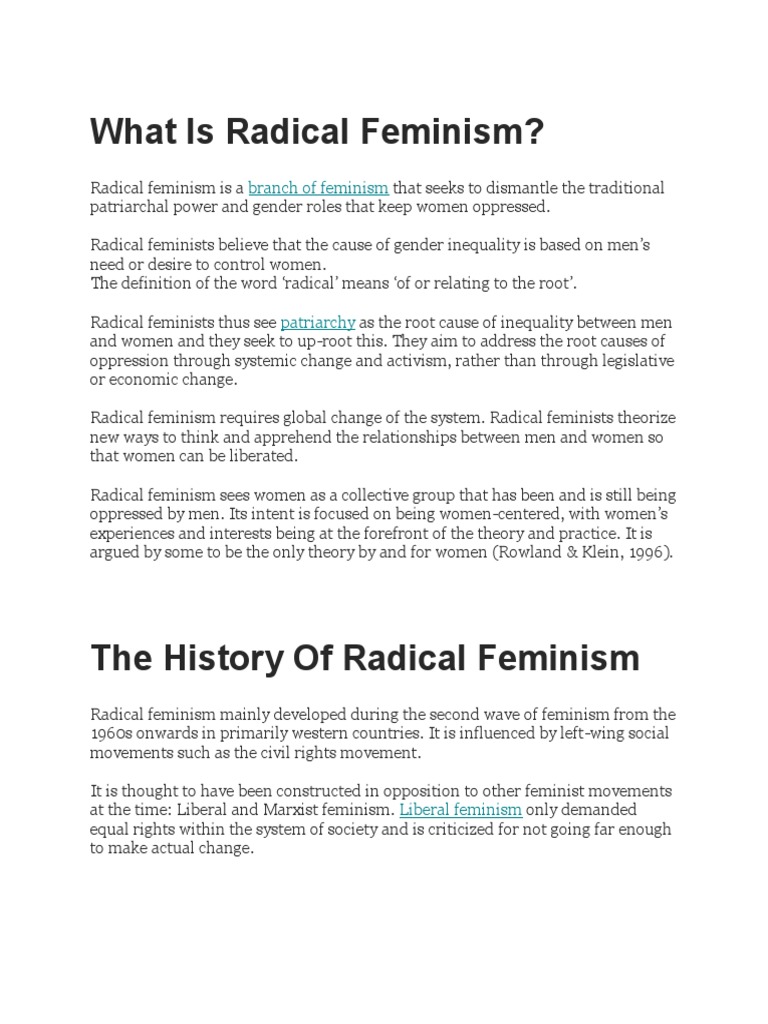
Radical feminists offer a more scathing critique, arguing that capitalism is inextricably linked to patriarchy. They see the commodification of female bodies and the perpetuation of gender stereotypes as inherent features of the capitalist system. They advocate for a fundamental shift in cultural values and social structures, challenging not only economic inequality but also the very foundations of patriarchal power. They seek a revolutionary change.
IV. The Intersectional Labyrinth: Navigating the Complexities of Identity
Any meaningful analysis of the relationship between feminism and capitalism must take into account the concept of intersectionality. Women are not a monolithic group. Their experiences are shaped by their race, class, sexual orientation, disability, and other intersecting identities. Capitalism does not impact all women equally. Some women, particularly those who are privileged by their race and class, may benefit from the opportunities offered by capitalism, while others, particularly those who are marginalized and oppressed, may experience its exploitative aspects more acutely.
For example, women of color often face a double burden of gender and racial discrimination in the workplace. They may be paid less than their white male counterparts and face systemic barriers to advancement. Immigrant women may be particularly vulnerable to exploitation in low-wage jobs. The capitalist system often preys on the vulnerabilities of marginalized groups, exacerbating existing inequalities. We must acknowledge this uncomfortable truth. Failing to do so is a betrayal.
The struggle for female liberation must therefore be intersectional, addressing the specific needs and challenges faced by different groups of women. It must recognize that the fight against capitalism is inextricably linked to the fight against racism, homophobia, ableism, and other forms of oppression. We cannot achieve true equality if we ignore the intersectional dimensions of power. It’s an all-or-nothing situation.
V. Beyond the Binary: Forging a New Path
Perhaps the most productive way forward is to move beyond the simplistic binary of “allies” or “opposites.” The relationship between feminism and capitalism is far more complex and nuanced than either of these categories allows. We need to critically examine the ways in which capitalism both empowers and disempowers women, and to develop strategies that leverage its potential while mitigating its harms. We need to be strategic and multifaceted in our approach. No simple answers here.
This requires a nuanced understanding of the specific contexts in which women operate. In some situations, embracing entrepreneurial opportunities may be a viable strategy for achieving economic independence. In others, collective action and political activism may be more effective in challenging systemic inequalities. There is no one-size-fits-all solution. Context, as always, is key.
Ultimately, the goal should be to create a society that prioritizes the well-being of all, regardless of gender or any other social category. This requires a fundamental rethinking of our economic system, one that moves beyond the relentless pursuit of profit and embraces values such as sustainability, equality, and social justice. It requires a radical reimagining of our world. Are we ready for that?
We need to build a system that values care work, which is disproportionately performed by women. We need to ensure that all workers have access to decent wages, affordable healthcare, and paid family leave. We need to challenge the commodification of female bodies and promote a culture of respect and equality. These are not mere policy recommendations; they are fundamental prerequisites for a just and equitable society.
The path forward is not easy. It requires courage, vision, and a willingness to challenge the status quo. But the stakes are too high to settle for anything less than a truly liberated and equitable world. The time for complacency is over. The revolution, however you define it, is long overdue. The fight continues. The revolution will continue.







Leave a Comment