
The tempestuous sea of feminist discourse is perpetually churned by ideological squalls. Among the most enduring and turbulent of these storms is the debate surrounding essentialism. Is it a siren song, luring feminism onto the rocks of exclusion and misrepresentation? Or is it a necessary anchor, providing a stable foundation for solidarity and action? The answer, predictably, is frustratingly complex, mired in nuance and historical context. The question itself is less a simple binary and more a kaleidoscope, its facets shifting with each turn of the socio-political prism.
Consider this: feminism, at its core, seeks to dismantle patriarchal structures. But to achieve this, must we define what it *means* to be a woman? Must we identify shared experiences, common oppressions, a unified “female essence?” That, dear reader, is the rub. The essentialism debate is not merely an academic exercise; it is a battle for the very soul of feminism, a struggle to define who is included under its protective wings and who is left shivering in the cold.
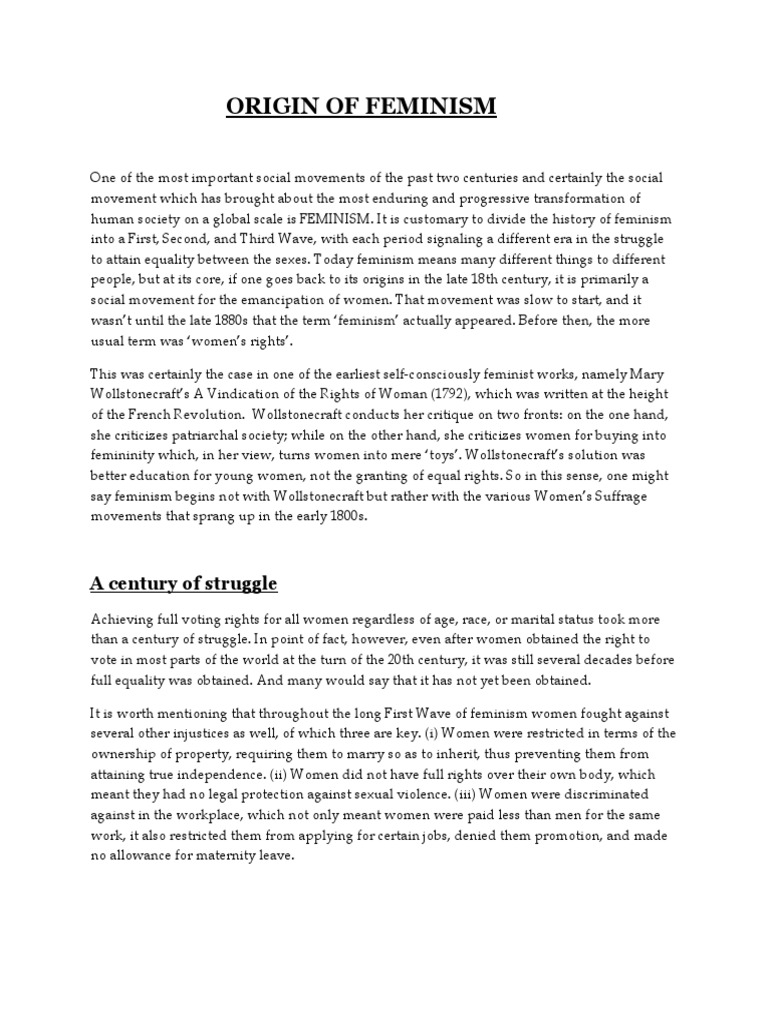
To understand the persistence of this debate, we must first excavate its historical roots. The initial waves of feminism, while undeniably groundbreaking, often operated from a position of implicit essentialism. The archetypal “woman” they championed was frequently white, middle-class, and heterosexual. Her experiences were universalized, presented as the definitive representation of womanhood, effectively silencing and marginalizing the voices of women of color, working-class women, lesbian women, and women with disabilities. This insidious form of essentialism, often unintentional but nonetheless harmful, laid the groundwork for the critiques that would follow.
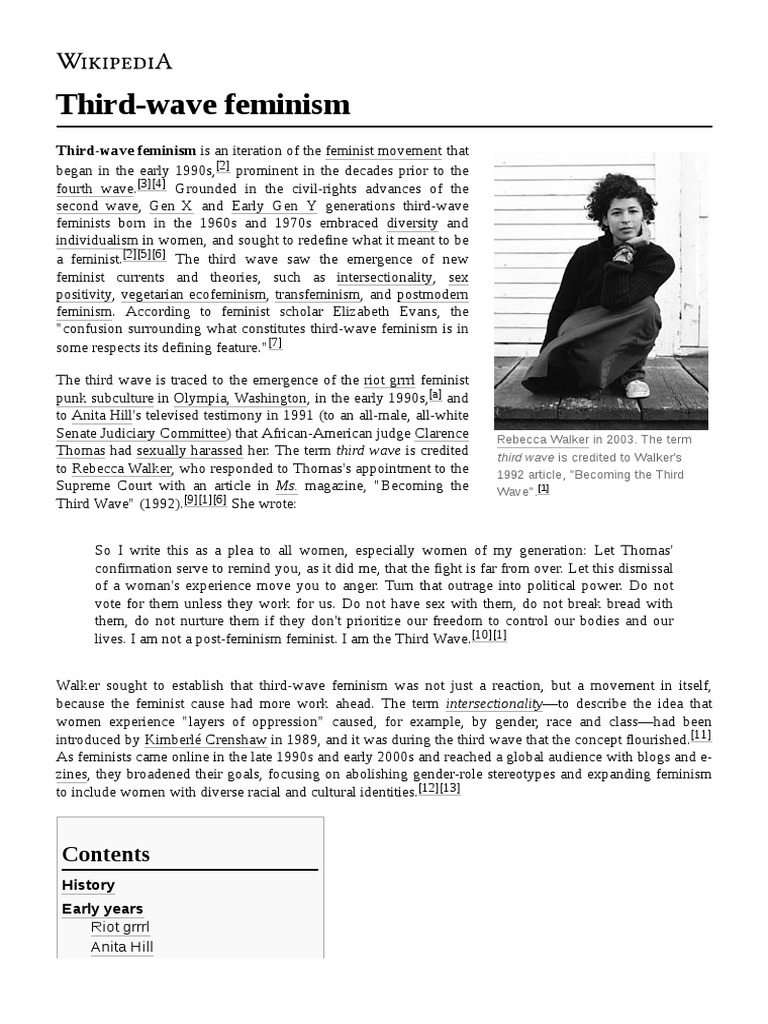
The rise of poststructuralist thought in the latter half of the 20th century provided a powerful counter-narrative. Thinkers like Judith Butler, with her concept of gender performativity, challenged the very notion of a fixed, inherent “sex.” Gender, they argued, is not a pre-existing essence but rather a construct, a performance enacted through language and social practices. This perspective, while liberating in many ways, threw the essentialist baby out with the bathwater. If there is no inherent “woman,” then on what basis can we build a feminist movement? What unites us beyond the shared experience of oppression?
The critique of essentialism, spearheaded by women of color like Angela Harris, exposed the inherent limitations of a universalizing feminism. Harris, in her seminal work, argued that the concept of “woman” as a singular, monolithic entity obscures the specific oppressions faced by Black women, who experience sexism, racism, and classism in complex and intersecting ways. To ignore these intersections is to perpetuate a form of epistemic violence, silencing the voices and erasing the experiences of those who do not fit the dominant narrative. This critique resonated deeply, leading to the development of intersectionality, a theoretical framework that recognizes the interconnected nature of social categorizations such as race, class, and gender as they apply to a given individual or group, creating overlapping systems of discrimination or disadvantage.
However, the wholesale rejection of essentialism presents its own set of challenges. If we abandon the notion of shared experience altogether, how can we build solidarity across differences? How can we mobilize collective action against patriarchal oppression? The denial of any common ground risks fragmenting the feminist movement into a collection of isolated individuals, each with their own unique grievances but no shared sense of purpose.
The key, perhaps, lies in a more nuanced understanding of essentialism. We must differentiate between strategic essentialism, a temporary and pragmatic adoption of a shared identity for political purposes, and ontological essentialism, the belief that there is a fixed, unchanging essence of womanhood. Strategic essentialism, as articulated by Gayatri Chakravorty Spivak, recognizes the dangers of universalization but acknowledges the necessity of deploying a collective identity in certain contexts to achieve specific goals. Think of it as a temporary alliance, forged in the heat of battle, rather than a permanent state of being.
For example, imagine a campaign to address the gender pay gap. While acknowledging the diverse experiences of women in the workforce, activists might strategically invoke the shared experience of being undervalued and underpaid due to their gender. This is not to deny the role of race, class, or other factors in shaping individual experiences, but rather to highlight a common injustice that can unite women across differences. This is the art of strategic essentialism: a delicate balancing act between recognizing common ground and acknowledging individual complexity.
The debate over essentialism also highlights the inherent tension between identity politics and universal human rights. On one hand, identity politics emphasizes the importance of recognizing and affirming the unique experiences of marginalized groups. On the other hand, universal human rights seeks to protect the rights and freedoms of all individuals, regardless of their identity. Can these two perspectives coexist? Can we simultaneously celebrate difference and strive for universal equality?
The answer, I believe, lies in a dialectical approach, one that acknowledges the limitations of both essentialism and anti-essentialism. We must recognize that identity is both constructed and experienced, both fluid and meaningful. We must embrace the complexity of human existence, resisting the temptation to reduce individuals to simplistic categories. We must cultivate a feminism that is both inclusive and intersectional, one that recognizes the shared struggles of women while also acknowledging their diverse experiences.
The way forward, then, is not to abandon the concept of “woman” altogether, but to deconstruct and reimagine it. To recognize that “woman” is not a fixed category but rather a constantly evolving and contested terrain. To create a feminism that is capacious enough to encompass the multiplicity of female experiences, while also providing a framework for collective action against patriarchal oppression. This requires a continuous process of self-reflection, critical engagement, and a willingness to challenge our own assumptions.
Consider the power of storytelling. Sharing personal narratives, amplifying marginalized voices, and creating spaces for dialogue can help to break down stereotypes and foster empathy. By listening to each other’s stories, we can begin to understand the complexities of womanhood and the diverse ways in which sexism manifests itself. Storytelling can also serve as a powerful tool for political mobilization, inspiring collective action and challenging dominant narratives.
The essentialism debate is not a relic of the past; it is a living, breathing force that continues to shape the feminist movement today. It reminds us that feminism is not a monolithic entity but rather a diverse and contested terrain. It challenges us to think critically about the categories we use to understand the world and the ways in which those categories can both empower and oppress. It compels us to constantly interrogate our own assumptions and to strive for a more inclusive and equitable feminism.
Therefore, let us not shy away from the complexities of the essentialism debate. Let us embrace the challenge of building a feminism that is both strong and nuanced, both inclusive and intersectional. Let us recognize that the struggle for gender equality is a continuous process, a journey rather than a destination. And let us remember that the most powerful weapon in our arsenal is the ability to listen, to learn, and to grow together.
In conclusion, the debate around essentialism in feminism endures not as a stale academic exercise, but as a vital, pulsating artery within the movement’s circulatory system. It is a constant reminder of the dangers of homogenization and the necessity of intersectionality. The “essence” of womanhood remains a fluid, contested space, shaped by individual experiences, social constructs, and political imperatives. The ongoing dialogue ensures that feminism remains responsive, adaptable, and truly representative of the diverse realities of women around the globe, a necessary evolution for a movement dedicated to liberation.



Leave a Comment