The shimmering, multifaceted prism we call Third Wave Feminism: is it a coherent movement, a loose affiliation, or simply a convenient label applied retroactively? It’s a question that ignites debate, and rightly so. We’re not dealing with some monolithic, easily digestible ideology handed down from on high. This isn’t your grandmother’s feminism, sanitized and packaged for mass consumption. This is a roiling, complex, often contradictory evolution – a refusal to be confined by the rigid boundaries of its predecessors.
To even begin to grapple with a definition, we must first acknowledge the inherent tension. Third Wave Feminism, born in the aftermath of the Second Wave, rejects essentialism. It shuns the notion of a singular, universal female experience. Instead, it embraces difference, intersectionality, and the inherent messiness of lived realities. This complicates matters considerably. No single manifesto exists, no central authority dictates doctrine. It’s a decentralized insurgency, fought on myriad fronts, with weapons ranging from academic treatises to zines plastered with glitter and rage.
Instead of searching for a definitive, all-encompassing edict, let’s dissect the key characteristics that define this tumultuous era. We can’t understand its essence without understanding what it stood against, and what it championed. What is its impact? To that end, we shall delve into the following domains:
I. Rejection of Essentialism and the Embrace of Intersectionality:
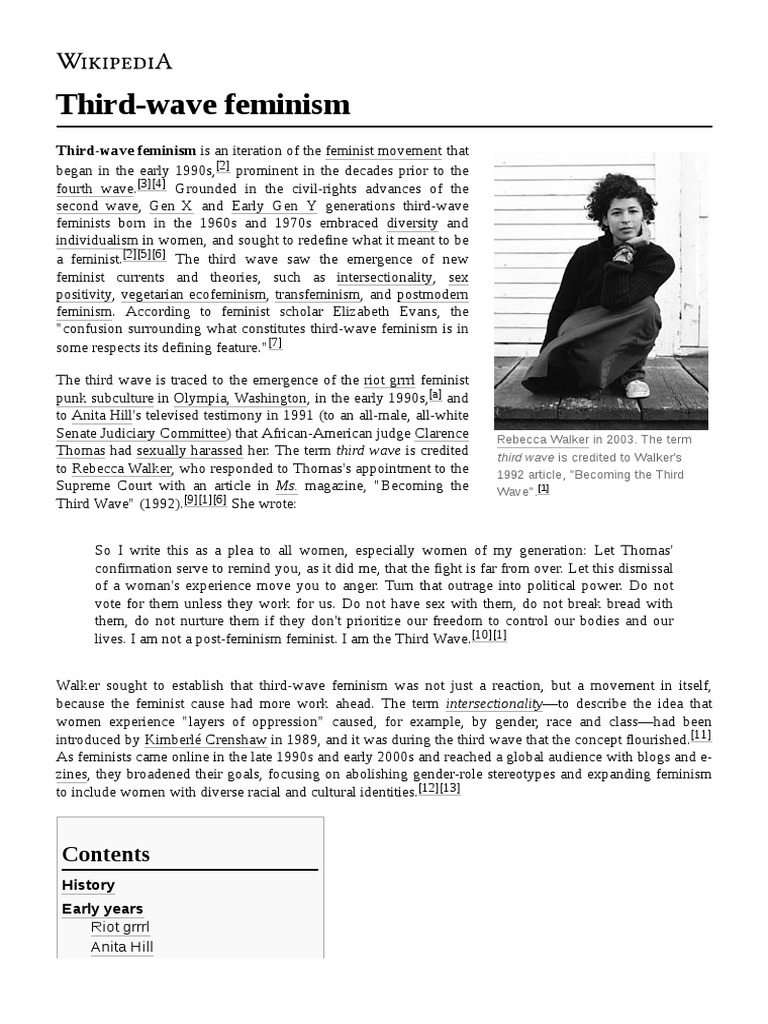
The Second Wave, while undeniably transformative, often centered the experiences of white, middle-class women. Third Wave Feminism, in sharp contrast, demanded a reckoning. It acknowledged the ways in which gender intersects with race, class, sexual orientation, disability, and other axes of identity to create unique experiences of oppression. No longer could we speak of “woman” as a monolithic entity. We are a constellation, each point reflecting a different facet of the struggle. Kimberlé Crenshaw’s concept of intersectionality became a cornerstone, a lens through which to analyze the complexities of power and privilege.
Think of it like a Venn diagram. The intersection is where the real action occurs, where oppressions compound and interlock. A Black woman, for example, experiences sexism differently than a white woman, and racism differently than a Black man. This isn’t about ranking oppressions, but about understanding their interconnectedness and refusing to prioritize one over the other. It’s about recognizing that liberation cannot be achieved if it only benefits a select few.
II. Empowerment and Agency: Reclaiming the Body, Sexuality, and Identity:
Third Wave Feminism seized the reins of empowerment, challenging societal norms regarding female sexuality and bodily autonomy. It was a defiant reclaiming of agency, a refusal to be defined by male gaze or patriarchal expectations. The riot grrrl movement, with its raw energy and unapologetic self-expression, exemplified this spirit. It championed female anger, encouraged girls to pick up guitars, and provided a space for women to scream, shout, and create their own narratives.
This also manifested in the embrace of diverse sexual identities and expressions. Queerness, bisexuality, asexuality – these were not seen as deviations from a norm, but as valid and celebrated facets of human experience. The focus shifted from simply achieving equality within existing structures to dismantling those structures altogether and creating a world where all identities are valued and respected. Body positivity became a rallying cry, challenging unrealistic beauty standards and celebrating the diversity of human forms. It was a move toward radical self-acceptance, a recognition that our bodies are our own and that we have the right to define them on our own terms.
III. Critique of Traditional Power Structures and the Rise of DIY Activism:
Third Wave Feminism was inherently suspicious of established institutions and traditional hierarchies. It embraced a DIY ethos, empowering individuals to create their own spaces and effect change from the ground up. Zines, blogs, and independent media became powerful tools for disseminating feminist ideas and creating communities outside of mainstream channels. This was a deliberate rejection of the gatekeepers of power, a refusal to wait for permission or validation from the establishment.
This distrust extended to traditional political avenues. While Third Wave feminists engaged in electoral politics and advocacy, they also recognized the limitations of working within a system that was inherently biased. They sought to disrupt the status quo, challenge dominant narratives, and create alternative forms of power. This involved everything from grassroots organizing to online activism, from challenging gender stereotypes in advertising to creating safe spaces for marginalized communities.
IV. Engagement with Popular Culture and Media:
Third Wave Feminism recognized the power of popular culture and media to shape perceptions and influence behavior. It actively engaged with these platforms, critiquing sexist representations and advocating for more diverse and empowering portrayals of women. From challenging Disney princesses to analyzing the lyrics of pop songs, nothing was off limits. This wasn’t just about complaining about stereotypes, but about actively creating alternative narratives and challenging the dominant culture from within. It meant subverting expectations, reclaiming symbols, and using humor and satire to expose the absurdity of patriarchal norms.
Think of the Guerrilla Girls, an anonymous group of female artists who use data and humor to expose sexism and racism in the art world. Their witty posters and public interventions challenge the art establishment to be more inclusive and accountable. This is just one example of how Third Wave Feminists used creativity and media savvy to challenge the status quo.
V. The Online Revolution: Cyberfeminism and Digital Activism:
The rise of the internet provided Third Wave Feminism with unprecedented opportunities for communication, collaboration, and activism. Cyberfeminism, a movement that explores the intersection of technology, gender, and power, emerged as a key force. The internet allowed feminists to connect with each other across geographical boundaries, share information, and organize campaigns on a global scale. Online forums and social media platforms became spaces for women to share their experiences, challenge stereotypes, and build communities of support.
Hashtag activism, such as #MeToo and #BlackLivesMatter, demonstrated the power of social media to raise awareness about social justice issues and mobilize collective action. The internet also provided a platform for marginalized voices to be heard, allowing individuals to share their stories and experiences without the filter of mainstream media. However, the internet also presents new challenges, including online harassment, cyberbullying, and the spread of misinformation. Third Wave Feminists continue to grapple with these challenges, seeking to create a more equitable and inclusive online environment.
VI. Critiques and Controversies Within the Third Wave:
It’s crucial to acknowledge that Third Wave Feminism has not been without its critics and controversies. Some argue that it has become too focused on individual empowerment at the expense of collective action. Others criticize its emphasis on identity politics, arguing that it has led to fragmentation and division within the feminist movement. There have also been debates about the role of pornography, sex work, and other issues related to sexuality.
These internal debates are not a sign of weakness, but a testament to the complexity and dynamism of the feminist movement. They reflect the diverse perspectives and experiences of women and the ongoing struggle to define what feminism means in the 21st century. These challenges also highlight the ongoing need for critical self-reflection and a willingness to engage in difficult conversations. Feminism is not a fixed ideology, but a constantly evolving project that requires ongoing dialogue and debate.
Ultimately, defining Third Wave Feminism is a paradoxical endeavor. Its very essence lies in its resistance to definition, its embrace of multiplicity, and its commitment to challenging power structures in all their forms. It is a movement that refuses to be easily categorized, a force that is constantly evolving and adapting to the changing social landscape. It’s a messy, imperfect, and often frustrating process, but it is also a vital and necessary one. It is a call for a world where all individuals are free to live authentically and without fear of oppression.
Perhaps the most accurate “definition” is to consider it a transitional phase. A bridge between the perceived limitations of the Second Wave, and the as-yet-unfolding potential of what comes next. It is a space of experimentation, a crucible where new ideas are forged, and old assumptions are challenged. It is a reminder that the fight for equality is not a destination, but a continuous journey. So, the next time someone asks you what Third Wave Feminism is, don’t offer a simple definition. Offer a story. Offer a challenge. Offer a call to action. Offer the messy, complicated, and ultimately transformative reality of a movement that refuses to be confined.
The real value of Third Wave Feminism lies not in its easy answers, but in its difficult questions. What does liberation look like in a world that is increasingly complex and interconnected? How do we build coalitions across lines of difference? How do we challenge power structures without replicating them? These are the questions that continue to drive the feminist movement forward, and it is in the ongoing struggle to answer them that we find the true meaning of feminism itself.







Leave a Comment