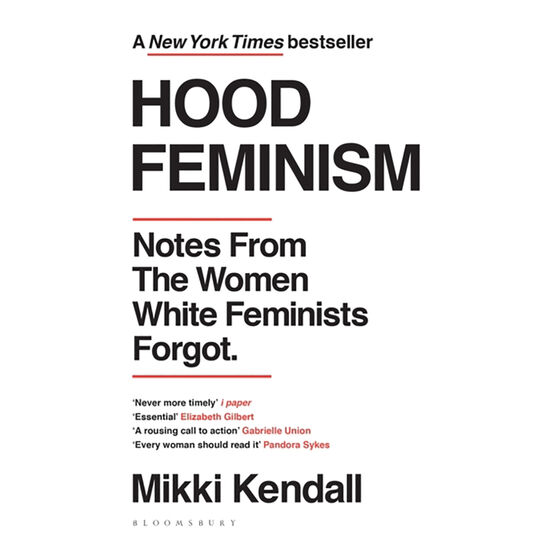
So, you fancy yourself a feminist, darling? Sporting that “Nevertheless, She Persisted” t-shirt, retweeting Gloria Steinem quotes, and patting yourselves on the back for smashing that oh-so-fragile patriarchy? Let’s talk. Let’s dissect this performance, this curated image of woke-ness, and delve into the uncomfortable truth: you’re likely borrowing, appropriating, and ultimately, diluting the very essence of the feminism you claim to champion.
We’re talking about *Hood Feminism*. The raw, unfiltered, unapologetic voice emanating from the margins, from the experiences of Black women, Indigenous women, women of color, whose realities are often footnotes in your polished, palatable, and profoundly privileged feminist narratives.
This isn’t a game. This isn’t a trend. This is a reckoning. A call to examine the scaffolding of your feminism, to see if it’s built on a foundation of genuine solidarity or simply the pilfered bricks of marginalized experience.
Get ready. We’re diving deep.
I. The Illusion of Inclusivity: When “All Women” Really Means *Some* Women
The rallying cry of “all women” is a seductive siren song, isn’t it? It sounds so unifying, so…egalitarian. But scratch the surface, and you’ll find that this seemingly inclusive phrase often functions as a smokescreen, obscuring the glaring disparities within the sisterhood.
Think about it. When you talk about the wage gap, are you factoring in the compounded effect of racial discrimination that disproportionately impacts women of color? Are you acknowledging that Black women, for instance, often face both sexism and racism in the workplace, resulting in a significantly wider chasm between their earnings and those of their white male counterparts? Probably not. The devil, as always, is in the intersectionality.
The same holds true for conversations surrounding reproductive rights. Access to abortion, while undeniably crucial, is not the sole determinant of reproductive justice. What about the systemic barriers that prevent women of color from accessing quality prenatal care, leading to higher rates of infant mortality? What about the historical context of forced sterilization and medical experimentation that has deeply eroded trust within the medical establishment? The discourse needs nuance.
These are not abstract hypotheticals. They are lived realities. And by failing to acknowledge these nuances, by collapsing the complexities of marginalized experiences into a monolithic “women’s issue,” you are perpetuating the very system of oppression you claim to dismantle. The erasure is palpable.
II. The Commodification of Trauma: Turning Pain into Profit
The age of performative allyship is upon us, and its most insidious manifestation is the commodification of trauma. Suddenly, everyone is eager to showcase their empathy, to signal their solidarity by amplifying the voices of the marginalized. But at what cost?
Think about the endless stream of think pieces, documentaries, and social media campaigns that center around the pain and suffering of marginalized communities. While these narratives can be powerful tools for raising awareness, they often run the risk of reducing individuals to their trauma, of turning their experiences into spectacles for consumption.
Furthermore, who profits from this commodification? All too often, it’s the same privileged individuals who have historically benefited from the marginalization of these communities. They write the articles, direct the documentaries, and curate the campaigns, reaping the accolades and financial rewards while the very people whose stories they are telling remain on the periphery.
The ethical implications are staggering. Are you truly amplifying marginalized voices, or are you simply leveraging their pain for your own personal gain? Are you creating space for genuine dialogue and empowerment, or are you simply perpetuating a cycle of exploitation? You need to seriously reflect.
III. The Fetishization of Authenticity: Demanding “Realness” on Your Terms
The quest for authenticity is a hallmark of contemporary culture, but when applied to marginalized communities, it can take on a particularly insidious form. Suddenly, these individuals are expected to perform their identities, to embody a certain brand of “realness” that conforms to the expectations and desires of the dominant culture.
This fetishization of authenticity often manifests as a demand for raw, unfiltered narratives of pain and suffering. Marginalized individuals are expected to bare their souls, to expose their vulnerabilities, all in the name of educating and enlightening the privileged masses. But what happens when they deviate from this script? What happens when they express joy, resilience, or even anger? They are often dismissed as inauthentic, as failing to live up to the expectations of their assigned role.
The irony is breathtaking. Marginalized individuals are simultaneously expected to be both representative of their entire community and uniquely authentic. They are expected to be both victims and survivors. They are expected to be both angry and grateful. It’s a dizzying, impossible balancing act.
The solution? Let go of your preconceived notions of what “authenticity” should look like. Allow marginalized individuals to define themselves on their own terms. Respect their boundaries. And most importantly, listen without judgment.
IV. The Erasure of Agency: Treating Marginalized Individuals as Passive Victims
One of the most damaging consequences of borrowing Hood Feminism is the erasure of agency. Marginalized individuals are often portrayed as passive victims, as helpless recipients of oppression, stripped of their power and autonomy.
This narrative is not only inaccurate, but it is also profoundly disempowering. It reinforces the idea that marginalized individuals are incapable of shaping their own destinies, that their only hope lies in the benevolence of their privileged saviors.
The truth is far more complex. Marginalized communities have a long and rich history of resistance, resilience, and self-determination. They have developed their own strategies for survival, their own systems of support, and their own visions for the future.
It’s time to shift the focus from victimhood to agency. Instead of pitying marginalized individuals, let’s celebrate their strength, their ingenuity, and their unwavering commitment to justice. Let’s amplify their voices, support their initiatives, and empower them to lead the way.
V. The Danger of Saviorism: The Unsolicited Hero Complex
Ah, the savior complex. A potent cocktail of good intentions and unchecked ego, it compels individuals to swoop in and “rescue” marginalized communities from their perceived plight.
The problem with saviorism is that it is inherently paternalistic. It assumes that marginalized individuals are incapable of solving their own problems, that they need the guidance and intervention of their privileged benefactors.
This assumption is not only insulting, but it is also often counterproductive. Saviorism can undermine local initiatives, stifle grassroots movements, and ultimately perpetuate the very systems of oppression it claims to dismantle. There is a fine line between allyship and unsolicited intervention, and crossing it can have devastating consequences.
The key is to listen to the needs and priorities of the communities you are trying to support. Ask them what they need, how you can help, and then step back and let them lead the way. Remember, allyship is about solidarity, not self-aggrandizement.
VI. The Co-opting of Language: Watering Down Radical Concepts
Words matter. They shape our understanding of the world, influence our actions, and ultimately determine the course of history. That’s why the co-opting of language is such a dangerous tactic.
When radical concepts like “intersectionality,” “privilege,” and “microaggression” are adopted by the mainstream, they often undergo a process of sanitization and dilution. Their original meaning is watered down, their edges are softened, and their revolutionary potential is neutralized.
Suddenly, “intersectionality” becomes a buzzword, “privilege” becomes a personal attack, and “microaggression” becomes a trivial offense. The very terms that were once used to challenge power structures are now being used to reinforce them.
We must resist this co-opting of language. We must reclaim our words, defend their integrity, and use them to continue challenging the status quo. We must refuse to allow our ideas to be commodified, diluted, or used against us.
VII. Beyond the Hashtag: Moving from Performative Activism to Meaningful Action
The age of social media has ushered in a new era of performative activism. It’s easy to post a hashtag, share a link, or retweet a quote, all in the name of signaling your solidarity. But is this enough?
The truth is that performative activism is often a substitute for meaningful action. It allows individuals to feel good about themselves without actually engaging in the hard work of social change.
True allyship requires more than just a social media presence. It requires a commitment to dismantling systems of oppression in your own life, in your own community, and in the world at large. It requires a willingness to challenge your own biases, to confront your own privilege, and to take concrete steps to create a more just and equitable society.
So, put down your phone, step away from your keyboard, and start doing the work. Volunteer your time, donate your money, and use your voice to advocate for change. And remember, activism is not a performance, it’s a practice.
VIII. The Constant Need for Education: Stop Asking Marginalized People to Do Your Homework
Want to know the definition of mansplaining? Try “whitesplaining” the nuances of racism to a Black woman. See, the internet is rife with information and resources on pretty much every social justice issue imaginable. Yet, time and again, marginalized people are expected to educate their privileged counterparts on the intricacies of their own oppression.
This is not only exhausting and frustrating, but it is also deeply unfair. It places the burden of education on the very people who are already burdened by systemic oppression.
It’s time to take responsibility for your own learning. Do your research, read the books, listen to the podcasts, and attend the workshops. And when you have questions, don’t ask marginalized people to do your homework. Seek out the resources that are already available.
IX. The Ignoring of Internal Community Dynamics: One Size Does Not Fit All
The assumption that all members of a particular marginalized group share the same experiences and perspectives is not only inaccurate, but it is also deeply harmful. Every community is diverse, with its own internal dynamics, its own points of contention, and its own unique voices.
By failing to acknowledge this internal complexity, you run the risk of silencing dissenting voices, of perpetuating harmful stereotypes, and of undermining the very community you are trying to support.
The key is to listen to a variety of voices within the community, to respect their differences, and to avoid making generalizations based on limited information.
X. The End Goal: True Solidarity, Not Tokenism
The goal of all this isn’t to make you feel guilty or ashamed. It’s to spark a genuine reevaluation of your feminist practice, to move beyond tokenistic gestures and embrace true solidarity.
True solidarity is about recognizing the interconnectedness of all forms of oppression, about understanding that our liberation is bound up with the liberation of others. It’s about using your privilege to amplify marginalized voices, to challenge power structures, and to create a more just and equitable world for all.
So, are you ready to dismantle the borrowed scaffolding of your feminism? Are you ready to embrace a more inclusive, intersectional, and ultimately, more powerful vision of liberation? The revolution awaits.






Leave a Comment