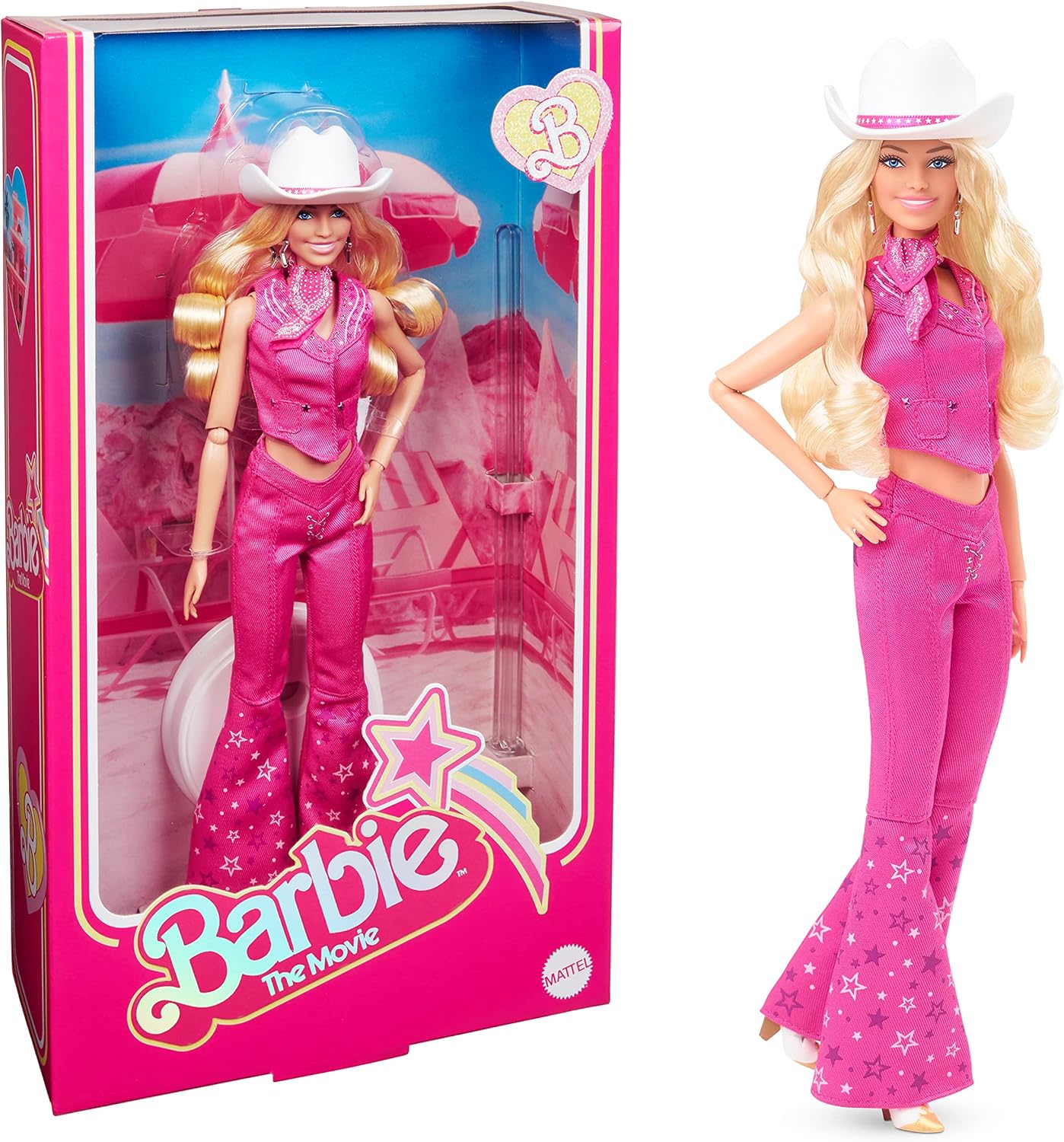
Barbie. The very name conjures up images of impossible proportions, platinum blonde hair, and an eternally cheerful smile. For decades, she’s been a lightning rod in the feminist discourse, a plastic effigy embodying both the aspirations and the anxieties surrounding womanhood. Is she a symbol of female empowerment, a multifaceted entrepreneur navigating a man’s world in her Dreamhouse, or a monument to patriarchal beauty standards, a doll perpetuating unrealistic ideals and stifling genuine self-expression? The answer, predictably, is far more complex and nuanced than either of these reductive narratives allows.
Let’s dive headfirst into the saccharine-coated rabbit hole and dissect this icon, shall we? Prepare for a cranial excavation of Barbie, the cultural artifact.
I. The Barbie Paradox: A Bifurcated Legacy
A. *The Empowerment Argument: More Than Just a Pretty Face*
Proponents of Barbie as a force for good often highlight her extensive resume. She’s been an astronaut, a doctor, a CEO, a presidential candidate, and a myriad of other professions, all before most of us have even figured out what we want for lunch. This argument suggests that Barbie, in her diverse career choices, provides young girls with a vision of limitless possibilities, encouraging them to dream big and break down societal barriers.
But is it really that simple? Is simply donning a doctor’s coat enough to dismantle deeply ingrained gender biases? Or does it merely provide a veneer of progress, masking the underlying issues of representation and systemic inequality?
B. *The Objectification Objection: A Perpetuation of Unattainable Ideals*
The counter-argument, and perhaps the more pervasive critique, centers on Barbie’s unrealistic body proportions and her role in perpetuating harmful beauty standards. Her impossibly thin waist, long legs, and perpetually youthful appearance contribute to a culture of body dysmorphia and self-doubt, particularly among young girls who are still forming their self-image. This critique posits that Barbie, far from empowering, actually reinforces the patriarchal gaze, reducing women to objects of aesthetic admiration rather than recognizing their intrinsic worth.
Furthermore, the emphasis on consumerism and material possessions, epitomized by Barbie’s Dreamhouse and extensive wardrobe, can be seen as a form of indoctrination, conditioning young girls to equate happiness with acquiring material goods.
II. Deconstructing the Dreamhouse: Unpacking the Socio-Cultural Baggage
A. *The Male Gaze in Plastic Form: Manufacturing Desire*
Barbie’s creation, though ostensibly intended to provide girls with a different kind of doll than the baby dolls that dominated the market, was still conceived within a specific socio-cultural context – one profoundly shaped by the male gaze. Her design, initially based on the German Bild Lilli doll, a risqué gag gift for adults, reflected a certain ideal of female desirability prevalent at the time. This inherent connection to the male gaze, arguably, continues to influence the doll’s representation and impact.
B. *The Illusion of Choice: Controlled Narratives and Limited Representation*
While Barbie has diversified her appearance over the years, introducing dolls with different skin tones, body types, and hairstyles, the underlying power structures remain largely unchanged. Mattel, the corporation behind Barbie, ultimately controls the narrative, dictating which versions of womanhood are deemed acceptable and marketable. This curated diversity, while seemingly progressive, can be seen as a form of “corporate feminism,” utilizing inclusivity as a branding strategy rather than a genuine commitment to social justice.
C. *The Dreamhouse as a Microcosm: Reinforcing Traditional Gender Roles?*
The Dreamhouse, with its emphasis on domesticity, fashion, and beauty, can also be interpreted as a subtle reinforcement of traditional gender roles. While Barbie may have a career, her primary focus often seems to be on her appearance and her relationships. This dichotomy creates a confusing message for young girls, suggesting that they can be both independent and reliant on traditional notions of femininity. The pastel-colored prison, some might argue, is simply a gilded cage.
III. Beyond the Binary: Reclaiming Barbie for Feminist Purposes
A. *Subversive Play: Reappropriating the Icon*
Despite the critiques, Barbie can also be a tool for subversion and feminist expression. Through imaginative play, girls can rewrite Barbie’s narrative, challenging traditional gender roles and creating stories that reflect their own aspirations and experiences. Barbie, in this context, becomes a blank canvas, a malleable figure that can be molded to fit diverse and empowering visions of womanhood. Think of it as guerrilla semiotics, hijacking the dominant narrative for radical self-expression.
B. *The Power of Parody: Deconstructing the Myth*
Artists and activists have also used Barbie as a vehicle for parody and social commentary. By exaggerating her features and placing her in unexpected contexts, they expose the absurdity of societal beauty standards and challenge the underlying power structures that perpetuate them. These interventions reclaim Barbie as a symbol of resistance, transforming her from a passive object into an active agent of change.
C. *Embracing Complexity: Acknowledging the Contradictions*
Ultimately, a nuanced feminist perspective on Barbie requires acknowledging the inherent contradictions within the doll and her cultural significance. She is both a product of patriarchal forces and a potential tool for female empowerment. To dismiss her outright would be to ignore the complex ways in which she has shaped and continues to shape the perceptions of womanhood. Instead, we must engage with her critically, recognizing both her limitations and her potential for transformation.
IV. Barbie and the Intersectional Imperative: Expanding the Dialogue
A. *Beyond the White Gaze: Addressing Issues of Representation*
Historically, Barbie has been criticized for her lack of diversity, primarily representing a narrow, Eurocentric ideal of beauty. While progress has been made in recent years with the introduction of dolls representing different ethnicities, body types, and abilities, the conversation surrounding representation must go beyond mere tokenism. It’s crucial to examine how these dolls are portrayed and whether they genuinely challenge the dominant narratives surrounding race, class, and gender.
B. *Challenging Ableist Norms: Representation of Disability*
The inclusion of Barbie dolls with disabilities is a significant step forward, but it’s essential to ensure that these dolls are not simply relegated to the margins. Their stories and experiences should be integrated into the mainstream narrative, challenging ableist assumptions and promoting inclusivity in all aspects of society. We need to move beyond surface-level representation and delve into the complexities of lived experience. Is the doll simply a prop, or a genuine attempt to deconstruct pervasive ableist biases?
C. *Socioeconomic Disparities: Access and Affordability*
The cost of Barbie dolls and accessories can be prohibitive for many families, particularly those from lower socioeconomic backgrounds. This creates a disparity in access, further marginalizing already disadvantaged groups. A truly inclusive feminist perspective must address these economic barriers, ensuring that all girls, regardless of their financial circumstances, have the opportunity to engage with Barbie in a meaningful way. Furthermore, what messages are conveyed when such expensive material items are tied to self-worth?
V. The Future of Barbie: A Catalyst for Change or a Relic of the Past?
A. *Evolving with the Times: Embracing New Technologies and Platforms*
As technology continues to evolve, Barbie must adapt to remain relevant. Integrating her into digital platforms, creating interactive experiences, and engaging with social media can help her connect with a new generation of girls. However, it’s crucial to ensure that these digital initiatives are used to promote positive messages and challenge harmful stereotypes, rather than simply reinforcing existing inequalities. Can Barbie be liberated from the screen, or will she become a digital simulacrum of outdated ideals?
B. *Promoting Critical Thinking: Empowering Girls to Question the Narrative*
Perhaps the most important step in reclaiming Barbie for feminist purposes is to empower girls to think critically about the messages she conveys. Encouraging them to question her beauty standards, challenge her gender roles, and create their own narratives can help them develop a more nuanced and empowering understanding of womanhood. This involves fostering media literacy and critical thinking skills from a young age, enabling girls to navigate the complex and often contradictory messages they receive from the media. We need to arm them with the tools to dissect and dismantle, not simply consume.
C. *Barbie as a Mirror: Reflecting and Shaping Societal Values*
Barbie, ultimately, is a mirror reflecting and shaping societal values. Her evolution, or lack thereof, reflects our own progress, or lack thereof, in addressing gender inequality. By continuing to engage with her critically, by demanding greater diversity and authenticity, and by empowering girls to rewrite her narrative, we can transform her from a symbol of patriarchal oppression into a catalyst for feminist change. The onus is on us to ensure that Barbie, in the future, represents not just an ideal, but a celebration of the diverse and multifaceted realities of womanhood. The plastic paragon must evolve, or become an anachronism; a cautionary tale for future generations.







Leave a Comment