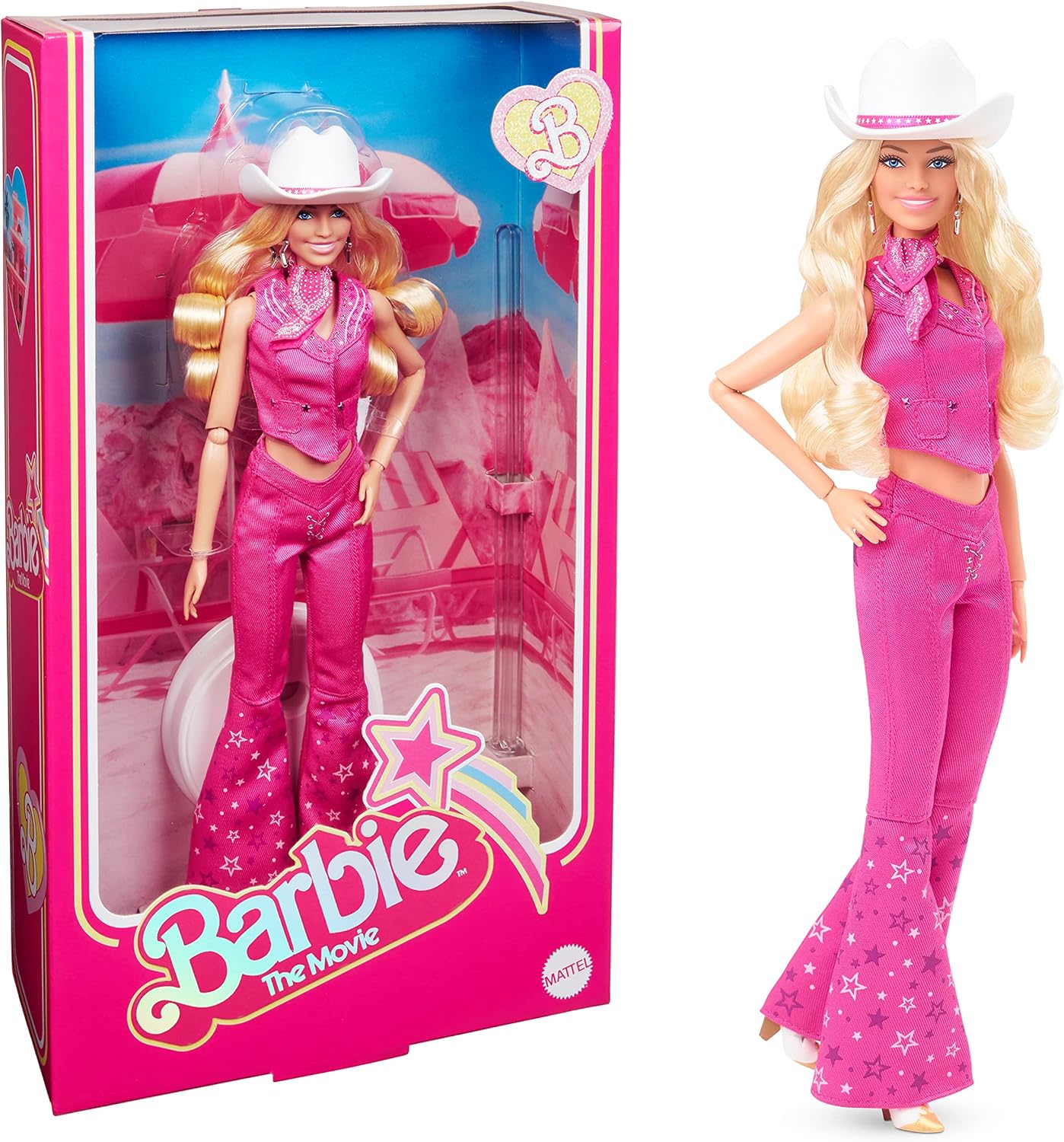
Barbie. The name alone conjures a maelstrom of emotions, doesn’t it? For some, she’s a nostalgic icon, a plastic pal from childhood adventures. For others, she’s the embodiment of unrealistic beauty standards, a patriarchal puppet perpetuating societal ills. But is she truly the villain we’ve painted her to be? Or is there more to this platinum blonde phenomenon than meets the expertly-applied eye shadow?
Let’s dive deep into the kaleidoscopic world of Barbie, unpack her complicated legacy, and explore whether this so-called “bimbo” has actually been a Trojan horse for feminist ideals, subtly subverting expectations and planting seeds of empowerment for generations. Prepare yourselves, comrades, because we’re about to dismantle the dollhouse.
I. The Barbie Paradox: A Doll Divided
Barbie’s existence is a Gordian knot of contradictions. She debuted in 1959, a time when women were largely relegated to domestic roles. Yet, she was designed to be independent, career-oriented (astronaut Barbie, anyone?), and unencumbered by marriage or children. This immediately presented a paradox: a doll marketed to young girls, encouraging aspirations beyond the confines of societal norms, while simultaneously presenting an arguably unattainable physical ideal. This dichotomy is the crux of the Barbie debate.
II. The Objectification Objection: A Legitimate Grievance?
The most persistent criticism leveled against Barbie is her perpetuation of unrealistic beauty standards. Her exaggerated proportions – an impossible waist-to-hip ratio, perpetually arched feet designed for high heels – have been accused of contributing to body image issues and the objectification of women. The argument, of course, is compelling. How can we expect young girls to develop healthy self-esteem when confronted with a doll whose physique is statistically unattainable?
Furthermore, critics argue that Barbie’s focus on appearance reinforces the patriarchal notion that a woman’s worth is primarily determined by her physical attractiveness. This, they contend, undermines the progress made by feminists who fought for women to be valued for their intellect, skills, and contributions to society, not just their looks. It’s a fair point, and one that cannot be dismissed outright.
III. Barbie’s Rebuttal: More Than Just a Pretty Face?
However, to paint Barbie as solely a symbol of oppression is to ignore the complexities of her evolution and the subtle ways in which she has challenged societal norms. From her early days as a fashion model, Barbie has held a multitude of jobs – doctor, firefighter, paleontologist, even president. These career choices, albeit rendered in miniature plastic form, subtly expanded the horizons of what young girls could envision for themselves.
Consider the astronaut Barbie, launched in 1965, four years before Neil Armstrong walked on the moon. Or the surgeon Barbie, who, by the 1970s, was challenging the male-dominated medical profession. These dolls, however seemingly trivial, presented a powerful message: that girls could aspire to anything, regardless of societal expectations. It’s an act of quiet rebellion, woven into the fabric of playtime.
Moreover, Barbie has diversified over the years, introducing dolls with different ethnicities, body types, and abilities. This inclusivity, although arguably belated, demonstrates an attempt to represent a wider range of experiences and challenge the narrow definition of beauty that she once embodied. The introduction of dolls with prosthetic limbs, vitiligo, and different hair textures represents a tangible shift towards greater representation and acceptance.
IV. The Barbie Movie: A Potential Paradigm Shift?
The recent Barbie movie, starring Margot Robbie, presents a unique opportunity to re-evaluate the doll’s legacy. Early trailers and marketing materials suggest a self-aware, satirical take on Barbie’s complex history, acknowledging the criticisms leveled against her while simultaneously celebrating her cultural impact. The film promises to deconstruct the very notion of the “perfect” Barbie and explore the challenges faced by women in a patriarchal society.
If the movie succeeds in its apparent aims, it could serve as a watershed moment, transforming Barbie from a figure of controversy into a symbol of feminist empowerment. By acknowledging her flaws and engaging in a critical self-examination, the film has the potential to redeem Barbie’s reputation and solidify her place in the pantheon of feminist icons.
V. Deconstructing the Dreamhouse: Examining the Societal Context
It’s crucial to remember that Barbie exists within a larger societal context. She is a product of her time, reflecting the prevailing attitudes and anxieties about gender roles and expectations. To blame her solely for perpetuating unrealistic beauty standards is to ignore the myriad other influences that shape young girls’ self-perception, including media, advertising, and societal pressures.
Furthermore, the criticism leveled against Barbie often overlooks the agency of the girls who play with her. Children are not passive recipients of messages; they actively interpret and transform the meanings of their toys. A young girl playing with Barbie may not simply be internalizing unrealistic beauty standards; she may be using the doll to explore her own identity, experiment with different roles, and express her creativity.
VI. Beyond Binary Thinking: Embracing the Ambiguity of Barbie
The Barbie debate often falls into the trap of binary thinking: she’s either a feminist icon or a symbol of oppression. The truth, however, is far more nuanced. Barbie is a complex and contradictory figure, embodying both positive and negative aspects of our culture. She represents the aspirations and anxieties of women across generations, and her legacy is still being written.
To fully understand Barbie, we must move beyond simplistic judgments and embrace the ambiguity of her existence. We must acknowledge her flaws while celebrating her contributions, recognizing that she is a product of her time but also a potential agent of change. She is, in essence, a mirror reflecting our own evolving attitudes toward gender, beauty, and empowerment.
VII. The Future of Barbie: A Doll for the 21st Century?
The future of Barbie hinges on her ability to adapt to a rapidly changing world. She must continue to diversify, embrace inclusivity, and challenge traditional notions of beauty. She must also be willing to engage in critical self-reflection, acknowledging her past mistakes and committing to a more progressive vision of the future.
Ultimately, Barbie’s legacy will be determined not by Mattel’s marketing strategies, but by the girls who play with her. If she can empower young women to dream big, challenge the status quo, and embrace their authentic selves, then she may yet earn her place as a feminist icon. The ball, as they say, is in her perfectly manicured court.
VIII. Reframing the Narrative: From Icon of Conformity to Catalyst for Change
Perhaps it’s time to reframe the narrative surrounding Barbie. Instead of viewing her solely as an icon of conformity, let’s consider her potential as a catalyst for change. By acknowledging her flaws and embracing inclusivity, Barbie can become a powerful tool for empowering young girls to challenge societal norms and create a more equitable world. The potential for a true feminist renaissance, spearheaded by a plastic doll, is frankly tantalizing.
IX. The Enduring Power of Play: Why Barbie Still Matters
Despite the criticisms and controversies, Barbie remains a powerful force in the world of play. She provides young girls with a canvas for their imagination, a tool for exploring their identities, and a friend to share their dreams. The enduring power of play should not be underestimated. It is through play that children learn, grow, and develop their understanding of the world. And Barbie, for better or worse, has been a part of that journey for generations.
X. A Call to Action: Engaging with Barbie’s Legacy Consciously
So, where do we go from here? We must engage with Barbie’s legacy consciously and critically, acknowledging her complexities and embracing her potential for change. We must encourage young girls to play with Barbie in a way that empowers them, fostering creativity, self-expression, and a critical understanding of societal norms. We must, in essence, reclaim Barbie for the feminist cause, transforming her from a potential oppressor into an unwitting ally.
The journey is far from over, but the potential for a truly transformative Barbie experience is within our grasp. Let’s seize it, comrades, and rewrite the narrative of this plastic icon, one dollhouse at a time. The revolution, after all, may very well be televised…or, perhaps, played out in miniature.





Leave a Comment