
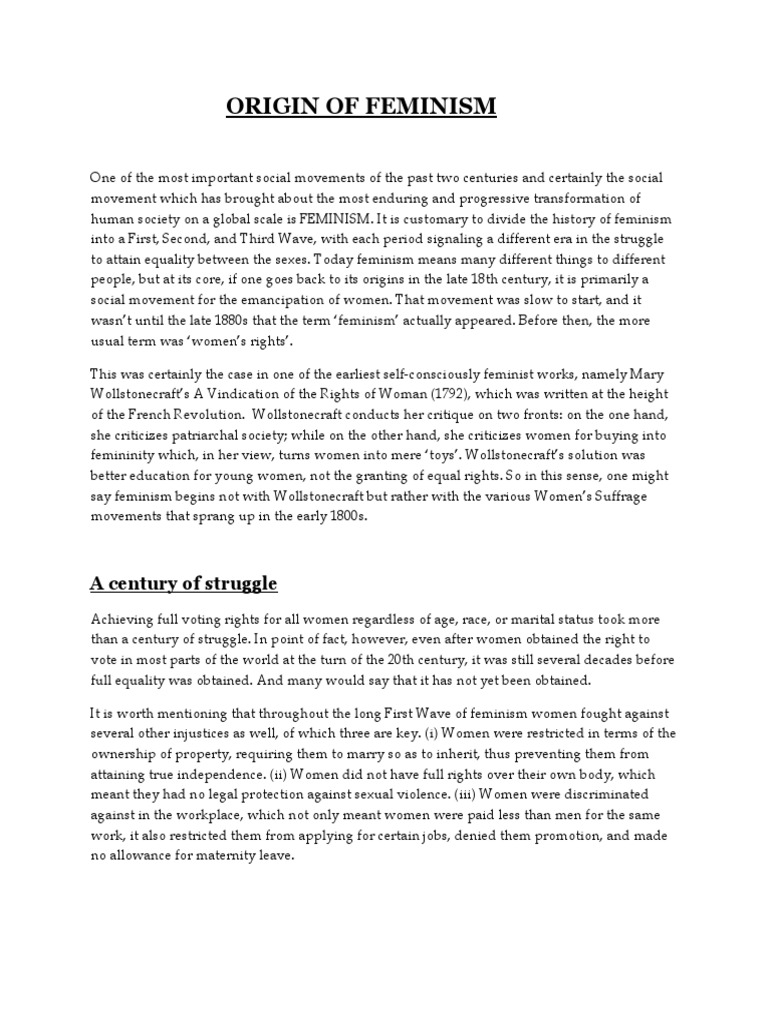
So, you wanna know when feminism really started in America, huh? Like pinpoint the exact nanosecond the first feminist thought popped into a woman’s head? Good luck with that, buttercup. It’s not as simple as flipping a switch, despite what some patriarchal gaslighters might want you to believe. Buckle up, because the story of feminism’s genesis is messier than a toddler’s art project, and twice as challenging to clean up. Be warned: this ain’t your grandma’s watered-down history lesson.
Instead of a single origin story, we’re talking about a confluence of moments, a slow burn of discontent that ignited into a raging inferno of demands for equality. We’re dismantling the mythology that feminism sprang fully formed from the brow of Susan B. Anthony. The quest to uncover the roots of American feminism requires a deep dive into diverse historical experiences, perspectives, and a relentless challenging of dominant narratives. Ready to excavate some truth?
I. Pre-Seneca Falls: Seeds of Dissent Sown in Fertile Ground
Before the official “start date” many cite (Seneca Falls, 1848), whispers of rebellion were already echoing through colonial and early America. These weren’t always neatly packaged feminist treatises; more like subversive murmurings, coded resistance, and outright defiance.
A. Colonial Constraints and Covert Resistance:
Life for women in colonial America was a veritable cage of patriarchal prescriptions. Coverture laws essentially erased a woman’s legal identity upon marriage, rendering her the property of her husband. She couldn’t own property, control her earnings, or even have legal guardianship of her children in many cases. Seriously stifling, right?
Yet, even within these draconian confines, women found ways to push back. We see it in acts of religious dissidence. Anne Hutchinson, banished from Massachusetts Bay Colony for her heretical theological interpretations, exemplified female intellectual autonomy. She challenged the male clergy and paid the price, a powerful symbol of early female resistance.
Furthermore, the economic realities of colonial life provided some women with limited agency. Widows, for example, often inherited property and businesses, granting them a degree of independence unheard of for married women. These moments of economic empowerment, however small, foreshadowed later demands for economic equality.
B. The Revolutionary Ferment: Rhetoric of Liberty, Reality of Inequality:
The American Revolution, with its soaring rhetoric of liberty and equality, inadvertently highlighted the stark contradictions of women’s subjugated status. “All men are created equal,” indeed. What about the ladies?
Abigail Adams famously implored her husband, John, to “Remember the Ladies” when drafting the new nation’s laws. Her plea, though often romanticized, reveals the growing awareness among some women of their exclusion from the promises of the Revolution. John’s dismissive response? A classic example of patriarchal blindness. The audacity!
Women actively participated in the Revolution, boycotting British goods, fundraising, and even serving as spies and soldiers (disguised as men, of course). However, their contributions were often minimized or forgotten in the official narrative. The Revolution, while sparking ideals of liberty, did little to fundamentally alter women’s legal and social standing. Thus, resentment festered, laying the groundwork for future activism.
II. Seneca Falls and its Discontents: A Manufactured Milestone?
Ah, Seneca Falls. The iconic convention, the Declaration of Sentiments, the purported “birthplace” of American feminism. But is it really the clean-cut origin story we’ve been told? Let’s unpack this problematic narrative, shall we?
A. The Declaration of Sentiments: Bold Demands, Limited Reach:
The Declaration of Sentiments, modeled after the Declaration of Independence, boldly proclaimed that “all men and women are created equal.” It listed a series of grievances, from the denial of suffrage to the lack of educational and economic opportunities. It was a radical document for its time, challenging the very foundation of patriarchal society.
But here’s the rub: the Seneca Falls Convention was largely attended by white, middle-class women. Its focus was primarily on issues affecting this specific demographic. The concerns of enslaved women, working-class women, and women of color were largely marginalized. This inherent limitation reveals a crucial blind spot in the early feminist movement.
The emphasis on suffrage, while important, overshadowed other pressing issues. Some historians argue that this focus on political rights ultimately served to reinforce existing class and racial hierarchies. The fight for the vote, while symbolically powerful, did not necessarily translate into broader social and economic justice for all women.
B. The Problem of Erasure: Recognizing the Unacknowledged Precursors:
Attributing the “start” of feminism solely to Seneca Falls erases the contributions of countless women who fought for equality long before 1848. Native American women, for example, often held positions of power and influence within their communities, challenging European patriarchal norms. Their stories are too often excluded from mainstream feminist history. It’s a deliberate act of patriarchal omission.
The anti-slavery movement provided another fertile ground for the development of feminist consciousness. Women like Sojourner Truth, a formerly enslaved woman who became a powerful abolitionist and women’s rights advocate, challenged both racial and gender oppression. Her famous “Ain’t I a Woman?” speech remains a powerful testament to the intersectionality of these struggles. She understood the connection between racism and sexism long before academic buzzwords made it fashionable.
Furthermore, the burgeoning labor movement saw women organizing for better wages and working conditions. These early labor activists, though not always explicitly identifying as “feminists,” were fighting for economic justice and challenging the exploitation of women in the workplace. Their struggles were integral to the broader fight for women’s rights.
III. A Multifaceted Tapestry: Embracing a More Inclusive Narrative
So, when did feminism start in America? The answer, as you’ve probably gathered, is far from simple. It wasn’t a single event, but a complex and evolving process. Instead of seeking a definitive “start date,” we need to embrace a more nuanced and inclusive narrative that acknowledges the diverse voices and experiences that shaped the feminist movement. This requires a willingness to deconstruct traditional historical frameworks and challenge the biases that have historically marginalized certain groups.
A. Intersectionality: Recognizing the Interconnectedness of Oppressions:
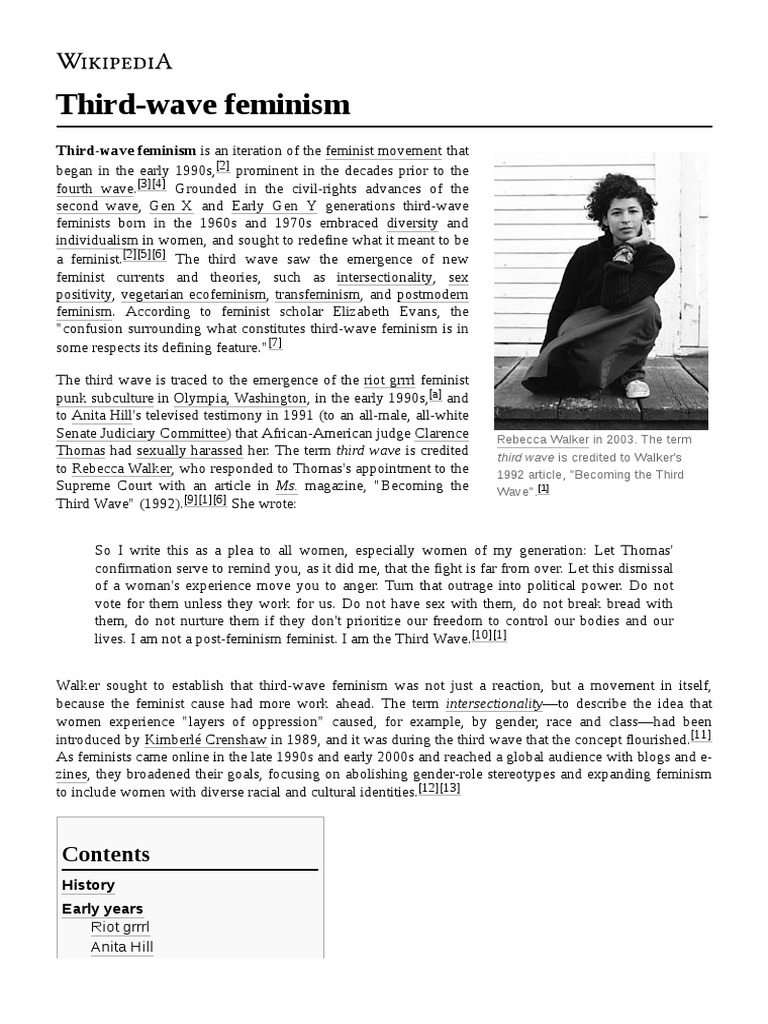
The concept of intersectionality, coined by Kimberlé Crenshaw, highlights the interconnectedness of various forms of oppression, such as race, class, gender, and sexual orientation. Understanding intersectionality is crucial to understanding the complexities of feminist history. Women’s experiences are not monolithic; they are shaped by their intersecting identities.
For example, the experiences of Black women in America have been shaped by both racism and sexism. They have faced unique challenges and have often been excluded from both the mainstream feminist movement and the civil rights movement. Recognizing and addressing these intersectional oppressions is essential for building a truly inclusive feminist movement.
Ignoring intersectionality perpetuates the very inequalities feminism seeks to dismantle. A feminism that fails to address the needs of all women is not feminism at all; it’s merely a tool for maintaining existing power structures. Don’t be a tool.
B. Beyond Suffrage: Expanding the Definition of Feminism:
Reducing feminism to the fight for suffrage is a gross oversimplification. Feminism encompasses a wide range of issues, including reproductive rights, economic justice, gender-based violence, and LGBTQ+ rights. It’s a movement that seeks to dismantle all forms of patriarchal oppression and create a more just and equitable society for all.
By expanding our definition of feminism, we can better understand the diverse ways in which women have resisted oppression throughout history. We can recognize the feminist activism of women who may not have explicitly identified as “feminists” but who were nonetheless fighting for gender equality in their own way. We must challenge the notion that feminism is a monolithic ideology and embrace the diversity of feminist thought and practice. It’s not a singular thing; it’s a spectrum.
IV. The Ongoing Evolution: Feminism as a Living, Breathing Force
Feminism is not a relic of the past; it’s a living, breathing force that continues to evolve and adapt to the changing needs of society. The fight for gender equality is far from over, and new challenges are constantly emerging.
A. Contemporary Challenges: From the Wage Gap to Online Harassment:
Despite significant progress, women still face significant challenges in America today. The gender wage gap persists, with women earning less than men for doing the same work. Women are underrepresented in leadership positions in both the public and private sectors. Gender-based violence remains a pervasive problem, both online and offline.
The rise of social media has created new opportunities for feminist activism, but it has also created new challenges. Online harassment and doxxing are used to silence and intimidate women, particularly women of color. The fight for online safety and freedom of expression is a critical feminist issue in the 21st century.
B. The Future of Feminism: Intersectionality, Inclusion, and Empowerment:
The future of feminism depends on its ability to embrace intersectionality, prioritize inclusion, and empower all women. This requires a commitment to challenging all forms of oppression and creating a more just and equitable society for all. It requires listening to the voices of marginalized women and centering their experiences in the feminist movement. It demands dismantling the systems that perpetuate inequality and building new systems that promote justice and equity.
The question, then, isn’t “when did feminism start?” but “where is feminism going?” The answer depends on our collective commitment to building a better future for all women. Get to work.





Leave a Comment