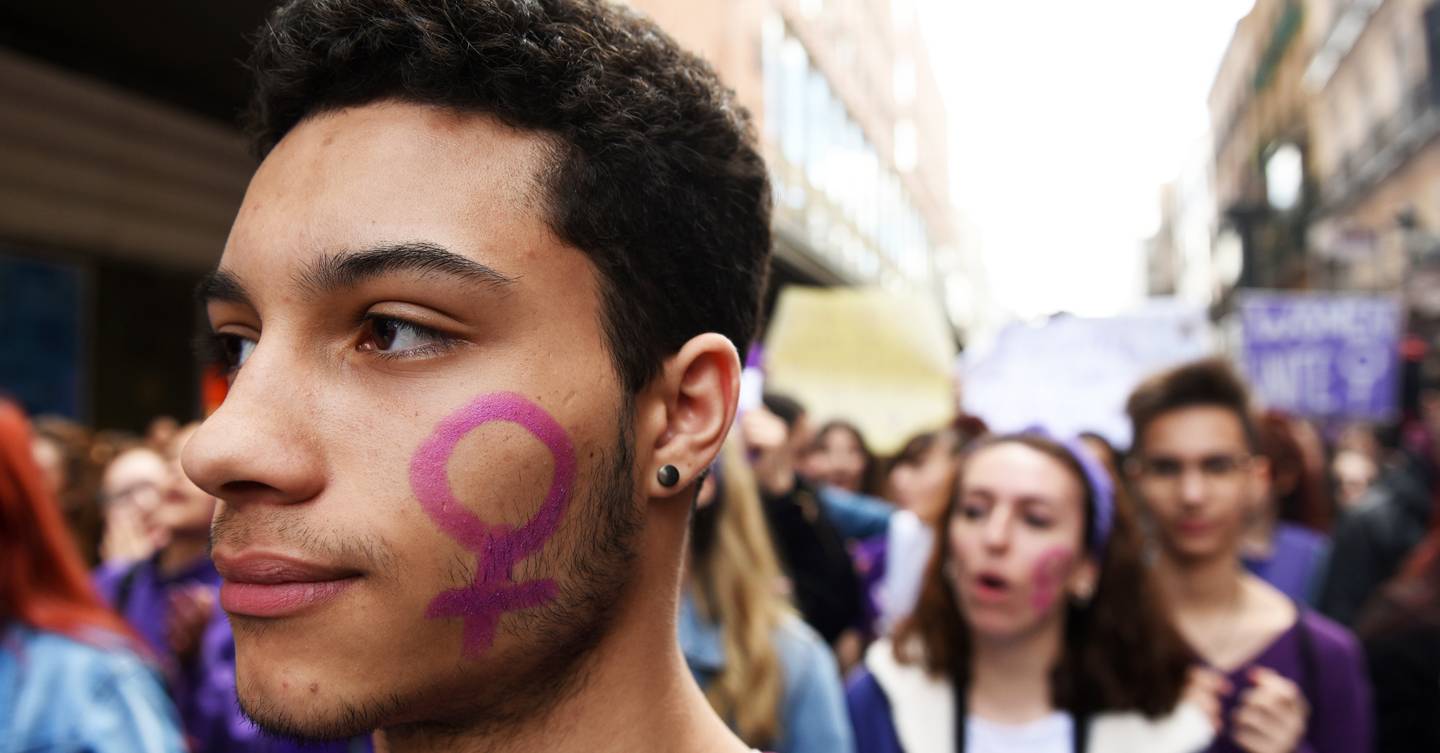
So, you think you know feminism? Good. But buckle up, buttercup, because we’re about to dive into the murky, often-misunderstood, and frankly, sometimes-infuriating territory of its male counterpart. What is the male version of feminism? Is it just men holding signs at protests, or is there something…more? I posit to you, dear reader, that the very question is a minefield, ripe with potential for appropriation, performativity, and a whole lotta mansplaining.
Let’s be honest: the phrase “male feminism” always gives me the ick. It feels, at its core, like a branding exercise. A way for dudes to get woke points without actually doing the work. But is that fair? Can men genuinely contribute to dismantling the patriarchy without co-opting the narrative? Or is the whole concept inherently…oxymoronic?
The Patriarchy Problem: It’s Not Just a Lady Issue
First, let’s reiterate a fundamental truth: patriarchy harms everyone. Yes, women bear the brunt of it, suffering systemic oppression in almost every facet of life. But men too are trapped in a rigid, suffocating box of expectations that dictates how they should feel, act, and exist. This is the crux of the problem.
Think about it: men are pressured to be stoic, emotionally stunted, and hyper-competitive. Showing vulnerability is seen as weakness; expressing anything other than anger or aggression is often met with derision. This not only damages men’s mental health but also perpetuates harmful cycles of behavior that contribute to toxic masculinity.
Therefore, a truly “male feminist” approach must acknowledge this internal struggle. It’s not just about supporting women’s rights; it’s about dismantling the very structures that have also confined them. It’s about recognizing the insidious ways patriarchy permeates their own lives, and actively working to unlearn those deeply ingrained behaviors.
Beyond the “Ally” Label: Moving Towards Complicity
Okay, so men can acknowledge the harm of patriarchy. Great. But is that enough? Is simply being an “ally” – a supporter, a cheerleader from the sidelines – truly sufficient? I argue no. Allyship, while important, can sometimes be passive. It allows men to maintain a distance from the actual work, to avoid confronting their own complicity in the system.
Instead, we need men to move towards complicity. Not in the sense of perpetuating harm, of course, but in actively taking responsibility for dismantling the patriarchy. This means challenging sexist jokes, calling out problematic behavior, and using their privilege to amplify marginalized voices. It means being willing to step back, listen, and learn, even when it’s uncomfortable.
The Performance Trap: Avoiding Woke Signaling
Here’s where things get tricky. In our age of social media activism, it’s incredibly easy for men to perform wokeness. They post a feminist quote, retweet a viral thread, and bam! Instant validation. But is this genuine engagement, or simply a performative act designed to garner praise and attention?
The danger here is that performative allyship can actually be more harmful than outright sexism. It creates a false sense of progress, while simultaneously silencing the voices of women and marginalized groups. It allows men to reap the rewards of being “good guys” without actually doing the hard, messy work of self-reflection and systemic change.
A true “male feminist” (and I use the term loosely) must be wary of this trap. They must be willing to prioritize action over optics, to focus on genuine change rather than fleeting praise. They must understand that their role is not to be the hero, but to be a collaborator, a partner in the fight for equality.
Redefining Masculinity: Breaking Free from the Machismo Cage
Central to any discussion of male feminism is the concept of masculinity. The traditional, patriarchal definition of masculinity is inherently toxic. It equates strength with dominance, emotions with weakness, and independence with isolation. This not only harms men themselves but also creates a culture that perpetuates violence, sexism, and homophobia.
Therefore, a key aspect of the “male feminist” project is redefining masculinity. It’s about creating a new vision of manhood that is based on empathy, vulnerability, and respect. It’s about encouraging men to embrace their emotions, to build meaningful connections with others, and to challenge the harmful stereotypes that have constrained them for so long.
This is not about emasculating men or forcing them to conform to some feminized ideal. It’s about empowering them to break free from the rigid constraints of patriarchal masculinity and to define their own identities on their own terms. It’s about creating a world where men can be both strong and sensitive, assertive and compassionate, without fear of judgment or ridicule.
Accountability is Key: Owning Up to the Mess
Let’s be brutally honest: even the most well-intentioned men will inevitably make mistakes. They will say something insensitive, perpetuate a harmful stereotype, or inadvertently contribute to a sexist dynamic. The key is not to avoid these mistakes (that’s impossible), but to take responsibility for them when they occur.
This means being willing to listen to criticism, to acknowledge their own biases, and to apologize sincerely when they have caused harm. It means understanding that being a “male feminist” is not about being perfect, but about being committed to continuous learning and growth. It means accepting that they will always be a work in progress.
Furthermore, accountability extends beyond individual actions. It also means holding other men accountable for their behavior. It means calling out sexist jokes, challenging problematic attitudes, and refusing to tolerate any form of harassment or discrimination. This can be uncomfortable, especially when it involves confronting friends, family members, or colleagues. But it is essential if we are to create a truly equitable society.
Centering Marginalized Voices: Pass the Mic, Please
One of the most common criticisms of the “male feminist” movement is that it often centers the experiences and perspectives of men, while marginalizing the voices of women and other marginalized groups. This is a valid concern. After all, feminism is fundamentally about the liberation of women and other oppressed groups. It is not about men finding a new way to assert their dominance.
Therefore, it is crucial that men who identify as feminists actively work to de-center themselves and to amplify the voices of those who are most affected by patriarchal oppression. This means listening to women, trans people, and people of color. It means creating space for their voices to be heard, and it means using their privilege to advocate for their rights.
It also means understanding that feminism is not a monolithic movement. There are many different perspectives and experiences within the feminist community, and it is important to respect and value that diversity. Men should not assume that they know what is best for women or other marginalized groups. Instead, they should listen to their concerns, learn from their experiences, and support their struggles.
The Ongoing Journey: There Is No Easy Answer
So, what is the male version of feminism? The answer, as you might have guessed, is complex and multifaceted. It is not a fixed identity or a set of pre-defined rules. It is an ongoing journey of self-reflection, learning, and action. It is about challenging patriarchal norms, redefining masculinity, and centering the voices of marginalized groups.
It is also about recognizing that the fight for gender equality is not a zero-sum game. It is not about taking something away from men, but about creating a society where everyone can thrive, regardless of their gender. It is about building a world where men can be free to express their emotions, to build meaningful relationships, and to live authentic lives, without fear of judgment or ridicule.
Ultimately, the success of the “male feminist” movement will depend on its ability to challenge the very foundations of patriarchy and to create a more just and equitable world for all. It will require men to be brave, to be vulnerable, and to be willing to challenge their own privilege. It will require them to listen, to learn, and to act in solidarity with women and other marginalized groups. And it will require them to understand that the fight for gender equality is not just a women’s issue, but a human issue. A truly human issue that affects us all. Now go forth, and dismantle.











Leave a Comment