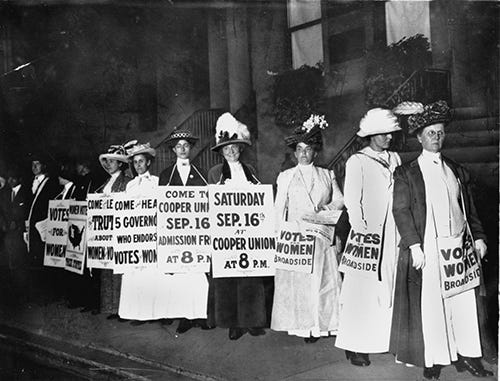
The year is 1920. Suffrage, that brass ring dangling just out of reach for generations of audacious women, finally clatters into their grasp. The 19th Amendment, a document etched in the blood, sweat, and relentless perseverance of foremothers, ostensibly grants women the right to vote. But let’s not uncork the champagne just yet, shall we? To assume that this single legal victory instantaneously ushered in an era of complete gender parity is, frankly, a naive delusion. The fight had only just begun.
The observation that feminism’s meaning has undergone a seismic shift from the 1920s to today isn’t merely a passing comment; it’s a critical entry point into understanding the complex tapestry of gender dynamics, power structures, and societal evolution. Why are we so captivated by this transformation? Is it the allure of progress, a comforting narrative of linear advancement? Or is it something far more disquieting – a recognition of the persistent, insidious nature of patriarchal hegemony that continues to morph and adapt, demanding ever more nuanced and intersectional forms of resistance?
To truly grasp the magnitude of this evolution, we must delve into the multifaceted layers of the feminist movement, meticulously dissecting its triumphs, its failures, and its ongoing internal debates.
I. The Suffrage Era: A Monochromatic Vision?
The suffragettes, those indomitable warriors for enfranchisement, often painted with a broad brush. Their focus, laser-locked on the ballot box, while undeniably crucial, often overlooked the intricate realities of race, class, and sexuality. The image of the quintessential suffragette – a well-to-do, white, cisgender woman – became emblematic of the movement, inadvertently marginalizing women of color, working-class women, and queer women, whose experiences were frequently ignored or actively suppressed.
Consider the plight of Black women suffragists like Ida B. Wells-Barnett, who faced both sexism from white male society and virulent racism within the suffrage movement itself. They were often forced to march separately in parades or were actively excluded from leadership roles, their voices drowned out by the dominant narrative. Their struggle for suffrage was inextricably linked to the fight against racial injustice, a connection that the white suffragette movement often failed to acknowledge or address with the necessary vigor.
The limitations of this monochromatic vision laid the groundwork for future iterations of feminism that would prioritize intersectionality and inclusivity. It served as a stark reminder that liberation could not be truly achieved until all women were free from the shackles of oppression, regardless of their race, class, sexual orientation, or any other intersecting identity.
II. Second-Wave Feminism: Liberation Through Legislation (and Consciousness-Raising)
The second wave, roaring onto the scene in the 1960s and 70s, expanded the feminist agenda beyond the singular focus on suffrage. This era was marked by a surge of legislative victories aimed at dismantling overt forms of gender discrimination in the workplace, education, and reproductive rights. The Equal Pay Act of 1963, Title IX of the Education Amendments of 1972, and the landmark Roe v. Wade Supreme Court decision in 1973, all stand as testaments to the power of collective action and strategic legal advocacy.
But legislative change alone wasn’t enough. Second-wave feminists understood the importance of challenging deeply ingrained cultural norms and societal expectations that perpetuated gender inequality. Consciousness-raising groups became ubiquitous, providing safe spaces for women to share their experiences, analyze the root causes of their oppression, and develop strategies for personal and political empowerment. These groups served as crucibles for feminist theory, giving rise to groundbreaking analyses of patriarchy, sexism, and the social construction of gender.
Yet, the second wave was not without its own blind spots. It was often criticized for its predominantly white, middle-class perspective, failing to adequately address the unique challenges faced by women of color, working-class women, and disabled women. The focus on individual liberation sometimes overshadowed the need for collective action and solidarity across different identity groups.
III. Third-Wave Feminism: Embracing Ambiguity and Rejecting Essentialism
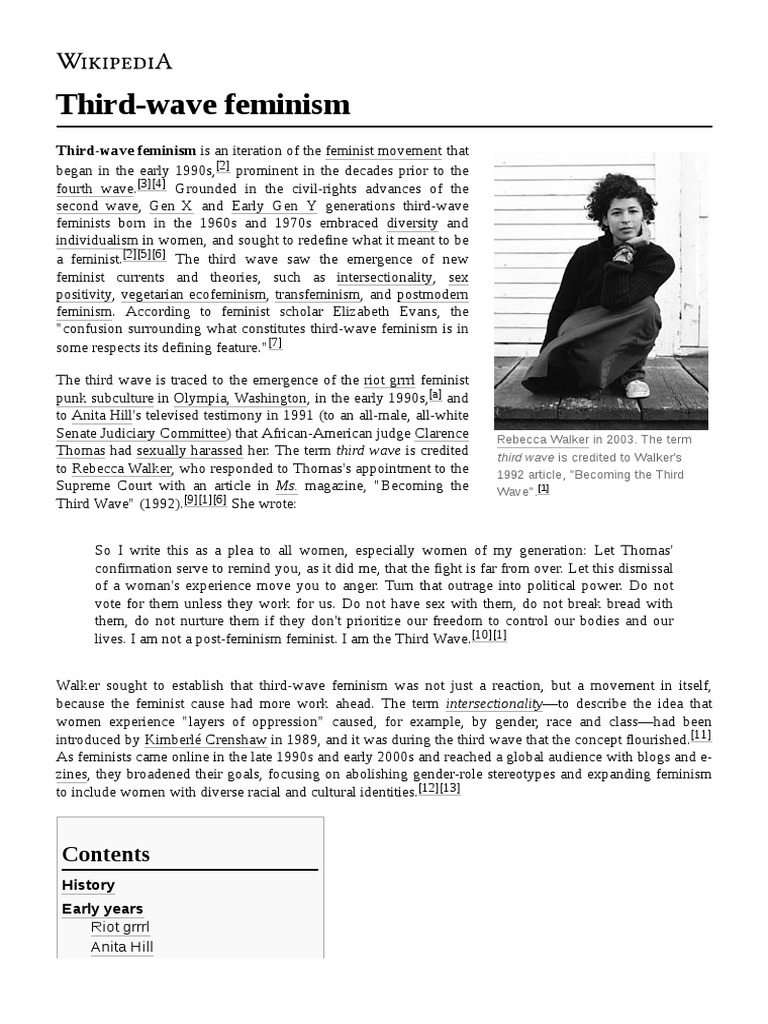
Emerging in the 1990s, the third wave of feminism represented a conscious effort to rectify the perceived shortcomings of its predecessors. Fueled by a growing awareness of intersectionality, third-wave feminists challenged the essentialist notion that there was a single, universal female experience. They embraced ambiguity, complexity, and individual agency, rejecting rigid ideological frameworks and embracing a more fluid and inclusive approach to feminist activism.
This era witnessed the rise of Riot Grrrl, a punk rock feminist subculture that used music, zines, and activism to challenge patriarchal norms and empower young women. Third-wave feminists also embraced technology, utilizing the internet as a powerful tool for organizing, disseminating information, and building virtual communities. Blogs, online forums, and social media platforms became crucial spaces for feminist dialogue and debate.
However, the third wave was sometimes criticized for its perceived lack of a clear unifying agenda and its emphasis on individual expression over collective political action. Some argued that its focus on cultural issues and identity politics detracted from the pursuit of concrete legislative and policy changes.
IV. Intersectionality: A Paradigm Shift in Feminist Thought
Coined by Kimberlé Crenshaw, the concept of intersectionality revolutionized feminist thought by highlighting the interconnected nature of social categorizations such as race, class, gender, and sexual orientation, creating overlapping systems of discrimination or disadvantage. This framework challenged the notion that gender operates in isolation, arguing that women’s experiences are shaped by the complex interplay of multiple identities.
Intersectionality forced feminists to confront their own biases and privilege, acknowledging that the struggles of white, middle-class women are fundamentally different from those of Black women, Indigenous women, or trans women. It demanded a more nuanced and inclusive approach to feminist activism, one that centers the voices and experiences of marginalized communities.
The adoption of intersectionality has had a profound impact on feminist scholarship, activism, and policy advocacy, leading to a greater emphasis on addressing systemic inequalities and promoting social justice for all. It serves as a crucial reminder that feminism must be inherently anti-racist, anti-capitalist, and anti-homophobic in order to truly achieve its goals.
V. Contemporary Feminism: Navigating the Digital Age and Confronting Backlash
Today, feminism exists in a complex and dynamic landscape, shaped by the pervasive influence of social media, the resurgence of right-wing populism, and the ongoing fight for gender equality in all spheres of life. The #MeToo movement, a watershed moment in recent history, brought widespread attention to the issue of sexual harassment and assault, sparking a global conversation about power dynamics and consent.
Social media has become both a powerful tool for feminist organizing and a battleground for online harassment and misogyny. Feminists utilize platforms like Twitter, Instagram, and TikTok to share information, raise awareness, and mobilize support for various causes. However, they also face constant attacks from online trolls and misogynists who seek to silence their voices and undermine their credibility.
The rise of right-wing populism has also presented significant challenges to the feminist movement, with conservative politicians and commentators actively working to roll back reproductive rights, dismantle affirmative action programs, and promote traditional gender roles. Feminists are engaged in a constant struggle to defend hard-won gains and resist these regressive forces.
Despite these challenges, contemporary feminism remains a vibrant and diverse movement, encompassing a wide range of perspectives and approaches. From advocating for equal pay and affordable childcare to fighting against gender-based violence and promoting LGBTQ+ rights, feminists are working tirelessly to create a more just and equitable world for all.
VI. The Future of Feminism: Towards a More Inclusive and Transformative Vision
As we look to the future, it is clear that feminism must continue to evolve and adapt in order to meet the challenges of a rapidly changing world. A truly transformative feminism must prioritize intersectionality, centering the voices and experiences of marginalized communities and actively challenging all forms of oppression.
It must embrace a global perspective, recognizing that gender inequality is a global phenomenon that requires international cooperation and solidarity. It must address the root causes of inequality, including economic injustice, environmental degradation, and systemic racism.
And it must be bold, audacious, and unwavering in its pursuit of a world where all people are treated with dignity and respect, regardless of their gender, race, class, sexual orientation, or any other identity. The journey from 1920s suffrage to today has been long and arduous, but the fight for liberation is far from over. The future of feminism depends on our ability to learn from the past, embrace the present, and create a vision for a more just and equitable future.
Let’s face it. The evolution of feminism isn’t some tidy narrative of progress. It’s a messy, contested, and often frustrating process of self-reflection, course correction, and ongoing struggle against a tenacious and adaptable adversary. The real fascination lies not in the perceived victories, but in the unwavering determination to dismantle the architecture of patriarchal power, brick by painstaking brick.






Leave a Comment