Ever wonder why your grandmother was such a firebrand, always stirring the patriarchal pot? Or maybe you’re scratching your head trying to decipher why Aunt Mildred keeps gifting you copies of “A Vindication of the Rights of Woman” – a book that’s older than sliced bread? It’s time to delve into the crucible where feminism, as a coherent and conscious movement, first took form.
But here’s the catch: what happens when the very narrative we’ve been taught about feminism’s genesis is itself steeped in the same power structures it seeks to dismantle? We need to dissect the conventional wisdom, interrogating the assumptions and unearthing the often-suppressed voices that contributed to the burgeoning feminist consciousness. Let’s peel back the layers of history, shall we?
I. Seeds of Dissent: Proto-Feminist Stirrings Before the Enlightenment
Forget the linear progression of history. The yearning for gender equity didn’t magically appear with the Enlightenment. Whispers, murmurs, and outright roars of defiance echoed long before Mary Wollstonecraft dipped her quill in ink. Think of them as the mycelial network beneath the forest floor, silently nourishing the future emergence of something truly powerful.
A. Ancient Echoes of Resistance:
1. Sappho’s Sapphic Sanctuary: Long before the word ‘lesbian’ was weaponized, Sappho created a haven for women on the isle of Lesbos. Her poetry celebrated female desire and intellect, a blatant affront to the patriarchal norms of ancient Greece. She dared to suggest women’s inner lives were worthy of exploration, independent of their roles as wives and mothers.
2. Hypatia’s Heretical Intellect: A philosopher, astronomer, and mathematician in Roman Egypt, Hypatia defied societal expectations by excelling in traditionally male domains. Her intellectual prowess threatened the established order, ultimately leading to her brutal murder at the hands of a fanatical mob. Her story serves as a chilling reminder of the price women paid for daring to challenge the status quo.
B. Medieval Heresies and Mystical Mavericks:
1. Hildegard of Bingen’s Visionary Authority: This Benedictine abbess was a polymath, excelling in theology, music, medicine, and botany. She claimed divine inspiration, granting her authority to critique societal injustices and challenge religious dogma. Hildegard wielded her influence with a rare combination of spiritual conviction and intellectual acumen.
2. Christine de Pizan’s Literary Polemics: In a time when misogyny was practically a national pastime, Christine de Pizan penned “The Book of the City of Ladies,” a utopian vision of a society ruled by virtuous women. She actively refuted prevailing stereotypes and celebrated the achievements of historical and contemporary women, providing a powerful counter-narrative to the dominant patriarchal discourse.
C. The Renaissance Ripple Effect:
1. Laura Cereta’s Scholarly Scorn: This Italian humanist challenged the prevailing view that women were incapable of intellectual pursuits. Her letters openly criticized the sexism of her time and championed the importance of female education. Cereta’s unapologetic defense of women’s intellectual capacity was a clarion call in a world determined to silence their voices.
2. Isabella d’Este’s Political Prowess: As a powerful Renaissance patron and political strategist, Isabella d’Este wielded considerable influence behind the scenes. While not explicitly advocating for feminist ideals, her example demonstrated women’s capacity for leadership and strategic thinking. Her actions implicitly challenged the limitations placed on women in public life.
II. The Enlightenment’s Double-Edged Sword: Reason and Exclusion
The Enlightenment, with its emphasis on reason and individual rights, should have been a watershed moment for women. But alas, the “rights of man” often conveniently forgot about the rights of woman. This glaring omission fueled the first systematic articulation of feminist principles.
A. Mary Wollstonecraft: The Foundational Fury:
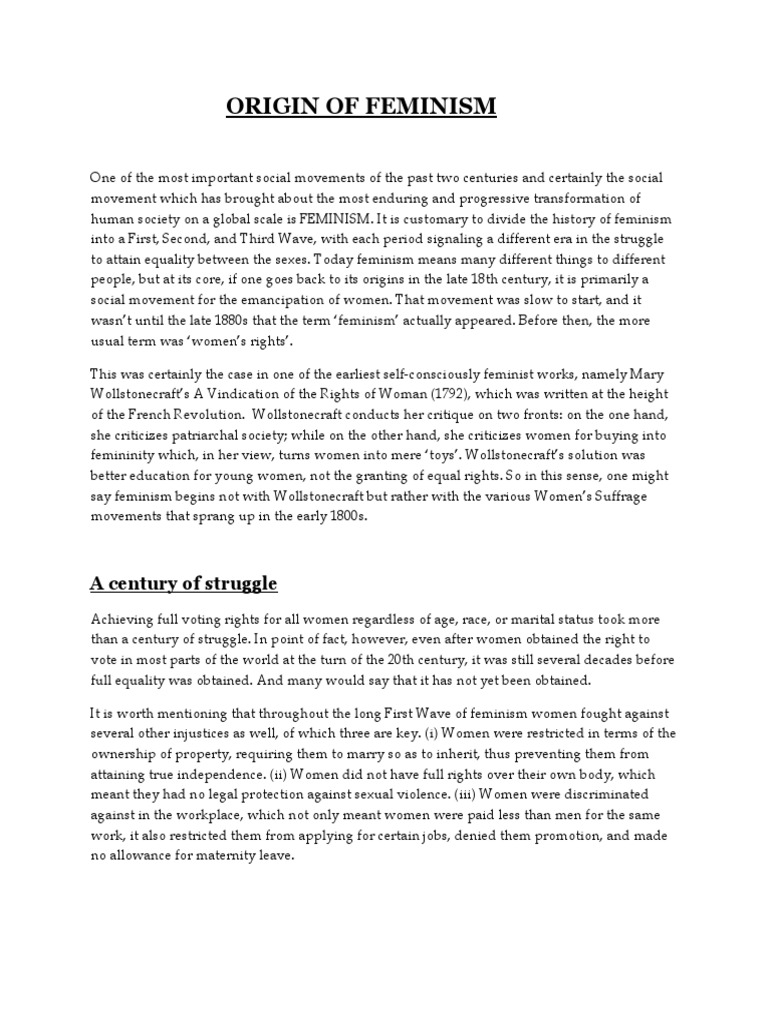
1. “A Vindication of the Rights of Woman”: This seminal text is considered the cornerstone of modern feminist thought. Wollstonecraft argued that women were not inherently inferior to men but lacked access to education and opportunity. She advocated for equal educational opportunities and challenged the societal norms that confined women to domestic roles.
2. Wollstonecraft’s Radical Republicanism: Beyond advocating for women’s rights, Wollstonecraft was a staunch republican and a vocal critic of monarchy and aristocracy. She believed that women’s liberation was intrinsically linked to broader societal reforms, including political and economic equality.
B. Olympe de Gouges: Revolutionary Rejection:
1. “Declaration of the Rights of Woman and the Female Citizen”: In response to the French Revolution’s failure to address women’s rights, Olympe de Gouges penned her own declaration, explicitly demanding equal rights for women. She challenged the hypocrisy of a revolution that claimed to champion liberty and equality while excluding half the population.
2. De Gouges’ Tragic Fate: Her radical views and outspoken criticism of the Reign of Terror ultimately led to her execution. Her martyrdom solidified her status as a feminist icon and a symbol of the sacrifices made in the pursuit of gender equality. She dared to confront the very revolution she believed in, and paid the ultimate price.
C. The Salonnières: Intellectual Incubators:
1. Madame de Staël’s Literary Luminosity: Germaine de Staël hosted influential salons that brought together leading intellectuals and political figures. She challenged conventional notions of femininity and advocated for women’s intellectual and creative contributions to society. Her salons served as crucial spaces for the exchange of ideas and the dissemination of feminist thought.
2. Madame Geoffrin’s Philosophical Gathering: Another prominent salonnière, Madame Geoffrin, fostered intellectual discourse and provided a platform for marginalized voices. Her salon was a haven for progressive thinkers and contributed to the growing awareness of social injustices, including gender inequality. These salons were instrumental in shaping the intellectual landscape of the Enlightenment and nurturing the nascent feminist movement.
III. The Rise of Abolitionism and the Women’s Rights Movement: A Symbiotic Struggle
The fight against slavery and the burgeoning women’s rights movement were inextricably linked. Women involved in abolitionism recognized the parallels between their own oppression and the enslavement of African Americans, leading to a powerful alliance and a shared commitment to liberation.
A. The Seneca Falls Convention: A Pivotal Proclamation:
1. The “Declaration of Sentiments”: This document, modeled after the Declaration of Independence, boldly declared that “all men and women are created equal.” It outlined a comprehensive list of grievances, including the denial of voting rights, property rights, and educational opportunities. The “Declaration of Sentiments” became a rallying cry for the women’s rights movement and a blueprint for future activism.
2. Elizabeth Cady Stanton’s Unwavering Voice: Stanton was a leading figure in the women’s rights movement and a key organizer of the Seneca Falls Convention. She tirelessly advocated for women’s suffrage and challenged the prevailing societal norms that relegated women to a subordinate status. Her intellectual rigor and unwavering commitment to gender equality made her a force to be reckoned with.
B. Sojourner Truth: Intersectionality’s Incarnation:
1. “Ain’t I a Woman?”: This powerful speech, delivered at the 1851 Women’s Rights Convention in Akron, Ohio, challenged the narrow definition of womanhood that excluded Black women. Truth highlighted the intersection of racism and sexism, arguing that Black women faced unique challenges and deserved full equality. Her words resonated deeply and broadened the scope of the women’s rights movement.
2. Truth’s Transcendent Truth: Sojourner Truth’s life was a testament to resilience and resistance. A former slave, she became an abolitionist, women’s rights advocate, and preacher. Her compelling oratory and unwavering commitment to justice inspired generations of activists. She embodied the intersectional nature of oppression and the importance of fighting for the rights of all marginalized groups.
C. The Divides Within: Race, Class, and the Suffrage Struggle:
1. The Exclusion of Black Women: Despite their contributions to the abolitionist movement and the women’s rights movement, Black women often faced discrimination and exclusion from white-dominated organizations. The suffrage movement, in particular, was plagued by racism, with some white suffragists prioritizing the enfranchisement of white women over that of Black women.
2. Class Divisions and the Suffrage Struggle: The women’s rights movement also grappled with class divisions. Middle-class and upper-class women often focused on issues that were relevant to their own experiences, while neglecting the needs of working-class women. These divisions underscored the complexities of fighting for gender equality in a society marked by profound inequalities.
IV. Beyond Suffrage: Early Feminist Activism in the Late 19th and Early 20th Centuries
The fight for suffrage was a central focus of the early feminist movement, but it was not the only issue on the agenda. Women activists also campaigned for reforms in education, employment, and family law, challenging a wide range of discriminatory practices.
A. Education and Employment: Breaking Down Barriers:
1. The Fight for Access to Higher Education: Women fought for access to higher education, challenging the prevailing view that they were incapable of intellectual pursuits. The establishment of women’s colleges and the admission of women to previously all-male institutions marked significant victories in this struggle.
2. Challenging Occupational Segregation: Women also challenged occupational segregation, seeking access to jobs that were traditionally reserved for men. They fought for equal pay and an end to discriminatory hiring practices. Their efforts laid the groundwork for future generations of women to enter a wider range of professions.
B. Family Law Reform: Reclaiming Autonomy:
1. Property Rights for Married Women: Women campaigned for the right to own property in their own names, challenging the legal fiction that subsumed a married woman’s identity under that of her husband. These reforms were crucial for women’s economic independence and autonomy.
2. Divorce Reform and Child Custody: Women also fought for more equitable divorce laws and child custody arrangements. They sought to protect women from abusive marriages and to ensure that mothers had a fair chance of retaining custody of their children. These reforms aimed to empower women within the confines of marriage and to provide them with greater recourse in cases of marital breakdown.
C. The Complicated Legacy of the First Wave:
1. Achieving Suffrage: A Partial Victory: The culmination of the first wave of feminism was the achievement of suffrage in the United States in 1920 with the passage of the 19th Amendment. While this was a landmark achievement, it was not a complete victory. Many women, particularly women of color, continued to face barriers to voting. Suffrage marked the end of one chapter and the beginning of another.
2. The Seeds of Second-Wave Feminism: Despite its limitations, the first wave of feminism laid the groundwork for future generations of activists. It established a tradition of female activism and challenged the prevailing societal norms that limited women’s opportunities. The struggles and achievements of the first wave inspired subsequent generations to continue the fight for gender equality. The echoes of their struggle reverberate even today.
So, the next time you see Aunt Mildred brandishing her Wollstonecraft, remember the long and arduous journey that brought us to this point. The birth of feminism was not a singular event but a complex and multifaceted process, shaped by the contributions of countless individuals who dared to challenge the status quo and imagine a world where women could live freely and equally. And that, my dears, is something worth celebrating.






Leave a Comment