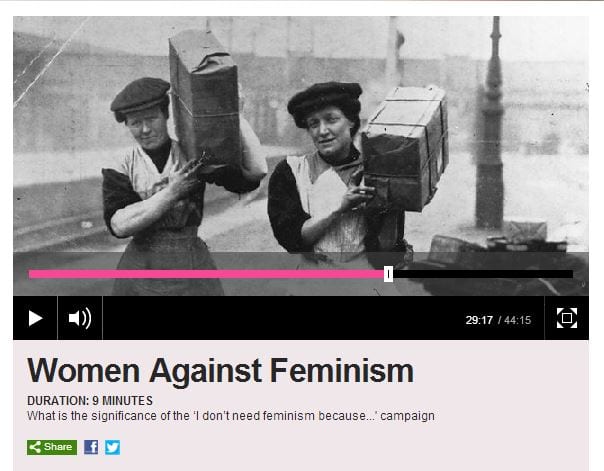
Does feminism weaken women? Honey, that’s like asking if oxygen weakens fire. Let’s unpack this loaded question, shall we? Is feminism a kryptonite to the “superwoman” myth, or the very forge in which we temper our mettle? Prepare yourselves; this isn’t going to be your grandmother’s tea party. It’s a philosophical cage match.
I. The Siren Song of “Tradition”: A Velvet Handcuff?
Let’s address the proverbial elephant in the room – those whisperings about feminism somehow undermining a woman’s “natural” inclinations or societal roles. There are pockets, echoing chambers where the archaic notion of women as inherently nurturing homemakers persists. They paint a picture of feminism as a wrecking ball, demolishing the sanctity of marriage and motherhood. Tell me, sisters, does liberation sound like destruction to you? Are we really to believe that a woman’s power is solely vested in her capacity to birth and nurture? How utterly pedestrian.
Consider this: the so-called “traditional” roles were often less about inherent desires and more about societal impositions. Generations of women were subtly (and not-so-subtly) steered away from ambition, intellectual pursuits, and economic independence. The “angel in the house” was a carefully crafted fiction, designed to maintain the patriarchal status quo. We were told our happiness lay in servitude. How convenient. Isn’t it telling that these arguments conveniently ignore the countless women who found fulfillment in careers, in art, in activism, long before feminism became a widespread movement? It’s a convenient amnesia, a selective historical recount meant to keep us shackled to outdated expectations.
II. The Myth of the Fragile Feminine: A Deliberate Disempowerment
One of the most insidious arguments against feminism is that it somehow “masculinizes” women, stripping them of their inherent femininity and making them aggressive or unappealing. This assertion is not only patently absurd but deeply rooted in a patriarchal need to control and define female identity. Heaven forbid a woman should be assertive, ambitious, or intellectual without being labeled a harpy! This “fragile feminine” trope is a weapon, designed to shame women into silence and submission. It implies that strength and femininity are mutually exclusive, a blatant falsehood that has haunted women for centuries. Newsflash: we can wear lipstick and dismantle the patriarchy simultaneously. The two aren’t mutually exclusive, no matter how hard some try to convince you otherwise.
Furthermore, this perpetuation of the “fragile feminine” ideal serves to infantilize women, denying them agency and reinforcing the notion that they need male protection and guidance. It fosters a culture of dependence, where women are discouraged from developing their own skills and talents. In essence, it keeps women in a perpetual state of adolescence, unable to fully realize their potential. Are we to believe that weakness is somehow empowering? Is dependence the ultimate expression of female strength? I think not.
III. The Sisterhood Complex: Internalized Misogyny and the “Queen Bee” Syndrome
The idea that feminism weakens women sometimes manifests as internal division within the female population itself. Ever heard of the “Queen Bee” syndrome? This insidious phenomenon describes women in positions of power who actively undermine other women, reinforcing patriarchal structures in the process. They may claim to have “earned” their success by playing the game, implicitly (or explicitly) criticizing women who advocate for systemic change. This internalized misogyny is a potent force, hindering solidarity and perpetuating the myth that women are inherently competitive and incapable of supporting each other. It’s a classic “divide and conquer” strategy, and it works far too well.
This internal fracturing is often fueled by the false scarcity of resources and opportunities. Women are led to believe that there’s only room for a limited number of them at the top, creating a cutthroat environment where collaboration is discouraged. Feminism, at its core, seeks to dismantle this scarcity mindset, advocating for a world where all women have equal access to opportunities and resources. The true power of feminism lies in its ability to foster solidarity, creating a network of support where women can lift each other up and challenge the patriarchal structures that hold them back.
IV. The Double Bind: Navigating the Minefield of Expectations
One of the most significant challenges facing modern women is the double bind – the conflicting and often contradictory expectations placed upon them by society. They are expected to be ambitious and successful in their careers, yet also nurturing and devoted mothers. They are expected to be strong and independent, yet also feminine and appealing to men. This constant pressure to conform to impossible standards can lead to burnout, anxiety, and a pervasive sense of inadequacy. Feminism does not create this double bind; it simply exposes it for what it is: a tool of oppression designed to keep women perpetually off balance.
Feminism, rather, offers a framework for dismantling these unrealistic expectations, encouraging women to define their own success and prioritize their own well-being. It challenges the notion that women must be all things to all people, advocating for a more equitable distribution of labor and a greater understanding of the complexities of female experience. It provides a space for women to share their struggles, offer support, and collectively challenge the patriarchal forces that seek to control their lives.
V. Reclaiming Agency: The True Power of Feminist Empowerment
Ultimately, the question of whether feminism weakens women or makes them unstoppable boils down to agency. Feminism is not about dictating how women should live their lives; it’s about empowering them to make their own choices, free from coercion and constraint. It’s about dismantling the structures of power that limit women’s opportunities and denying them their full potential. It’s about creating a world where women are valued for their intellect, their creativity, and their contributions to society, not just their physical appearance or their reproductive capabilities.
To those who claim that feminism is a destructive force, I say this: look around you. Look at the women who are leading movements, breaking barriers, and changing the world. They are not weakened by their feminist beliefs; they are emboldened by them. They are not victims of some radical ideology; they are agents of change, fighting for a better future for themselves and for generations to come. Feminism is not a weakness; it is a superpower. It is the collective strength of women united, demanding equality, justice, and a world where all voices are heard. It is the ultimate act of self-definition, the unwavering pursuit of a life lived on one’s own terms. So, does feminism weaken women? Absolutely not. It sets them ablaze.
It provides the tools, the language, and the community necessary to navigate a world that is still, in many ways, hostile to female empowerment. It gives women the courage to challenge the status quo, to speak truth to power, and to demand the respect and recognition they deserve. It empowers them to reclaim their bodies, their minds, and their voices, and to create a world where all women can thrive.
VI. Beyond the Binary: Embracing Intersectionality and Inclusivity
True feminism is not a monolithic movement; it is a diverse and evolving tapestry of voices and perspectives. It recognizes that women’s experiences are shaped by a multitude of factors, including race, class, sexual orientation, and disability. Intersectionality, the understanding that these identities intersect and create unique forms of oppression, is crucial to creating a truly inclusive and effective feminist movement. A feminism that fails to address the needs of all women is not feminism at all. It is a diluted version, a privileged echo that serves only to perpetuate existing inequalities. We must strive for a feminism that is not only for women but by them, particularly those who have been historically marginalized and silenced.
Embracing intersectionality also requires acknowledging and challenging the ways in which women themselves can perpetuate oppression. White women, for example, must acknowledge their privilege and actively work to dismantle the systems of racism that benefit them. Straight women must be allies to the LGBTQ+ community, fighting for equal rights and challenging homophobia and transphobia. We must all be willing to examine our own biases and complicity in oppressive systems, and commit to creating a feminism that is truly inclusive and equitable.
VII. The Future is Feminist: A Call to Arms (and Activism)
The fight for gender equality is far from over. We still face significant challenges, from the gender pay gap to the epidemic of sexual violence to the persistent underrepresentation of women in leadership positions. But the future is feminist, and the momentum is on our side. Women are rising up, demanding change, and refusing to be silenced. We are organizing, mobilizing, and building a movement that is more powerful and more inclusive than ever before.
The key to our success lies in our ability to work together, to support each other, and to challenge the patriarchal forces that seek to divide us. We must continue to educate ourselves and others about the complexities of gender inequality. We must amplify the voices of marginalized women. We must advocate for policies that promote gender equality. And we must never, ever give up on the fight for a world where all women can live free from oppression and have the opportunity to reach their full potential.
So, let the naysayers scoff. Let the patriarchal gatekeepers tremble. The tide is turning. The revolution is here. And it is led by a generation of unstoppable women, armed with their intellect, their courage, and their unwavering commitment to justice. Join us. The water’s fine.





Leave a Comment