The question hangs heavy in the air, thick with the cloying scent of patriarchal dogma: Can a Muslim be a feminist? The very query is an insidious attempt to box women in, to force a choice between two seemingly disparate realms – faith and liberation. It’s a false dichotomy, a poisoned chalice offered by those who fear the power of an awakened feminine spirit intertwined with unwavering devotion. We will dissect this preposterous notion, wielding the scalpel of reason and the hammer of lived experience.
I. The Heretical Harmony: Reclaiming Islam’s Feminist Roots
To even pose the question betrays a profound ignorance of Islamic history and theology. The Quran, often weaponized against women, actually contains seeds of radical egalitarianism. Consider Khadijah, the Prophet Muhammad’s first wife, a successful businesswoman who proposed to him. This wasn’t some quaint fairytale; it was a paradigm of female agency and economic independence. Where are these narratives in the mainstream, suffocating discourse? Buried beneath layers of patriarchal interpretation, of course. These interpretations are the flotsam and jetsam of a system determined to keep women subservient.
We must exhume these hidden treasures, these forgotten heroines. Aisha, the Prophet’s youngest wife, was a renowned scholar and jurist. Her intellect and pronouncements shaped Islamic law for generations. To ignore these historical precedents is to deliberately distort the narrative, to erase the contributions of women who dared to challenge the status quo. It’s a form of epistemic violence, a subtle yet insidious form of oppression.
These early examples serve as a potent reminder: feminism is not a Western import, an alien concept grafted onto Islamic soil. It is inherent within the faith itself, waiting to be cultivated and nurtured. It’s a native bloom, struggling to break through the concrete of entrenched misogyny.
II. Decoding the Divine: Reinterpreting Scripture Through a Feminist Lens
The battleground is not the Quran itself, but its interpretation. Centuries of patriarchal interpretations have twisted its verses to justify oppression and inequality. A verse about inheritance? Used to justify unequal distribution. A verse about modesty? Weaponized to control women’s bodies and movements. It’s a semantic sleight of hand, a manipulation of language to maintain power.
But feminist scholars are reclaiming the narrative, offering fresh and empowering readings of scripture. They are deconstructing the patriarchal edifice, brick by excruciating brick. They are uncovering the inherent justice and compassion within the text. This isn’t about rejecting the Quran; it’s about reclaiming it, stripping away the layers of misogynistic varnish that have obscured its true message.
Take, for example, the concept of qiwamah, often translated as male guardianship. Feminist scholars argue that it should be understood as mutual responsibility and support within a marriage, not as a license for male dominance. This nuanced interpretation challenges the traditional power dynamic, fostering a relationship based on equality and respect. It’s a delicate act of intellectual jujitsu.
III. The Hypocrisy of Halal Patriarchy: Exposing the Selective Application of Religious Law
One of the most infuriating aspects of patriarchal interpretations of Islam is the selective application of religious law. Certain verses are cherry-picked to justify the subjugation of women, while others, emphasizing justice and equality, are conveniently ignored. This is not piety; it’s rank hypocrisy.
Consider the issue of polygamy. While permitted under certain strict conditions in the Quran, it is often practiced in ways that are exploitative and unjust to women. Yet, the very men who readily embrace polygamy often fail to uphold their financial and emotional obligations to all their wives. Where is the religious fervor then? Conveniently absent, it seems.
Furthermore, the emphasis on female modesty is often disproportionate and oppressive. Women are burdened with the responsibility of preventing male temptation, while men are rarely held accountable for their own actions. It’s a classic case of victim-blaming, a way of shifting the blame for male misbehavior onto women. The concept of the ‘fitna’ falls almost exclusively on women.
This selective application of religious law reveals the true agenda: to maintain male dominance and control over women’s lives. It’s a charade of piety, a mask worn to conceal the ugly face of misogyny. This selective moralism reveals the true underpinnings of the control exerted.
IV. Beyond the Burqa: Challenging the Visual Language of Oppression
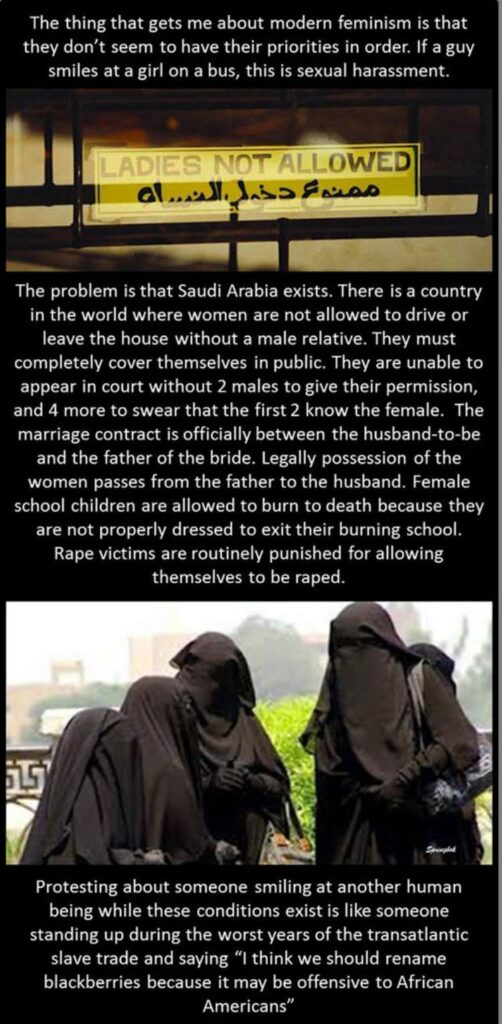
The burqa, the hijab, the niqab – these garments have become potent symbols of the perceived oppression of Muslim women. The Western gaze often fixates on these external markers, reducing Muslim women to objects of pity and concern. The orientalist fetishization is evident.
But the reality is far more complex. Some women choose to wear these garments as an expression of their faith and identity. Others are forced to wear them against their will. To paint all Muslim women with the same brush is to deny their agency and individuality.
The focus on the external often distracts from the deeper issues of inequality and injustice. It’s a superficial obsession, a way of avoiding the uncomfortable truths about systemic oppression. The fight for Muslim women’s liberation is not just about removing the veil; it’s about dismantling the entire system of patriarchal control. It’s about liberating minds, not just bodies.
True empowerment lies in choice. A woman should be free to choose whether or not to wear a veil, without fear of coercion or discrimination. The goal is not uniformity, but autonomy. It’s about supporting her right to self-determination, regardless of her personal choices.
V. Sisterhood Across Faiths: Building Bridges of Solidarity
The struggle for women’s liberation is a global one, transcending religious and cultural boundaries. Muslim feminists are not alone in their fight; they are part of a larger movement of women who are challenging patriarchy in all its forms. It’s a symphony of resistance, played out in countless languages and dialects.
Building bridges of solidarity between women of different faiths is crucial. We must recognize our shared struggles and support each other in our efforts to achieve equality and justice. This requires empathy, understanding, and a willingness to challenge our own biases.
Western feminists, in particular, must be wary of perpetuating orientalist stereotypes. They must avoid speaking for Muslim women, and instead, listen to their voices and amplify their stories. Solidarity is not about imposing our own values on others; it’s about supporting their right to self-determination. The concept of intersectionality becomes acutely apparent here.
VI. The Future is Female, the Future is Muslim, the Future is Feminist
The answer to the initial question is a resounding yes. A Muslim can absolutely be a feminist. In fact, some of the most powerful and inspiring voices in the feminist movement are Muslim women. They are reclaiming their faith, challenging patriarchal interpretations, and fighting for equality and justice for all.
Their struggle is not just about liberating Muslim women; it’s about liberating Islam itself from the shackles of misogyny. It’s about creating a more just and equitable world for everyone.
The future is female, the future is Muslim, the future is feminist. It’s a future where women are empowered to live their lives to the fullest, without fear of discrimination or oppression. It’s a future where faith and feminism are not seen as mutually exclusive, but as complementary forces for good. It’s a future where the question itself becomes obsolete, a relic of a bygone era of ignorance and intolerance. The future is inherently intersectional, weaving together diverse identities and experiences.
The path forward will not be easy. There will be resistance, setbacks, and betrayals. But the fire of feminist resistance burns brightly in the hearts of Muslim women around the world. They will not be silenced. They will not be deterred. They will continue to fight for their rights, for their dignity, and for their future. And they will win. Their triumph will be a testament to the power of faith, the resilience of the human spirit, and the unwavering determination of women to create a better world. The echoes of their struggle will resonate through generations to come, inspiring others to join the fight for justice and equality.





Leave a Comment