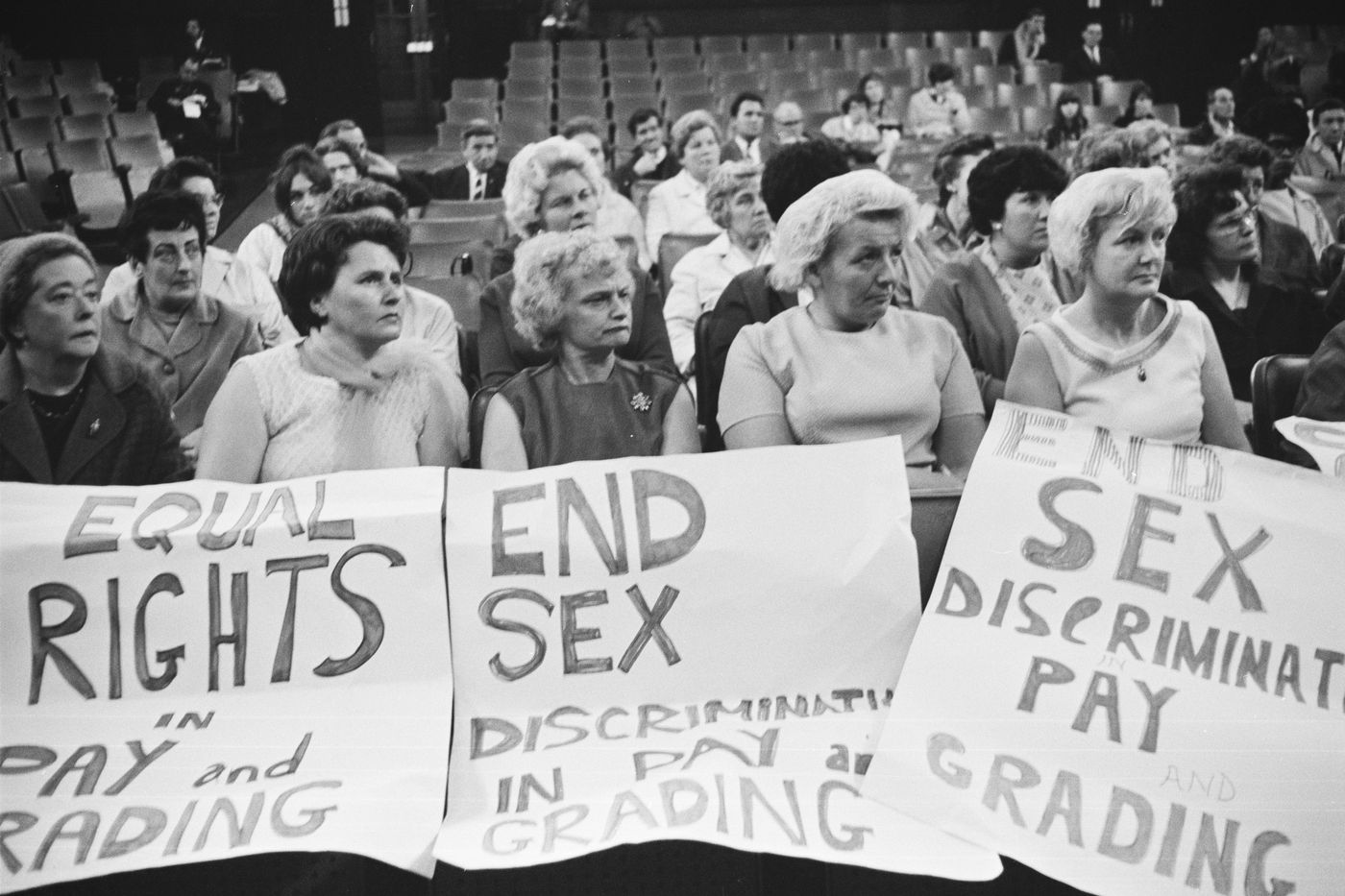
The 1970s. A decade synonymous with disco balls, questionable fashion choices, and, more importantly, the earth-shattering reverberations of second-wave feminism. But why this particular era? Why does the ’70s feminist movement continue to captivate and inspire, decades after bell-bottoms went out of style? Is it merely nostalgia for a simpler time, or does something far more profound resonate within the collective consciousness when we gaze back at the bra-burning battles and consciousness-raising circles of this transformative decade? I posit it’s the latter.
Let’s dissect this fascination, shall we?
I. The Ashes of the ’50s Mystique: Fueling the Feminist Fire
The ’50s. A prison constructed of pearls and poodle skirts. Beneath the veneer of suburban bliss and domestic tranquility simmered a potent cocktail of female frustration. Betty Friedan christened it “the problem that has no name,” a malaise born from the stifling societal expectations that relegated women to the roles of wife, mother, and perpetual homemaker. This, my friends, was the fertile ground from which the ’70s feminist movement sprang. It was a direct repudiation of the post-war patriarchal paradigm.
The idyllic image of the happy housewife, perpetually smiling while scrubbing floors and baking pies, was a lie. A manufactured narrative designed to keep women in their place, economically dependent and politically voiceless. The 1970s saw women waking up from this decades-long slumber, shaking off the shackles of domesticity, and demanding more than a life defined by the needs of others.
The inherent inequity and the suffocating limitations of the ’50s ignited a rage, a righteous anger, that fueled the feminist engine of the ’70s. This was not mere discontent; it was a full-blown revolt against a system that systematically denied women agency and autonomy.
II. Consciousness-Raising: The Alchemy of Shared Experience
One of the most distinctive features of the ’70s feminist movement was the proliferation of consciousness-raising (CR) groups. These weren’t your typical book clubs or sewing circles. These were spaces where women gathered to share their experiences, dissect the patriarchal structures that shaped their lives, and collectively forge a path towards liberation.
Imagine a room filled with women, sharing stories of sexism in the workplace, unequal pay, domestic violence, and the constant pressure to conform to unrealistic beauty standards. Through this process of shared vulnerability and mutual support, women realized they were not alone in their struggles. They understood that their personal experiences were not isolated incidents but rather systemic manifestations of patriarchal oppression.
These CR groups were crucibles of feminist thought, where personal grievances were transmuted into political action. They provided women with the language to articulate their experiences, the confidence to challenge the status quo, and the collective power to demand change. CR groups were, in essence, the breeding grounds for a radical feminist consciousness.
III. The Personal is Political: Redefining the Scope of Feminist Struggle
A central tenet of ’70s feminism was the declaration that “the personal is political.” This meant that issues traditionally considered private, such as sexuality, reproductive rights, and domestic violence, were in fact deeply intertwined with broader power structures and political inequalities. The fight for women’s liberation was not just about equal pay and political representation; it was about transforming every aspect of women’s lives, from the bedroom to the boardroom.
This radical redefinition of the political landscape allowed feminists to challenge the patriarchal control over women’s bodies and sexuality. The fight for reproductive rights became a central battleground, culminating in the landmark Roe v. Wade Supreme Court decision in 1973. The burgeoning lesbian feminist movement challenged heteronormativity and demanded recognition of diverse sexual orientations and gender identities.
By politicizing the personal, ’70s feminists exposed the deep-seated misogyny that permeated every level of society. They demonstrated that true equality required not just legal reforms but a fundamental shift in cultural attitudes and power dynamics.
IV. The Bra-Burning Myth: Separating Fact from Fiction
Ah, the infamous bra-burning incident. A symbol forever etched in the popular imagination as the quintessential act of ’70s feminism. But here’s the inconvenient truth: it never actually happened. At least, not in the way it’s often portrayed.
The myth of the bra-burning stems from a protest against the Miss America pageant in 1968, where feminists symbolically threw items of female oppression, such as bras, girdles, and makeup, into a “Freedom Trash Can.” While no bras were actually set ablaze, the media seized upon the image, forever associating feminism with radical acts of destruction. The media, predictably, sensationalized a nuanced message into a soundbite.
The bra-burning myth, despite its inaccuracy, served a purpose. It became a shorthand for the feminist rejection of oppressive beauty standards and the objectification of women. It captured the spirit of rebellion and the desire to break free from the constraints of patriarchal expectations.
V. Waves of Activism: From Marches to Manifestos
The ’70s were a whirlwind of feminist activism. From large-scale marches and demonstrations to grassroots organizing and consciousness-raising groups, women mobilized across the country to demand equality and social justice. Marches on Washington drew hundreds of thousands of participants, protesting discriminatory laws and advocating for women’s rights.
Feminist publications, such as Ms. Magazine, provided a platform for women’s voices and disseminated feminist ideas to a wider audience. Landmark texts, such as Kate Millett’s “Sexual Politics” and Shulamith Firestone’s “The Dialectic of Sex,” challenged traditional notions of gender and sexuality and laid the groundwork for future feminist scholarship.
The ’70s saw the rise of various feminist organizations, each with its own focus and approach. The National Organization for Women (NOW) advocated for legal and political reforms, while radical feminist groups challenged patriarchal power structures at their core. This diversity of perspectives and strategies enriched the feminist movement and allowed it to address a wide range of issues.
VI. Legal and Political Victories: Paving the Way for Progress
The ’70s feminist movement achieved significant legal and political victories that transformed the landscape for women. The passage of Title IX in 1972 prohibited sex discrimination in education, opening up opportunities for women in sports and other academic fields. The Equal Credit Opportunity Act of 1974 prohibited discrimination based on sex or marital status in credit transactions.
The aforementioned Roe v. Wade decision in 1973 established a woman’s constitutional right to an abortion, a landmark victory for reproductive rights. While this right has been consistently under attack, its initial establishment was a testament to the power of feminist organizing and advocacy.
These legal and political victories, while significant, were not the end of the struggle. The fight for equality continues to this day, but the ’70s laid a crucial foundation for future progress.
VII. Intersectional Stirrings: Seeds of a More Inclusive Feminism
While the ’70s feminist movement made significant strides, it was not without its limitations. Early second-wave feminism was often criticized for its focus on the experiences of white, middle-class women, neglecting the unique challenges faced by women of color, working-class women, and LGBTQ+ women. The insidious shadow of privilege often went unacknowledged.
However, the ’70s also saw the emergence of intersectional perspectives that challenged these limitations. Black feminists, such as Audre Lorde and bell hooks, critiqued the racism and classism within the feminist movement and called for a more inclusive and equitable approach. Lesbian feminists challenged heteronormativity and demanded recognition of diverse sexual orientations and gender identities.
These early seeds of intersectionality laid the groundwork for the more inclusive and nuanced feminist movements that followed. While the journey towards a truly intersectional feminism is ongoing, the ’70s marked a crucial turning point in the evolution of feminist thought.
VIII. The Backlash Begins: Resistance to Feminist Gains
As the feminist movement gained momentum and achieved significant victories, a backlash inevitably emerged. Conservative forces mobilized to resist feminist gains, arguing that women’s liberation threatened traditional family values and social order. The rhetoric of the “Moral Majority” gained traction, fueled by fears of a changing social landscape.
The fight over the Equal Rights Amendment (ERA), which aimed to guarantee equal rights for women under the Constitution, became a major battleground. Despite initial support, the ERA ultimately failed to be ratified, due in part to the efforts of conservative activists who successfully mobilized opposition. The ERA’s defeat served as a stark reminder of the persistent resistance to feminist progress.
This backlash, while disheartening, also served to galvanize the feminist movement. It highlighted the importance of vigilance and the need to continue fighting for equality in the face of persistent opposition.
IX. The Legacy of the ’70s: A Foundation for Future Feminisms
The ’70s feminist movement left an indelible mark on society, transforming the lives of women and shaping the landscape of gender politics. Its legacy continues to resonate today, inspiring new generations of feminists to challenge injustice and fight for a more equitable world. The era’s focus on bodily autonomy, for example, remains a critical talking point.
The legal and political victories of the ’70s paved the way for future progress, opening up opportunities for women in education, employment, and politics. The consciousness-raising groups of the ’70s empowered women to speak out against sexism and demand change. The intersectional stirrings of the ’70s laid the groundwork for a more inclusive and equitable feminism.
The ’70s may be long gone, but the spirit of rebellion and the unwavering commitment to equality that defined the era continue to inspire us today. The fight for women’s liberation is far from over, but the ’70s feminist movement provided a crucial foundation upon which to build a more just and equitable future.
The fascination with the ’70s feminist movement, therefore, isn’t just about a decade of bell-bottoms and disco. It’s about a period of profound social and political transformation, a time when women dared to challenge the status quo, demand equality, and forge a new path towards liberation. It’s a reminder that progress, while often hard-won, is possible when women unite and fight for what is right. A timely message, wouldn’t you agree?






Leave a Comment