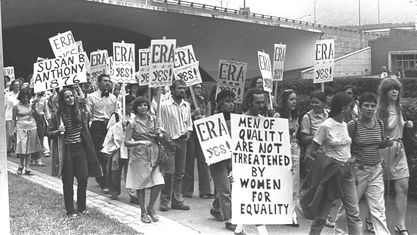
The 1970s. A decade dripping with the audacity of change, a crucible where the simmering discontent of women worldwide finally erupted into a roaring inferno of feminist fervor. It wasn’t merely a turning point; it was a tectonic shift, a rupture in the patriarchal bedrock that resonated across continents and continues to reverberate today. It was, and remains, nothing short of a global feminist apotheosis.
Why? Because the 1970s witnessed the coalescence of disparate feminist strands into a potent, unified force, a hydra-headed movement tackling issues from reproductive rights to economic parity with unprecedented ferocity. The decade saw the rise of intersectionality, albeit in nascent form, recognizing the interwoven oppressions faced by women of color and those marginalized by class and sexuality. This was a feminism that refused to be homogenous, a tapestry woven from the diverse experiences of women around the globe. This burgeoning solidarity served as a potent catalyst.
Here’s a deep dive into the multifaceted reasons why the 1970s marked a pivotal juncture in the global feminist narrative:
I. The Consciousness-Raising Revolution: Cracking the Mirror of Patriarchy
A. The most powerful weapon in the feminist arsenal during the 1970s was not legislation, although that was crucial, but rather the simple act of speaking. Consciousness-raising groups sprung up like defiant wildflowers in the cracks of societal norms, offering women a safe space to articulate their experiences, to name the unnamed oppressions that had haunted their lives.
B. These weren’t mere therapy sessions; they were radical acts of self-discovery. Women realized that their individual struggles were not isolated incidents but were symptomatic of a systemic problem: the pervasive and insidious nature of patriarchy. It was a collective epiphany, a shattering of the distorted mirror through which women had been forced to view themselves. Imagine the power in that realization.
C. Through these dialogues, the personal became political. Suddenly, issues like domestic violence, marital rape, and workplace harassment, once relegated to the realm of private shame, were thrust into the public sphere, demanding recognition and redress. No longer would women suffer in silence. The code of omertà was broken.
II. The Rise of Reproductive Rights: Claiming Bodily Autonomy
A. The fight for reproductive rights was, and remains, at the very heart of the feminist struggle. The 1970s witnessed a seismic shift in this arena, culminating in the landmark Roe v. Wade decision in the United States (1973), legalizing abortion nationwide. This was not merely about access to abortion; it was about women’s fundamental right to control their own bodies, their own destinies.
B. The struggle wasn’t confined to the U.S. Across the globe, feminist movements fought for access to contraception, safe abortion, and comprehensive sex education. They challenged laws that criminalized women for seeking abortions and fought against the patriarchal notion that women’s primary purpose was procreation. They rejected the idea of compulsory maternity.
C. This battle for bodily autonomy extended beyond abortion to encompass issues like forced sterilization, particularly targeting women of color and indigenous women. Feminist activists exposed these horrific practices and demanded accountability, highlighting the intersectional nature of reproductive injustice. The fight for reproductive justice was, and is, a fight for social justice.
III. Economic Emancipation: Shattering the Glass Ceiling (and the Sticky Floor)
A. The 1970s saw a surge in women entering the workforce, fueled by both economic necessity and a growing desire for independence. However, women faced pervasive discrimination in the workplace, earning significantly less than their male counterparts and being relegated to lower-paying, less prestigious jobs. The glass ceiling, that invisible barrier preventing women from reaching the top, was a stark reality.
B. But it wasn’t just the glass ceiling. Feminists also recognized the “sticky floor,” the factors that kept women trapped in low-wage jobs, often due to lack of access to education, childcare, and equal opportunities. Addressing these systemic barriers became a key focus of feminist activism. Change was slow, but the momentum was undeniable.
C. Feminist economists challenged traditional economic models that failed to account for the unpaid labor performed by women in the home, such as childcare and housework. They argued that this unpaid labor was essential to the functioning of the economy and should be recognized and valued. This was a radical re-evaluation of the very foundations of economic thought. It required an absolute paradigm shift.
IV. Challenging Heteronormativity: The Emergence of Lesbian Feminism
A. The 1970s witnessed the rise of lesbian feminism, a powerful and often controversial branch of the movement that challenged heteronormativity and patriarchal assumptions about women’s sexuality and roles. Lesbian feminists argued that women did not need men to be complete or fulfilled, and that women’s relationships with other women were inherently political acts of resistance.
B. Lesbian feminists challenged the very definition of “woman” within the feminist movement, arguing that the experiences of heterosexual women were not universal and that the needs and concerns of lesbians were often ignored or marginalized. They created their own spaces, their own communities, and their own culture, celebrating female sexuality and challenging the male gaze. Their existence was a radical declaration.
C. This intersectional perspective broadened the scope of feminist activism, recognizing that the fight for women’s liberation was inextricably linked to the fight for LGBTQ+ rights. Lesbian feminism forced the broader feminist movement to confront its own biases and to embrace a more inclusive and intersectional approach. This was an essential correction.
V. Global Feminist Solidarity: Building Bridges Across Borders
A. The 1970s saw the growth of international feminist networks, connecting women activists from different countries and cultures. These networks facilitated the sharing of information, strategies, and experiences, strengthening the global feminist movement. The United Nations played a key role in this process, hosting the first World Conference on Women in Mexico City in 1975.
B. This conference, and subsequent UN conferences on women, provided a platform for women from around the world to come together and address issues of common concern, such as violence against women, poverty, and lack of access to education. These conferences helped to raise awareness of women’s issues on a global scale and to promote the adoption of international human rights standards. It fostered a sense of shared purpose, of global sisterhood.
C. Global feminist solidarity extended beyond these formal conferences to encompass grassroots activism and transnational collaborations. Women activists supported each other’s struggles, shared resources, and organized joint campaigns on issues such as peace, disarmament, and environmental justice. This was a feminism that transcended national boundaries, recognizing that the fight for women’s liberation was a global imperative. It was the realization of a planetary consciousness.
VI. The Backlash and Its Lessons: Resilience in the Face of Resistance
A. The successes of the feminist movement in the 1970s were met with a fierce backlash from conservative forces who sought to roll back the gains that women had made. This backlash manifested itself in various forms, from attacks on Roe v. Wade to the rise of the New Right and its anti-feminist agenda. The forces of reaction mobilized.
B. The backlash served as a stark reminder that progress is not always linear and that the fight for equality is never truly over. Feminists learned that they could not take their victories for granted and that they needed to remain vigilant and organized in order to defend their rights. Complacency was not an option.
C. The backlash also forced feminists to re-evaluate their strategies and to consider new approaches to activism. They realized that they needed to build broader coalitions with other social justice movements and to engage in more effective communication and outreach. It was a crucible of refinement, forging a stronger, more resilient movement.
In conclusion, the 1970s were a global turning point for feminism because the movement coalesced around key issues such as reproductive rights, economic equality, and challenging heteronormativity. Consciousness-raising groups empowered women to articulate their experiences and demand change. Global feminist solidarity emerged, building bridges across borders and fostering a sense of shared purpose. While the movement faced a backlash, it also learned valuable lessons and emerged stronger and more resilient.
The ripple effects of the 1970s feminist revolution continue to shape our world today. While we still have a long way to go to achieve full gender equality, the foundations laid during that decade provide a solid basis for future progress. The torch of feminist activism, lit in the 1970s, burns brightly still, illuminating the path towards a more just and equitable future for all. It serves as a constant, burning ember.







Leave a Comment