
So, where did feminism really begin? Forget the sanitized textbook narratives spoon-fed to you in introductory Women’s Studies courses. Toss aside the simplistic timeline of suffragettes and bra-burners. The genesis of feminist thought is far more tangled, more nuanced, and dare I say, more politically inconvenient than the establishment wants you to believe. We’re not talking about a single point of origin, a tidy “Big Bang” of liberation. We’re excavating a complex tapestry woven with threads of resistance stretching across continents and centuries, predating the neatly packaged movements we so readily label “first wave” or “second wave.”
Prepare to question everything you thought you knew.
The conventional narrative typically kicks off with Mary Wollstonecraft’s *A Vindication of the Rights of Woman* (1792), conveniently situating the dawn of feminist consciousness within the Enlightenment’s hallowed halls. But this Eurocentric starting point conveniently ignores the simmering cauldrons of dissent bubbling elsewhere. It erases the contributions of countless women whose struggles against patriarchal oppression predate and run parallel to the Western-centric narrative. It centers whiteness. It is a deeply flawed foundation.
Let’s dismantle this flawed foundation piece by piece. We need to excavate the pre-history of feminism, those whispers of rebellion echoing through the ages, often silenced or dismissed as isolated incidents rather than integral parts of a larger, evolving consciousness. Think about it: Were women simply content with their subjugation until a few enlightened thinkers in Europe decided to write about it? Absurd.
I. Seeds of Dissent: Precursors to Organized Feminism
We need to look beyond explicitly “feminist” texts and movements to identify the nascent seeds of rebellion. These seeds germinated in diverse soils: religious heresies, literary subversions, and acts of everyday resistance. These weren’t necessarily articulated as “feminism,” but they challenged the prevailing power structures that upheld patriarchal dominance.
A. Religious Heresies and Mystical Rebellion: Throughout history, women have used religious frameworks, often heterodox ones, to carve out spaces of autonomy and challenge male authority. Think of the Beguines, independent communities of women in medieval Europe who rejected traditional monastic vows and pursued their own spiritual and intellectual paths. Their autonomy was a direct challenge to the established church’s control over women’s lives and sexuality. Consider also the mystics, like Hildegard of Bingen, who wielded considerable influence through their visions and writings, despite operating within a patriarchal church structure. They found ways to exert power and agency within systems designed to suppress them.
B. Literary Subversion: Literature, even before the rise of explicitly feminist novels, provided a space for exploring women’s experiences and challenging societal expectations. Think of Sappho, whose poetry celebrated female beauty and desire, offering a counter-narrative to the dominant male gaze. Consider the female characters in Shakespeare’s plays, who often defied gender roles and exhibited intelligence, wit, and ambition. These literary representations, while not always explicitly feminist, planted seeds of doubt about the naturalness and inevitability of patriarchal norms.
C. Everyday Resistance: Perhaps the most overlooked aspect of feminism’s pre-history is the myriad forms of everyday resistance practiced by women throughout history. These acts of defiance, often invisible to the historical record, included everything from gossiping and storytelling to economic sabotage and subtle forms of disobedience. They were acts of quiet rebellion, aimed at undermining patriarchal authority and creating spaces of autonomy within oppressive systems. Think of the women who secretly controlled the household finances, or the slaves who used coded language and subversive songs to resist their masters. These seemingly insignificant acts were crucial in maintaining a sense of agency and challenging the status quo.
II. The Myth of the “First Wave”: Rethinking the Suffrage Narrative
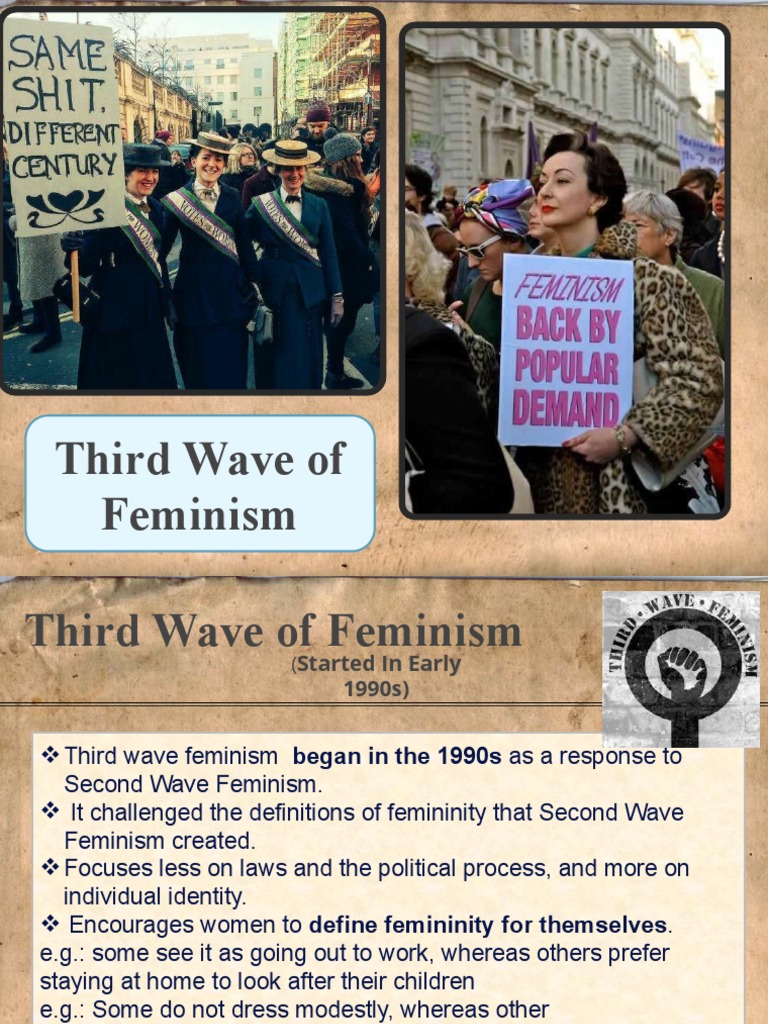
The traditional narrative of “first-wave” feminism, focused on suffrage and property rights, is another area ripe for deconstruction. While securing the vote was undoubtedly a crucial victory, it’s essential to recognize the limitations and exclusions inherent in this movement. The focus on suffrage often overshadowed other crucial issues, such as economic justice, reproductive rights, and racial equality. Furthermore, the “first wave” was largely dominated by white, middle-class women, who often excluded women of color and working-class women from their agenda. Their feminism was not intersectional; it was, in many ways, a reflection of their own privileged position.
A. The Exclusion of Women of Color: Black women, Indigenous women, and other women of color were often actively excluded from the mainstream suffrage movement. They faced both sexism and racism, and their struggles were often dismissed or ignored by white suffragettes. Women like Sojourner Truth and Ida B. Wells challenged this exclusion, advocating for a feminism that addressed the specific needs and experiences of women of color. Their contributions are often marginalized in traditional accounts of the suffrage movement, perpetuating a whitewashed narrative.
B. Class Divisions and Economic Justice: The focus on property rights often overlooked the economic realities of working-class women, who faced exploitation and poverty. Socialist and labor feminists argued that suffrage alone would not liberate women without addressing the underlying economic inequalities that kept them oppressed. They advocated for fair wages, safe working conditions, and access to education and healthcare for all women. Their voices, too, are often silenced in the dominant narrative of “first-wave” feminism.
C. Beyond Suffrage: The Broader Agenda: Many women in the early 20th century were fighting for a broader range of rights and reforms, including access to education, healthcare, and birth control. These issues were often intertwined with the struggle for suffrage, but they represented a more comprehensive vision of female liberation. Figures like Margaret Sanger championed reproductive rights, despite facing legal and social opposition. Their struggles highlight the diversity of feminist activism in the early 20th century and the need to move beyond a narrow focus on suffrage.
III. Global Genealogies: Feminism Beyond the West
Perhaps the most glaring omission in the conventional history of feminism is the failure to acknowledge the contributions of women outside the Western world. Feminism is not a Western invention; it is a global phenomenon that has taken diverse forms in different cultural and historical contexts. To truly understand the origins of feminism, we must look beyond Europe and North America and explore the struggles of women in Africa, Asia, Latin America, and the Middle East.
A. Anti-Colonial Resistance: In many colonized countries, women played a crucial role in the fight for independence. They challenged not only colonial rule but also the patriarchal structures that were often reinforced by colonialism. Their activism was often intertwined with national liberation movements, but it also addressed the specific needs and concerns of women in their communities. Figures like Funmilayo Ransome-Kuti in Nigeria and Fatima Jinnah in Pakistan led movements that challenged both colonial oppression and gender inequality.
B. Indigenous Feminisms: Indigenous women have long fought against the erasure of their cultures and the violation of their rights. Their feminisms are often rooted in traditional values and spiritual beliefs, and they prioritize the protection of their land, their languages, and their communities. They challenge both patriarchal norms within their own cultures and the dominant Western feminist discourse, which often fails to recognize their unique experiences. They offer a powerful critique of colonialism and its impact on Indigenous women’s lives.
C. Islamic Feminisms: Islamic feminism challenges the patriarchal interpretations of Islamic texts and traditions and advocates for gender equality within an Islamic framework. Islamic feminists argue that Islam is not inherently oppressive to women and that the Quran and the Sunnah can be interpreted in ways that support women’s rights. They advocate for reforms in family law, education, and political participation, while remaining committed to their faith and cultural heritage. They represent a diverse and dynamic movement that challenges both Western stereotypes of Muslim women and patriarchal norms within Muslim societies.
IV. Beyond Waves: A Rhizomatic Understanding of Feminism
Ultimately, the traditional “wave” model of feminism is inadequate for capturing the complexity and diversity of feminist thought and action. It suggests a linear progression, with each “wave” building upon the previous one, but this ignores the continuities and overlaps between different movements. A more accurate and nuanced understanding of feminism requires a rhizomatic approach, recognizing that feminist ideas and practices are interconnected and constantly evolving, spreading in multiple directions and forming new connections. We need to see feminism not as a series of discrete waves, but as a complex and ever-changing network of resistance, adaptation, and innovation.
A. Intersectional Feminism: Intersectional feminism recognizes that gender is not a monolithic category but is intertwined with other forms of oppression, such as race, class, sexuality, and disability. It challenges the tendency to prioritize the experiences of white, middle-class women and advocates for a feminism that is inclusive of all women. It acknowledges that different women face different forms of oppression and that these oppressions are interconnected. Intersectional feminism is not just an add-on to traditional feminism; it is a fundamental shift in perspective that requires us to rethink our understanding of power and privilege.
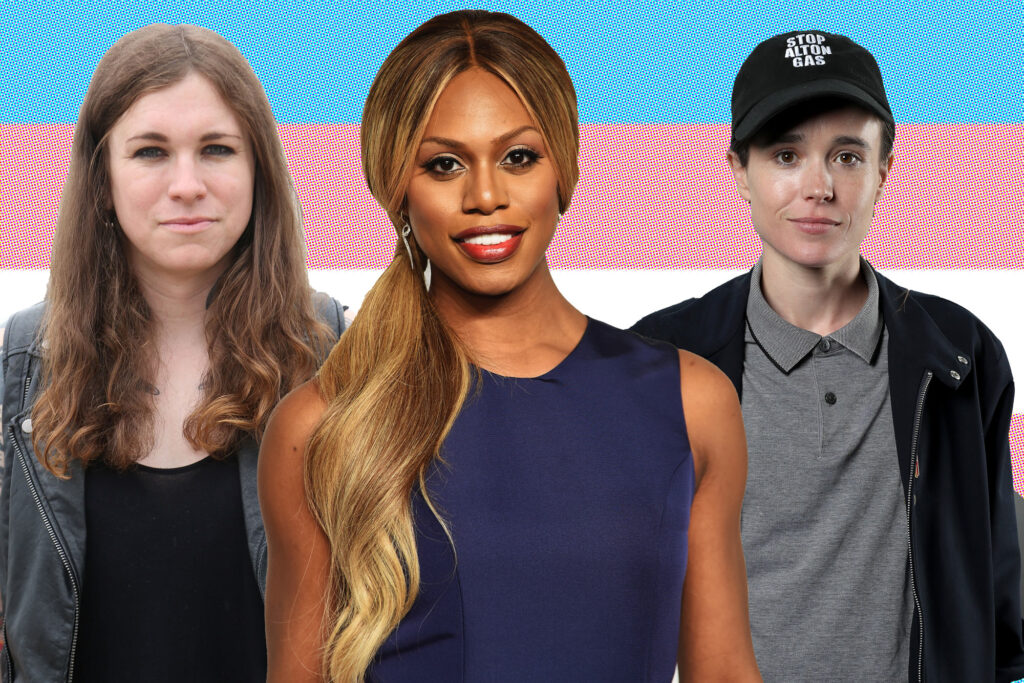
B. Transfeminism: Transfeminism recognizes that transgender women are women and that their experiences are integral to feminist theory and practice. It challenges the binary understanding of gender and advocates for the rights and liberation of all transgender people. Transfeminists argue that the fight for transgender liberation is inextricably linked to the fight for women’s liberation and that both struggles are essential for creating a more just and equitable world.
C. The Future of Feminism: The future of feminism lies in its ability to adapt to changing social and political landscapes and to embrace new technologies and forms of activism. It requires a commitment to intersectionality, inclusivity, and global solidarity. It demands that we challenge not only overt forms of oppression but also the subtle and insidious ways that power operates in our everyday lives. The journey is far from over. The fight for liberation continues.
So, the next time someone asks you, “Where did feminism start?”, resist the urge to offer a simple, sanitized answer. Tell them the messy, complicated truth. Tell them about the whispers of rebellion, the acts of everyday resistance, the global genealogies of dissent. Tell them that feminism is not a finished project, but an ongoing process of struggle, adaptation, and transformation. Tell them the truth.





Leave a Comment