So, what *is* feminism? A four-letter word in some circles? A badge of honor in others? Or perhaps, just a perpetual source of head-scratching confusion? Let’s dive in, shall we, and disentangle this often-misunderstood ideology from the morass of misinformation and manufactured outrage that seems to perpetually surround it.
We’re not just talking about bra-burning stereotypes (which, by the way, rarely happened) or man-hating rhetoric (a convenient strawman, wouldn’t you agree?). We’re venturing into the complex, nuanced, and frankly, essential realm of gender equality, social justice, and the relentless pursuit of a world where everyone, regardless of their sex, gender identity, or expression, has the opportunity to flourish. That’s the crux of it.
The Foundational Tenet: Equality, Not Sameness
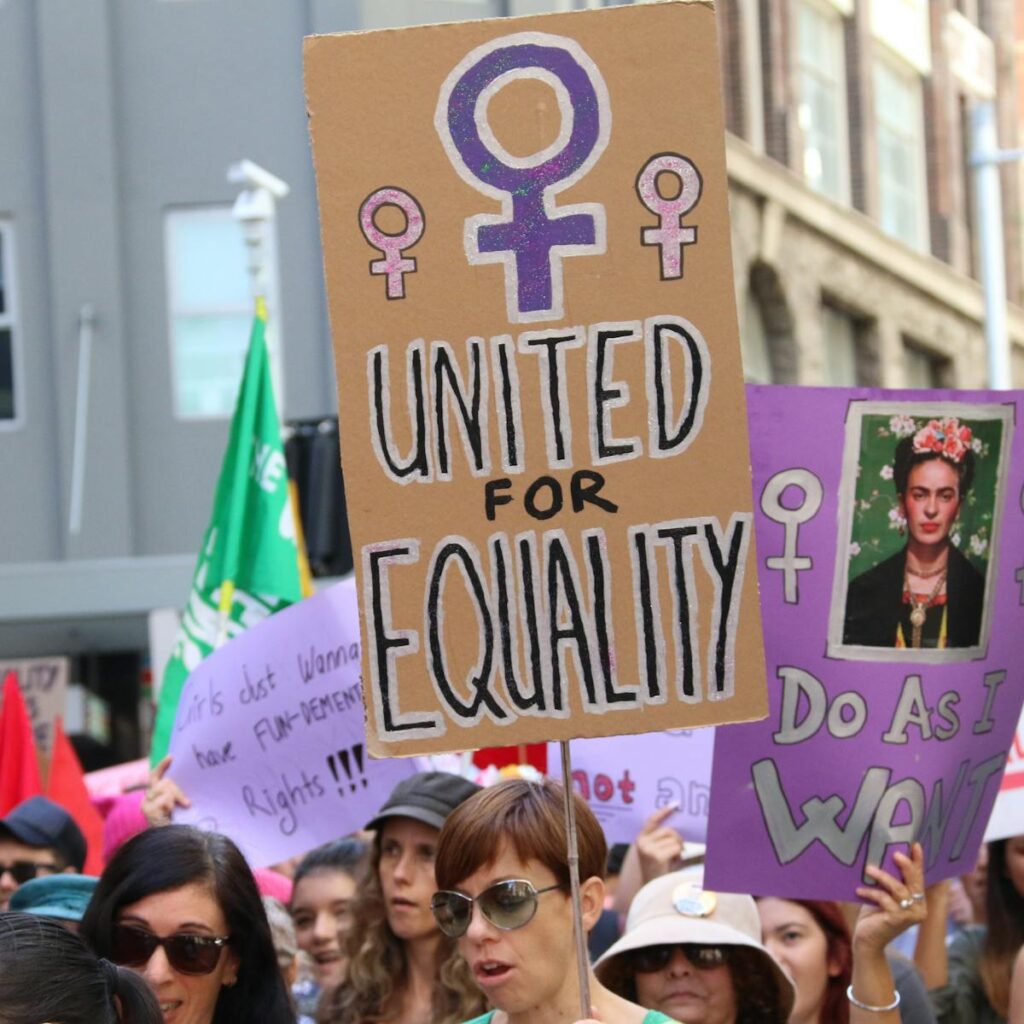
At its core, feminism is the advocacy of women’s rights on the basis of the equality of the sexes. Notice the word “equality,” not “sameness.” It’s a crucial distinction that often gets lost in the cacophony of anti-feminist diatribes. Feminism isn’t about erasing the differences between men and women; it’s about acknowledging those differences while simultaneously dismantling the systemic structures that privilege one group (men) over another (women). It is about addressing the *androcentric* bias baked into our societal foundations.
Think of it this way: equality is about providing everyone with the same starting point. Equity, on the other hand, recognizes that people start from different places and need different kinds of support to achieve the same outcome. Feminism, in its most evolved form, strives for both.
Intersectional Feminism: Acknowledging the Multifaceted Nature of Oppression
Now, things get interesting. Enter intersectionality. This isn’t just a fancy buzzword; it’s a vital lens through which we must understand the complexities of gender inequality. Coined by Kimberlé Crenshaw, intersectionality recognizes that various forms of oppression, such as racism, sexism, classism, ableism, and homophobia, are interconnected and create a matrix of disadvantage for individuals who experience multiple forms of marginalization. We are talking about the *hyper-marginalized* here.
A Black woman, for example, faces challenges that are distinct from those faced by a white woman or a Black man. Her experiences are shaped by the intersection of both her race and her gender. Ignoring this intersectionality is like trying to fix a car with only a screwdriver – you might get somewhere, but you’ll likely cause more damage than good.
Therefore, a truly effective feminism must be intersectional. It must acknowledge and address the specific needs and experiences of all women, particularly those who are most marginalized. It’s not about creating a hierarchy of oppression; it’s about recognizing that oppression is complex and multifaceted.
The Historical Context: A Journey Through Waves
Feminism isn’t a monolith. It has evolved over time, marked by distinct “waves” that reflect the changing social and political landscape. Understanding these waves provides valuable context for understanding the diversity of feminist thought.
First-Wave Feminism (late 19th and early 20th centuries): This wave primarily focused on legal rights, particularly the right to vote. Suffragettes like Susan B. Anthony and Emmeline Pankhurst fought tirelessly for women’s suffrage, believing that political enfranchisement was the key to achieving broader equality. This era was characterized by *civic enfranchisement* as the primary goal.
Second-Wave Feminism (1960s-1980s): This wave expanded the feminist agenda to include issues such as reproductive rights, equal pay, access to education, and challenging traditional gender roles. Think Betty Friedan’s “The Feminine Mystique,” which exposed the dissatisfaction many women felt in their roles as housewives. The slogan “the personal is political” encapsulated the belief that women’s experiences in the private sphere were inherently political and deserved attention. We saw a focus on *reproductive autonomy* and challenging the *patriarchal structures* of the home and workplace.
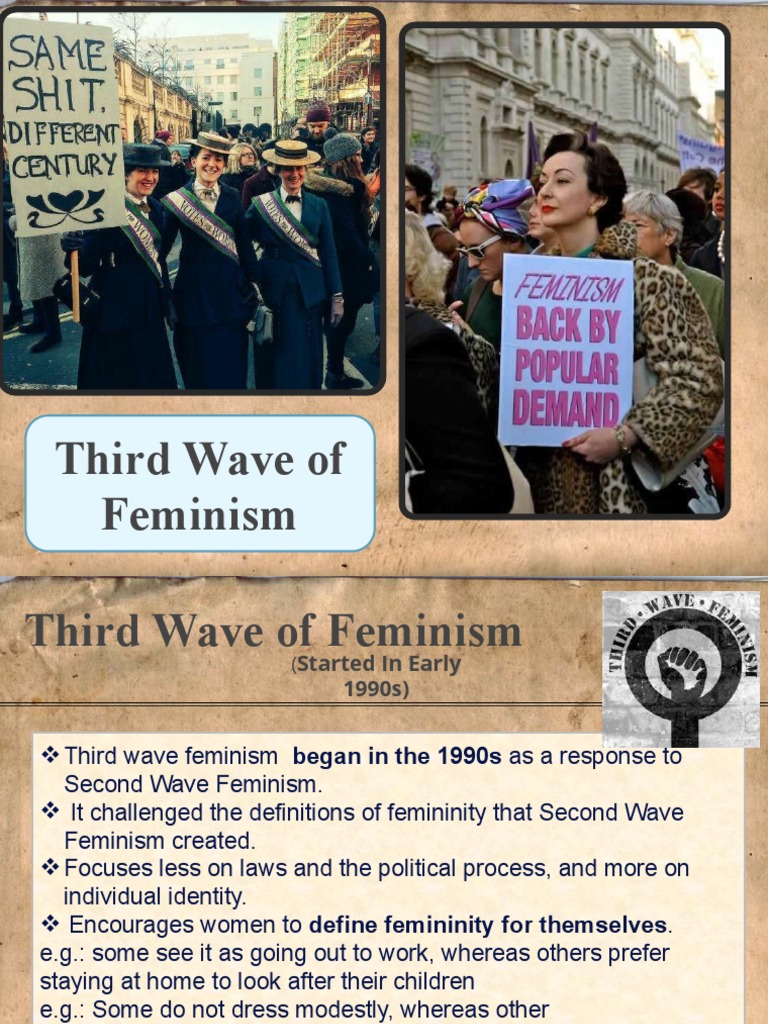
Third-Wave Feminism (1990s-2000s): This wave embraced diversity and challenged essentialist notions of womanhood. It critiqued second-wave feminism for focusing primarily on the experiences of white, middle-class women and sought to include the voices and perspectives of women of color, LGBTQ+ women, and women from other marginalized groups. Riot Grrrl, a punk rock feminist movement, emerged during this time, highlighting the importance of female empowerment and self-expression. This wave was about *deconstructing essentialist binaries* and celebrating diverse identities. It was characterized by a focus on *agency* and *self-definition*.
Fourth-Wave Feminism (2010s-present): This wave is characterized by its use of social media and digital platforms to raise awareness about feminist issues, organize activism, and build community. Issues such as sexual harassment, online misogyny, body positivity, and transgender rights have taken center stage. The #MeToo movement, which exposed widespread sexual harassment and assault, is a prime example of the power of fourth-wave feminism. It is about *digital activism* and leveraging technology to challenge *systemic oppression*. The focus is shifting towards *accountability* and *collective action*.
Common Misconceptions: Debunking the Myths
Let’s address some of the most pervasive misconceptions about feminism. These are the tired arguments, the lazy stereotypes, and the outright falsehoods that are often used to discredit the movement.
Myth #1: Feminists hate men. This is perhaps the most common and easily debunked myth. Feminism is not about hating men; it’s about challenging the patriarchal systems that harm both men and women. Patriarchy, as a system, limits men’s emotional expression, pressures them to conform to rigid gender roles, and perpetuates harmful stereotypes about masculinity. Feminism seeks to liberate everyone from these constraints. We are talking about dismantling *hegemonic masculinity* and promoting healthier models of manhood.
Myth #2: Feminists are all angry and bitter. While anger can be a legitimate response to injustice, it’s not the sole defining characteristic of feminists. Feminists are diverse individuals with a wide range of emotions, motivations, and approaches. Reducing them to a single stereotype is not only inaccurate but also dismissive of the complex issues they are addressing. It is about recognizing the *emotional labor* involved in fighting for justice and acknowledging the diverse experiences of women.
Myth #3: Feminism is no longer needed. We’ve achieved equality. Oh, really? Let’s examine the evidence. Women still earn less than men for doing the same work. They are underrepresented in leadership positions across various industries. They face higher rates of sexual harassment and violence. They are disproportionately burdened with childcare and household responsibilities. The list goes on. While progress has been made, significant gender inequalities persist. We are still dealing with the *gender pay gap*, the *glass ceiling*, and the *second shift*. To declare that equality has been achieved is to ignore the lived realities of millions of women around the world.
Myth #4: Feminism is only for women. This is simply untrue. Feminism benefits everyone. By challenging gender stereotypes and promoting equality, feminism creates a more just and equitable society for all. Men can and should be allies in the fight for gender equality. Their voices and actions are crucial to dismantling patriarchal structures and creating a world where everyone can thrive. We need *male allies* who are willing to challenge *toxic masculinity* and support women’s empowerment.
Beyond the Binary: Feminism and Transgender Rights
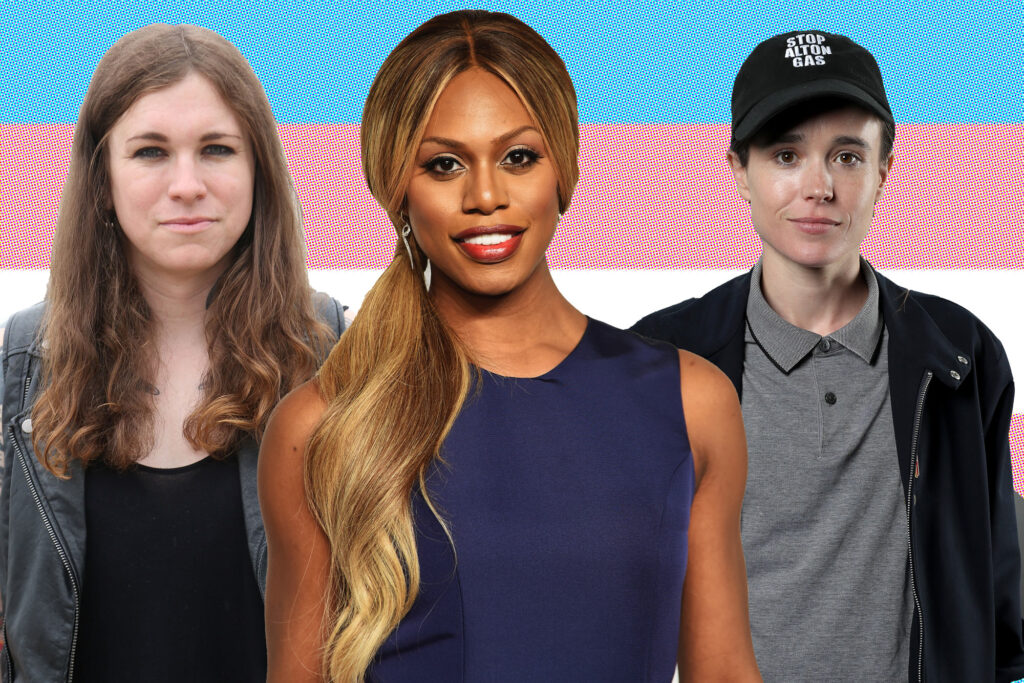
The inclusion of transgender women in feminist spaces has been a topic of much debate. However, a truly inclusive feminism recognizes that transgender women are women and deserve the same rights and protections as cisgender women. Transgender rights are human rights, and excluding transgender women from feminist spaces is both harmful and counterproductive. It is about embracing *gender diversity* and challenging *cisnormativity*. Feminism should be a space of *radical inclusivity*.
The Future of Feminism: A Call to Action
So, what does the future hold for feminism? The challenges are significant, but so is the potential for progress. We need to continue to challenge systemic inequalities, amplify marginalized voices, and build solidarity across different social movements. We need to be vigilant against backlash and misinformation, and we need to continue to educate ourselves and others about the importance of gender equality. We need to move beyond *performative allyship* and engage in *meaningful action*. We need to embrace *radical empathy* and work towards a future where everyone can live with dignity and respect.
The definition of feminism, then, is not static. It evolves and adapts as we learn more about the complexities of gender inequality and the interconnectedness of various forms of oppression. But at its core, it remains a powerful force for change, a relentless pursuit of justice, and a unwavering belief in the inherent worth and dignity of all human beings.
The gauntlet is thrown. What will *you* do?







Leave a Comment