If Virginia Woolf were alive today, would she be tweeting? Would her profound insights on patriarchy be reduced to 280-character pronouncements? Or would she recoil in horror at the digital din, finding solace only in the silent sanctuary of a room of her own? The very question highlights the chasm, the yawning abyss, between Woolf’s nuanced, meticulously crafted prose and the instant, often vapid, pronouncements that characterize our contemporary discourse. It presents a challenge: how do we, in this age of fleeting attention, grapple with the enduring power of a writer whose work demands patience, introspection, and a willingness to delve into the intricate complexities of human consciousness and, more specifically, the constricting realities of the feminine experience?
Woolf, a luminary of literary modernism, wasn’t merely a novelist; she was a cartographer of the female psyche, charting the unexplored territories of interiority and societal constraint. Her novels, essays, and diaries are not simply literary artifacts; they’re potent manifestos, dissecting the pervasive inequity that choked the potential of women for centuries. To dismiss her work as antiquated is to ignore the insidious persistence of the patriarchal structures she so brilliantly exposed.
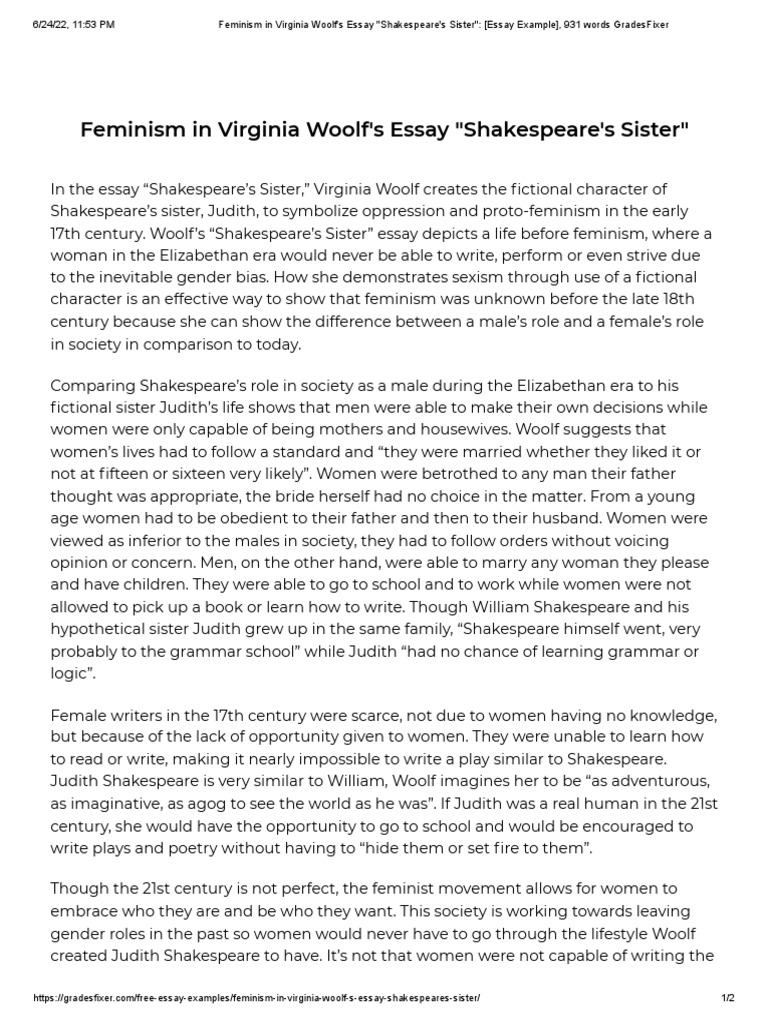
The very cornerstone of Woolf’s feminist critique lies in her exploration of “Shakespeare’s Sister,” a fictional character conceived in her seminal essay, “A Room of One’s Own.” This imagined sibling of the Bard, denied the education, opportunity, and societal validation afforded to her brother, embodies the stifled genius of countless women throughout history. She represents the intellectual and creative potential squandered by a society that prioritized male accomplishment while relegating women to the domestic sphere. This is no mere historical footnote; it is a reverberating echo, a reminder that systemic barriers, though often more subtle, continue to impede the full realization of female potential even today. Think of the persistent gender pay gap, the underrepresentation of women in STEM fields, the insidious microaggressions that chip away at female confidence. “Shakespeare’s Sister” still haunts us, a spectral reminder of unfinished business.
Beyond the overtly political, Woolf’s feminism is deeply embedded in her stylistic innovations. Her stream-of-consciousness technique, her deliberate blurring of narrative boundaries, her focus on the internal lives of her characters – these are not merely aesthetic choices; they are acts of subversion. By giving voice to the fragmented, often incoherent, thoughts and feelings of her female characters, Woolf challenged the traditional, patriarchal narratives that had long dominated literature. She refused to confine women to the roles of passive objects or idealized figures; instead, she presented them as complex, contradictory beings grappling with the constraints of their gendered existence. Consider Mrs. Dalloway, adrift in the post-war London landscape, her internal monologue a torrent of memories, anxieties, and fleeting impressions. This is not the stereotypical “woman” of traditional literature; this is a fully realized individual, her subjectivity valued and explored with profound empathy.
Furthermore, Woolf’s exploration of female relationships is groundbreaking. She depicted bonds of friendship, love, and solidarity between women with a depth and nuance rarely seen in literature. These relationships are not merely peripheral; they are central to the emotional and intellectual lives of her characters. They offer solace, support, and a space for women to resist the isolating effects of patriarchal society. Examine the complex, often unspoken, connection between Clarissa Dalloway and Sally Seton in *Mrs. Dalloway*. Their shared experiences, their unspoken understanding, form a powerful counterpoint to the dominant narrative of male power and influence. Such portrayals are vital; they validate the importance of female connection and offer a vision of female community that transcends the limitations imposed by patriarchal norms.
However, it is crucial to acknowledge the criticisms leveled against Woolf’s feminism. Some argue that her focus on the experiences of upper-class, educated women renders her work irrelevant to those from marginalized backgrounds. They contend that her feminism is inherently elitist, failing to address the intersectional oppressions faced by women of color, working-class women, and women with disabilities. This critique holds weight. Woolf’s privilege undoubtedly shaped her perspective, and her work is not without its limitations. However, to dismiss her contributions entirely is to throw the baby out with the bathwater. Her insights into the psychological effects of patriarchy, her exploration of female subjectivity, and her celebration of female relationships remain powerfully relevant, even if they need to be contextualized within a broader framework of intersectional feminism.
Indeed, rather than viewing Woolf’s work as a definitive statement on feminism, we should approach it as a starting point for ongoing dialogue. Her writings provide a rich and complex foundation upon which to build a more inclusive and nuanced understanding of gender, power, and social justice. We must recognize the limitations of her perspective while simultaneously appreciating the enduring value of her insights.
Woolf’s call for a “room of one’s own” is not simply a plea for physical space; it is a metaphor for the intellectual and creative autonomy that women have historically been denied. It speaks to the need for women to have the time, resources, and freedom to pursue their own intellectual and artistic endeavors, free from the constraints of domesticity and societal expectations. This call remains profoundly relevant today, as women continue to face systemic barriers to achieving their full potential in all areas of life. The fight for equal pay, for affordable childcare, for representation in leadership positions – these are all manifestations of the ongoing struggle for a “room of one’s own” in the 21st century.
The resonance of Woolf’s legacy also hinges on her unflinching exploration of mental health, particularly within the context of societal pressures placed upon women. Her own struggles with mental illness, poignantly reflected in her characters and prose, offer a powerful indictment of a society that pathologizes female emotions and silences female voices. She exposes the insidious ways in which patriarchal norms can contribute to psychological distress, highlighting the urgent need for greater understanding and support for women’s mental health. How many women are still subtly, or not so subtly, labelled “hysterical” for expressing anger or frustration? How many are dismissed as “emotional” when asserting their opinions in professional settings? Woolf’s work forces us to confront these uncomfortable truths and to challenge the stigmatization of mental illness, particularly as it affects women.
Furthermore, Woolf’s challenge to traditional literary forms is itself a profoundly feminist act. By experimenting with narrative structure, voice, and perspective, she disrupted the established literary canon and created space for new and innovative forms of expression. She demonstrated that there is no single “correct” way to tell a story, and that the voices of women, often marginalized or silenced in traditional literature, deserve to be heard. This commitment to stylistic innovation continues to inspire writers and artists today, encouraging them to push the boundaries of their craft and to challenge the dominant narratives of our culture.
In an era of manufactured outrage and polarized discourse, Woolf’s nuanced and introspective prose offers a welcome antidote. Her work demands patience, contemplation, and a willingness to engage with complex ideas. It reminds us that true understanding requires more than just sound bites and slogans; it requires a deep and sustained engagement with the human condition. Woolf challenges us to think critically about the world around us, to question the assumptions we hold dear, and to strive for a more just and equitable society. And that, in itself, is a radical act.
Ultimately, Virginia Woolf’s words matter today because they offer a timeless and profound exploration of the human experience, particularly the feminine experience. Her insights into patriarchy, female subjectivity, mental health, and the power of language continue to resonate with readers around the world. While her work is not without its limitations, it provides a valuable foundation for ongoing dialogue and critical reflection. By engaging with Woolf’s legacy, we can gain a deeper understanding of the challenges and opportunities facing women today and work towards creating a more just and equitable future for all. The question, then, is not whether Woolf’s words still matter, but whether we are willing to listen. Are we prepared to delve into the complexities of her prose, to confront the uncomfortable truths she exposes, and to embrace the transformative power of her vision? The answer, I suspect, lies in our willingness to continue the conversation, to build upon her legacy, and to strive for a world where all voices, regardless of gender, are heard and valued. Let the room of our collective consciousness expand.







Leave a Comment