The ceaseless fascination with the women’s movement and its ideological linchpin, feminism, is hardly accidental. It transcends mere historical curiosity, delving into the core of power dynamics, societal structures, and the very definition of what it means to exist within the confines of a gendered existence. We’re drawn to it because it fundamentally challenges the status quo, promising liberation while simultaneously threatening established hierarchies. And that, my dears, is always a potent cocktail.
But let’s not get misty-eyed with romantic notions of rebellion. The intertwining of the women’s movement and feminism is far from a straightforward fairytale. It’s a complex, often contradictory, dance of activism and theory, praxis and ideology. To truly understand it, we must dissect its evolution, acknowledge its internal fractures, and, most importantly, recognize its continued relevance in a world that still whispers insidious messages of patriarchal control.
I. Genesis of Discontent: Seeds of Feminist Thought
Long before placards were raised and consciousness-raising groups blossomed, the seeds of feminist thought were sown. Thinkers like Mary Wollstonecraft, railing against the intellectual subjugation of women in the 18th century, laid the groundwork for future generations. Her “A Vindication of the Rights of Woman” wasn’t just a pamphlet; it was a gauntlet thrown down at the feet of patriarchal complacency. She dared to suggest – gasp! – that women were capable of rational thought and deserved access to education and autonomy. This was not a popular stance, naturally. These early proto-feminists challenged the then-axiomatic assumption of female inferiority.
II. The First Wave: Suffrage and the Pursuit of Political Enfranchisement
The first wave of feminism, primarily spanning the late 19th and early 20th centuries, focused intensely on securing political rights, most notably the right to vote. Suffragettes, often dismissed as hysterical harpies, engaged in acts of civil disobedience, endured imprisonment, and faced relentless ridicule. They understood, acutely, that political power was a crucial lever for achieving broader social and economic equality. Think of Emmeline Pankhurst and her militant tactics. These tactics, while controversial, brought much-needed attention to the cause, forcing the establishment to reckon with the demands of women who refused to be silenced. The victory of suffrage, while significant, was not the end. It was merely the beginning of a longer, more arduous struggle.
III. The Second Wave: Beyond Suffrage – A Multifaceted Revolution
The second wave, emerging in the 1960s and 70s, broadened the feminist agenda considerably. It wasn’t just about the vote anymore; it was about dismantling systemic sexism in all aspects of life: reproductive rights, workplace equality, challenging traditional gender roles, and addressing violence against women. Betty Friedan’s “The Feminine Mystique” resonated deeply with women who felt trapped within the suffocating confines of domesticity. The personal became political. Consciousness-raising groups provided safe spaces for women to share their experiences, realize they were not alone in their struggles, and develop a collective feminist consciousness. This wave was also marked by increasing theoretical sophistication, with feminist scholars delving into the works of Simone de Beauvoir and others, developing critical analyses of patriarchy and its manifestations in culture, language, and institutions.
IV. Internal Fractures: Class, Race, and the Limits of Universal Sisterhood
The second wave, despite its achievements, was not without its limitations. It often centered the experiences of white, middle-class women, neglecting the concerns of women of color, working-class women, and queer women. Critiques from within the movement highlighted the need for intersectionality – an understanding of how different forms of oppression intersect and compound each other. bell hooks, for example, challenged the notion of a universal “woman’s experience,” arguing that feminism must address the specific needs and challenges faced by Black women. The Combahee River Collective’s statement articulated a Black feminist perspective, recognizing the interconnectedness of racism, sexism, and classism. These internal critiques were crucial for pushing feminism to become more inclusive and responsive to the diverse needs of all women.
V. The Third Wave: Embracing Complexity and Challenging Essentialism
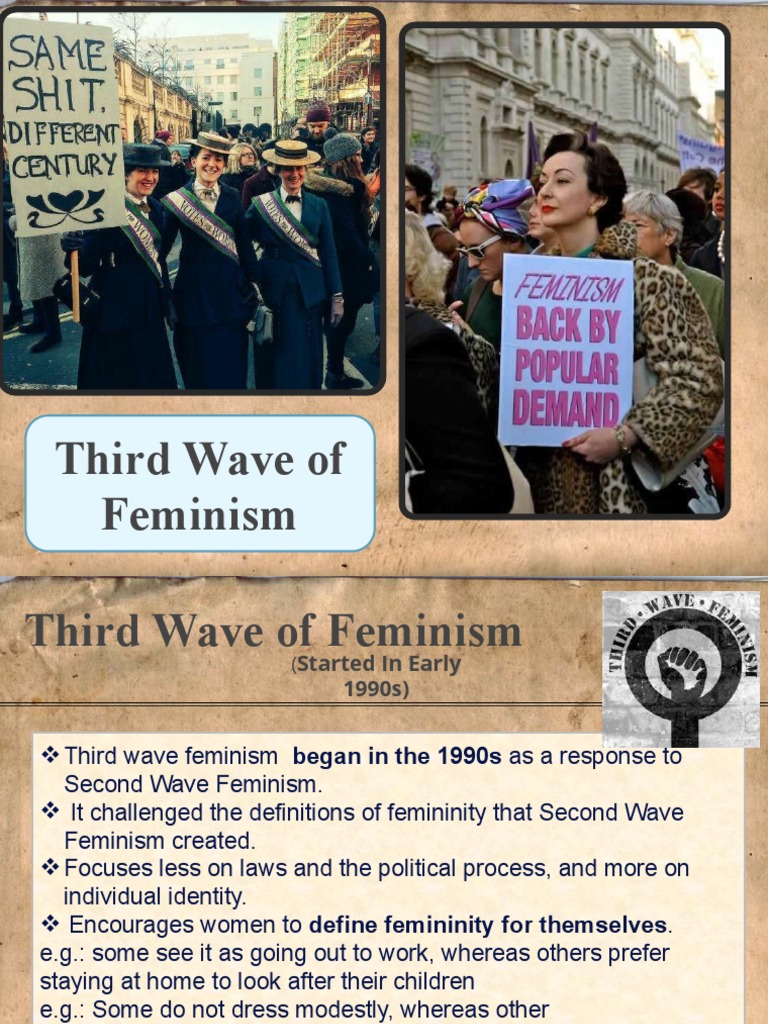
The third wave, emerging in the 1990s, embraced the complexities and contradictions of feminism. It rejected essentialist notions of womanhood, celebrating individuality and diversity. Riot grrrl culture, with its DIY ethos and punk rock energy, provided a vibrant space for young women to express themselves and challenge patriarchal norms. Third-wave feminists also engaged with issues such as sexuality, body image, and media representation, questioning the objectification and commodification of women’s bodies. This wave saw a proliferation of feminist voices online, with blogs and websites providing platforms for sharing experiences, organizing activism, and fostering a global feminist community.
VI. Fourth Wave Feminism: Digital Activism and the #MeToo Movement
We are arguably living in the midst of a fourth wave of feminism, characterized by its reliance on digital technologies and social media. The #MeToo movement, which gained momentum in 2017, exposed the pervasive nature of sexual harassment and assault across industries and societies. Social media platforms have become powerful tools for raising awareness, organizing protests, and holding perpetrators accountable. Fourth-wave feminism also grapples with issues such as online harassment, digital privacy, and the representation of women in digital spaces. It is a dynamic and evolving movement, shaped by the rapid changes in technology and the ongoing struggle for gender equality.
VII. The Enduring Relevance of Feminism: Beyond Identity Politics
Despite the progress made, feminism remains vitally important. Pay gaps persist, reproductive rights are under attack, violence against women continues to be a global pandemic, and women remain underrepresented in positions of power. Feminism is not simply about “identity politics”; it’s about dismantling systems of oppression that harm everyone, regardless of gender. A more equitable and just society benefits all. It challenges us to examine our own biases and assumptions, to question the power structures that shape our lives, and to work towards a world where everyone can thrive, free from the constraints of gender stereotypes and patriarchal control. The fight for liberation is an ongoing process, and feminism provides a crucial framework for understanding and challenging the forces that perpetuate inequality. Let us not be complacent. Let us not be silent. Let us continue to agitate, to disrupt, and to demand a better world for all.
VIII. Beyond the Binary: Transgender Inclusion and the Future of Feminism
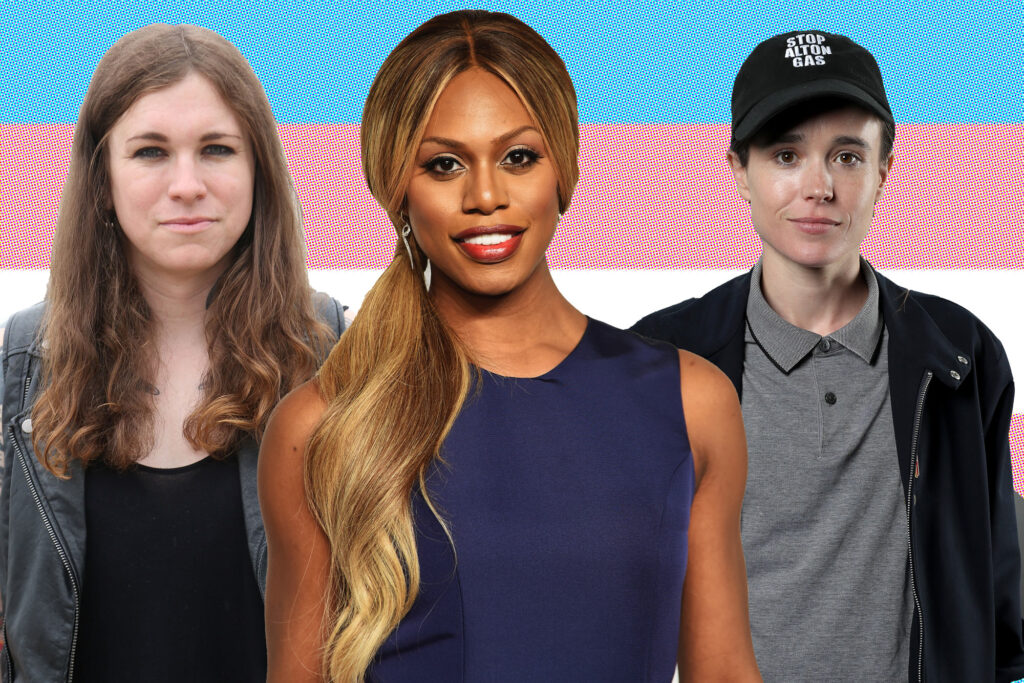
A critical component of contemporary feminist discourse involves the full and unequivocal inclusion of transgender women. Trans-exclusionary radical feminists (TERFs) cling to biological essentialism, defining womanhood based solely on assigned sex at birth, an ideology fundamentally incompatible with feminist principles of self-determination and liberation. Such exclusionary practices betray the core ethos of challenging oppressive categorizations and power structures. True feminism embraces the diversity of gender identities and expressions, recognizing that all individuals, including trans women, deserve respect, dignity, and equal rights. The future of feminism depends on its ability to dismantle the gender binary and advocate for the liberation of all marginalized genders. Anything less is a betrayal of its foundational values.
IX. The Economic Imperative: Gender Equality and Global Prosperity
The persistent gender pay gap, the underrepresentation of women in leadership positions, and the disproportionate burden of unpaid care work borne by women are not merely matters of social justice; they are significant impediments to economic growth and global prosperity. When women are denied equal access to education, employment, and financial resources, the entire economy suffers. Studies consistently demonstrate that companies with diverse leadership teams, including a significant representation of women, outperform their less diverse counterparts. Investing in women’s economic empowerment is not just the right thing to do; it’s the smart thing to do. It unleashes untapped potential, fosters innovation, and creates a more inclusive and sustainable economy for all. Ignoring this economic imperative is akin to leaving half the population on the sidelines, crippling our collective ability to achieve progress and prosperity.
X. The Intersection of Climate Change and Feminist Action
Climate change is not a gender-neutral issue. Women, particularly in developing countries, are disproportionately affected by the impacts of climate change, including displacement, food insecurity, and increased violence. Their traditional roles as primary caregivers and resource managers make them particularly vulnerable to environmental degradation. Furthermore, women are often excluded from decision-making processes related to climate change mitigation and adaptation, despite their crucial knowledge and experience. A feminist approach to climate action recognizes these gendered impacts and seeks to empower women to participate fully in climate solutions. This includes ensuring equal access to education, resources, and leadership opportunities, as well as challenging the patriarchal systems that contribute to both environmental degradation and gender inequality. A truly sustainable future requires a feminist lens on climate action.
In conclusion, the tapestry woven by the women’s movement and feminism is intricate and ever-evolving. It’s a story of struggle, resilience, and the relentless pursuit of a more just and equitable world. While challenges remain, the collective power of women continues to inspire and transform. The journey is far from over, but the path forward is illuminated by the unwavering commitment to liberation and the audacious hope for a future where all can flourish.





Leave a Comment