So, you want to dismantle the patriarchy, eh? Excellent. But before you grab your metaphorical (or literal, no judgment) pitchfork and charge the gates of societal oppression, a crucial question: which flavor of feminist fury fuels your fire? Because, let’s be clear, feminism isn’t a monolithic entity; it’s a sprawling, vibrant ecosystem teeming with diverse perspectives, nuanced critiques, and, yes, even the occasional internecine squabble. Navigating this labyrinth can be daunting, especially for the neophyte crusader. But fear not! This guide will arm you with the intellectual ammunition you need to understand the kaleidoscopic world of feminist thought.
But, beware, wading into these waters can be tricky. Are you prepared to grapple with the uncomfortable truths, the historical baggage, the potential for internal contradictions? Are you ready to confront your own biases and privileges, to dismantle the internalized misogyny that even the most ardent feminist may harbor? The journey to liberation is rarely comfortable, darlings. It demands intellectual rigor, emotional honesty, and a willingness to constantly interrogate your own position within the power structures you seek to dismantle.
I. The Foundational Pillars: Laying the Groundwork for Liberation
No exploration of feminism would be complete without acknowledging its foundational pillars – the movements that laid the groundwork for subsequent iterations. These are the OG disruptors, the women who dared to challenge the status quo when doing so was genuinely revolutionary.
A. Liberal Feminism: Equality Through Legislation
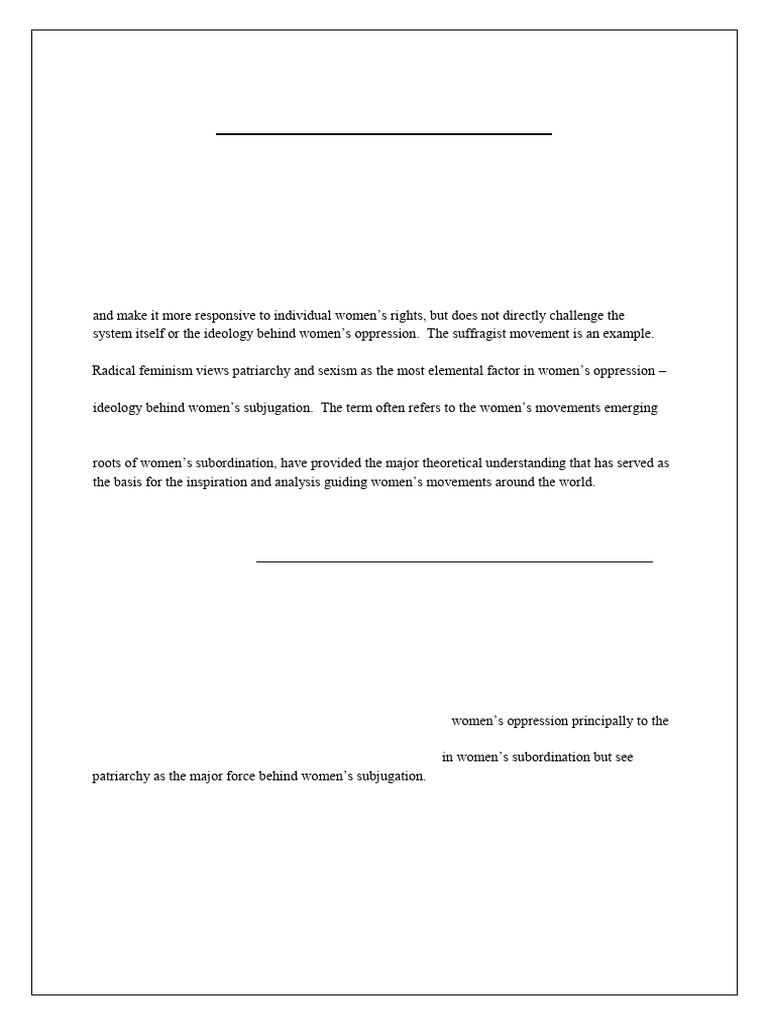
Think suffragettes and equal pay. Liberal feminism focuses on achieving gender equality through legal and political reforms. It emphasizes individual rights and freedoms, advocating for equal opportunities in education, employment, and political participation. This is the “work within the system” approach, aiming to dismantle discriminatory laws and policies through existing institutions.
Its appeal lies in its pragmatism and its accessibility. It’s the feminism that resonates most readily with mainstream audiences, often because it doesn’t challenge the fundamental structures of capitalist society. However, critics argue that it’s too focused on individual achievement and neglects the systemic issues that perpetuate gender inequality.
B. Radical Feminism: Uprooting the Patriarchal Tree
Now we’re talking. Radical feminism views patriarchy as the root cause of women’s oppression, arguing that it permeates every aspect of society – from our interpersonal relationships to our cultural institutions. It seeks to fundamentally transform social structures, challenging traditional gender roles and power dynamics.
Radical feminists advocate for a range of strategies, including consciousness-raising, separatist communities, and direct action. They often critique the objectification of women in media and popular culture, and they challenge the traditional family structure as a site of female oppression. This is where we find the boldest critiques and the most uncompromising demands for societal change.
C. Socialist Feminism: Capitalism and the Patriarchy – A Toxic Duo
Socialist feminism recognizes the interconnectedness of gender inequality and economic exploitation. It argues that capitalism and patriarchy are mutually reinforcing systems that perpetuate women’s oppression. Women are exploited in the workplace, burdened with unpaid domestic labor, and marginalized in positions of power.
Socialist feminists advocate for economic justice, including equal pay, affordable childcare, and paid parental leave. They also call for the redistribution of wealth and resources, challenging the capitalist system that concentrates power in the hands of a few. They see liberation as intertwined with the liberation of all oppressed people.
II. Emerging Perspectives: Expanding the Feminist Lexicon
As feminism evolved, new perspectives emerged, reflecting the growing awareness of intersectionality and the diverse experiences of women around the globe. These perspectives challenge the dominant narratives and offer alternative frameworks for understanding and addressing gender inequality.
A. Black Feminism: Interrogating the White Gaze
Black feminism emerged in response to the exclusion of Black women from both the feminist movement and the civil rights movement. It recognizes that Black women face a unique form of oppression that is rooted in the intersection of racism, sexism, and classism. Black feminists challenge the dominant narratives of white feminism, highlighting the distinct experiences and perspectives of Black women.
Black feminism emphasizes the importance of self-definition and self-determination. It celebrates Black women’s strength, resilience, and cultural traditions. It also advocates for social and economic justice for all Black people. This is the feminism that acknowledges the complexities of identity and the necessity of centering marginalized voices.
B. Postcolonial Feminism: Decolonizing the Mind
Postcolonial feminism critiques the legacy of colonialism and its impact on women in the Global South. It challenges the Western-centric perspectives that often dominate feminist discourse, highlighting the distinct challenges faced by women in postcolonial societies. Postcolonial feminists argue that Western feminist frameworks are often inadequate or inappropriate for addressing the realities of women in the Global South.
Postcolonial feminism emphasizes the importance of cultural context and historical specificity. It recognizes the diversity of women’s experiences and challenges the notion of a universal sisterhood. It also advocates for decolonizing the mind, dismantling the internalized oppression that results from colonial rule. This perspective forces us to confront the power dynamics inherent in global feminism.
C. Transfeminism: Expanding the Boundaries of Womanhood
Transfeminism incorporates the perspectives of transgender women into feminist theory and activism. It recognizes that transgender women are women and that their experiences are essential to understanding gender inequality. Transfeminists challenge the traditional binary understanding of gender, advocating for the rights and liberation of all transgender people.
Transfeminism critiques the cisnormative assumptions that often underlie feminist discourse. It emphasizes the importance of challenging gender stereotypes and dismantling the societal structures that marginalize transgender people. This perspective pushes the boundaries of what it means to be a woman and challenges us to reimagine gender itself.
D. Intersectional Feminism: Recognizing the Overlapping Oppressions
Intersectional feminism, popularized by Kimberlé Crenshaw, is perhaps the most crucial lens through which to view all feminist perspectives. It recognizes that individuals can experience multiple forms of oppression based on their race, class, gender, sexual orientation, disability, and other social identities. These forms of oppression are interconnected and create unique experiences of marginalization.
Intersectional feminism challenges the notion that women constitute a homogenous group. It emphasizes the importance of understanding the diverse experiences of women and of working to dismantle all forms of oppression. It demands that we move beyond a singular focus on gender and address the systemic inequalities that affect all marginalized people. Ignoring intersectionality is not just a theoretical failing; it’s a practical one that undermines the entire project of liberation.
III. Contemporary Debates: Navigating the Murky Waters
Feminism is not a static ideology; it is a constantly evolving and contested terrain. Contemporary debates reflect the ongoing tensions and disagreements within the feminist movement, pushing us to grapple with complex questions and challenging us to refine our understanding of gender inequality.
A. The Sex-Positive vs. Anti-Pornography Divide: Reclaiming or Reinforcing?
This is perhaps one of the most contentious debates within feminism. Sex-positive feminists argue that embracing female sexuality and challenging sexual repression is essential to liberation. They advocate for sex education, access to contraception, and the right to make autonomous choices about one’s own body.
Anti-pornography feminists, on the other hand, argue that pornography perpetuates the objectification and sexual exploitation of women. They believe that it normalizes violence against women and reinforces harmful stereotypes about female sexuality. This debate forces us to confront the complex relationship between sex, power, and consent.
B. The TERF Wars: Trans Exclusionary Radical Feminism – A Betrayal?
TERF stands for Trans Exclusionary Radical Feminist, a label applied to individuals who identify as radical feminists but hold transphobic views, particularly regarding the inclusion of transgender women in women’s spaces and the recognition of transgender identities. Mainstream feminism overwhelmingly rejects TERF ideology as harmful and discriminatory, arguing that it contradicts the core principles of inclusivity and liberation.
The debate surrounding TERF ideology highlights the importance of intersectionality and the need to center the experiences of the most marginalized. It forces us to confront the ways in which even feminist movements can perpetuate exclusion and oppression.
C. The “Lean In” Debate: Individualism vs. Systemic Change
Sheryl Sandberg’s “Lean In” sparked a heated debate about the role of individual agency versus systemic change in achieving gender equality in the workplace. Critics argue that it places too much emphasis on individual women to overcome workplace barriers and neglects the systemic issues that perpetuate gender inequality.
The “Lean In” debate highlights the tension between individual empowerment and collective action. It forces us to consider whether focusing on individual strategies is sufficient to address the deeply entrenched structures of sexism in the workplace.
IV. Moving Forward: A Call to Action
So, where do we go from here? The answer, of course, is multifaceted. Embrace the complexity. Engage in critical self-reflection. Listen to marginalized voices. And, most importantly, act. Feminism is not just a theory; it is a practice.
Whether you choose to work within the system or challenge it from the outside, whether you focus on individual empowerment or systemic change, remember that the goal is liberation for all. The journey may be challenging, but the destination – a world free from gender inequality – is worth fighting for.
Now go forth and dismantle that patriarchy. But do it with nuance, with empathy, and with a healthy dose of rebellious joy.








Leave a Comment