The tapestry of feminism, woven with threads of defiance, resilience, and relentless pursuit of equity, unfurls across centuries. To confine its evolution to neatly demarcated ‘stages’ is a Sisyphean task, yet tracing the trajectory of feminist thought and action illuminates the enduring struggle against patriarchal constraints. These are not discrete boxes, but rather overlapping waves, each building upon the foundations laid by its predecessors, constantly reshaping the landscape of gender politics.
Let us begin with the faintest glimmer of resistance, the pre-history of organized feminism, where individual acts of defiance flickered like rebellious candles in the oppressive darkness. Think of Sappho, poetess of Lesbos, celebrating female desire in a world that sought to erase it. Or the Beguines, independent women of the medieval period who carved out spaces for communal living and spiritual autonomy, eschewing the constraints of marriage and convent life. These nascent challenges to the status quo, though not explicitly feminist in the modern sense, planted the seeds of future insurrection.
Then dawns the First Wave, a tide of suffragist fervor that crashed against the shores of the 19th and early 20th centuries. Its primary objective: the vote. This was a movement largely, though not exclusively, populated by white, middle-class women, a fact that invites critical scrutiny. Figures like Susan B. Anthony, Elizabeth Cady Stanton, and Emmeline Pankhurst galvanized support, employing tactics ranging from peaceful petitioning to militant demonstrations. They argued that women, as rational beings, deserved the same political rights as men. This wave, however, was not without its flaws. The voices of women of color, working-class women, and other marginalized groups were often silenced or relegated to the periphery. The inherent biases within the movement, reflective of the societal structures it sought to dismantle, serve as a cautionary tale against homogenization and exclusionary practices.
The achievement of suffrage in many Western countries was not an ending, but a threshold. The Second Wave, emerging in the 1960s and 70s, broadened the scope of feminist concerns, moving beyond the political realm to challenge the pervasive structures of patriarchy in every facet of life. The personal became political, as women analyzed their experiences within the family, the workplace, and society at large. The publication of Betty Friedan’s “The Feminine Mystique” ignited a firestorm, exposing the discontent simmering beneath the veneer of suburban domesticity. Simone de Beauvoir’s “The Second Sex,” a seminal work of existentialist feminism, dissected the social construction of womanhood, declaring that “one is not born, but rather becomes, a woman.”
This era witnessed the rise of consciousness-raising groups, where women shared their experiences and collectively identified the patterns of oppression. Demands for reproductive rights, equal pay, and an end to sexual violence became central to the feminist agenda. Radical feminists like Andrea Dworkin and Catharine MacKinnon challenged the very foundations of patriarchal power, arguing that pornography and prostitution were forms of sexual exploitation that perpetuated male dominance. Cultural feminism, a strand within the Second Wave, celebrated female difference and sought to create a separate female culture, free from male influence. This wave, too, faced criticism for its tendency to prioritize the experiences of white, heterosexual women, neglecting the intersectional realities of other groups.
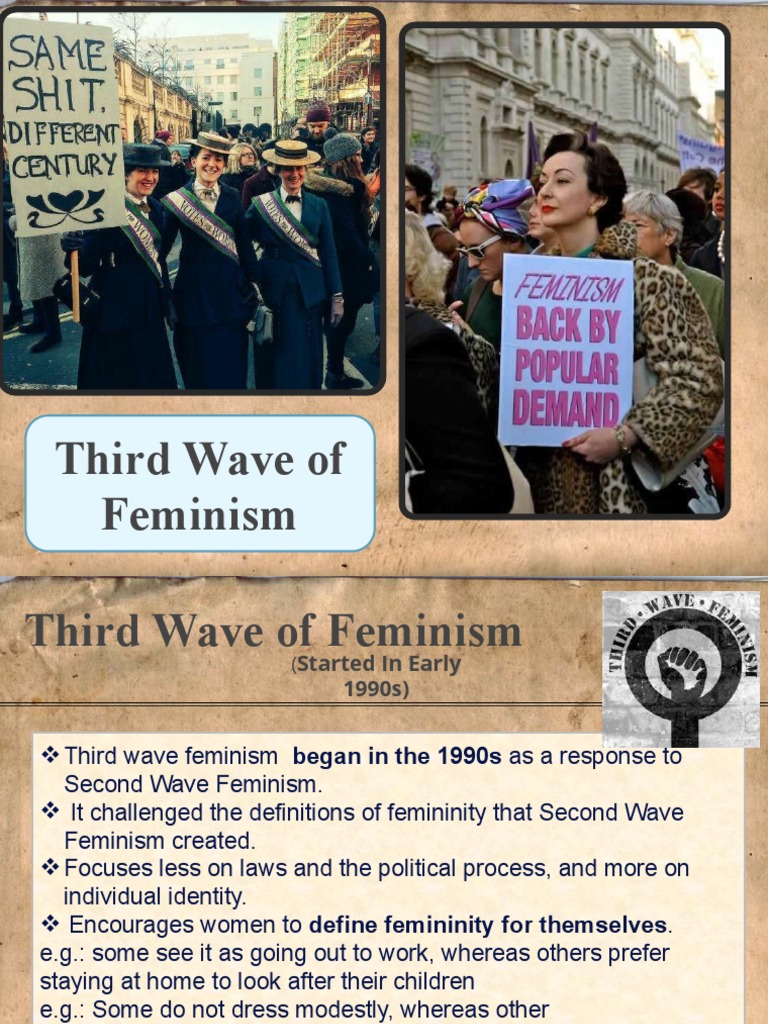
The Third Wave, surging forth in the 1990s, emerged as a response to the perceived limitations and exclusions of its predecessors. It embraced fluidity, diversity, and a more nuanced understanding of power dynamics. Rejecting essentialist notions of womanhood, Third Wave feminists celebrated individuality and embraced a multitude of identities. Intersectionality, a concept coined by Kimberlé Crenshaw, became a central framework for understanding how various forms of oppression – based on race, class, sexuality, and other factors – intersect and compound one another.
Riot Grrrl, a punk subculture movement, provided a platform for young women to express their anger and challenge gender stereotypes through music, zines, and activism. Postfeminism, a contested term, emerged as a reaction against what some perceived as the rigidity and victimhood mentality of Second Wave feminism. Postfeminists argued that gender equality had largely been achieved and that women were now free to make their own choices, without being constrained by feminist ideology. This perspective, however, was often criticized for its dismissal of ongoing inequalities and its tendency to individualize social problems.
And now, the Fourth Wave, propelled by the digital revolution and the rise of social media, crashes upon us. This wave is characterized by its global reach, its emphasis on intersectionality, and its use of online platforms to mobilize activism and raise awareness. The #MeToo movement, sparked by allegations of sexual harassment and assault against Harvey Weinstein, demonstrated the power of collective storytelling and the potential for online activism to bring about real-world change. Social media has also facilitated the rise of feminist bloggers, YouTubers, and influencers who use their platforms to challenge gender norms, promote body positivity, and advocate for social justice.
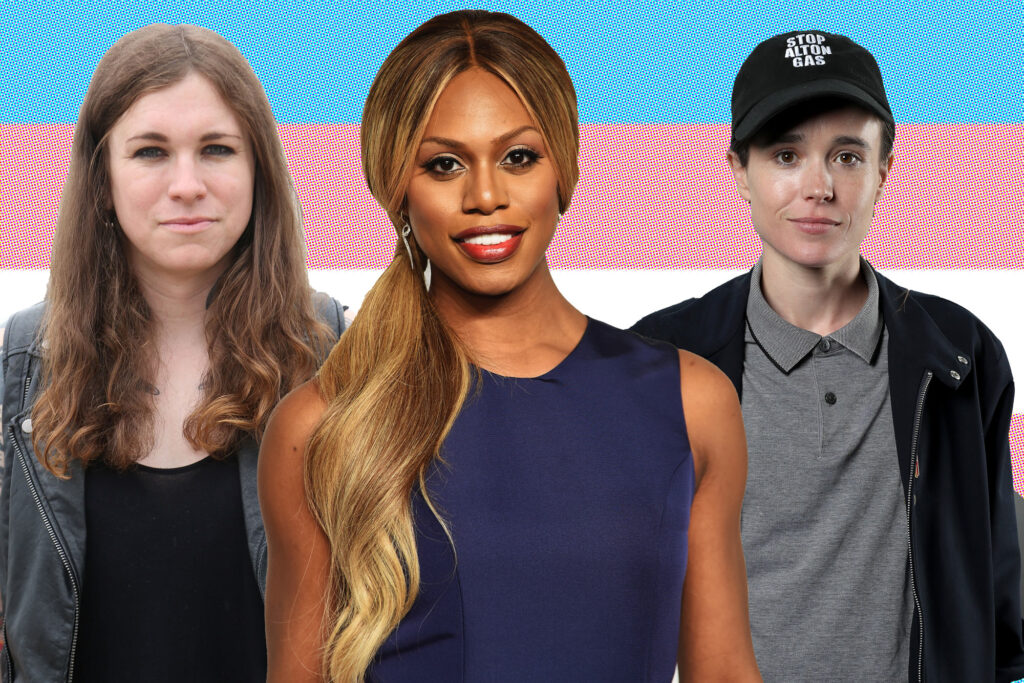
The Fourth Wave grapples with issues such as online harassment, the gender pay gap, reproductive rights, and the representation of women in media and politics. It also addresses the complexities of transgender rights, challenging the binary understanding of gender and advocating for the inclusion of transgender and gender non-conforming individuals within the feminist movement. The rise of femicide, the gender-based killing of women, has also become a central concern for Fourth Wave feminists, who are working to raise awareness about this global issue and demand justice for victims.
However, the very notion of distinct waves can be problematic. It risks oversimplifying a complex and multifaceted history, obscuring the continuities and overlaps between different periods. It can also marginalize the contributions of feminists who do not fit neatly into these categories. Furthermore, the wave metaphor itself implies a linear progression, suggesting that feminism is constantly moving forward, when in reality, progress is often uneven and punctuated by setbacks.
Consider the ongoing struggle for reproductive rights in many parts of the world, where abortion access is under attack and women’s bodily autonomy is threatened. Or the persistent gender pay gap, which continues to disadvantage women in the workforce. Or the pervasive problem of sexual violence, which remains a daily reality for millions of women around the globe. These are not relics of the past, but rather contemporary challenges that demand ongoing feminist action.
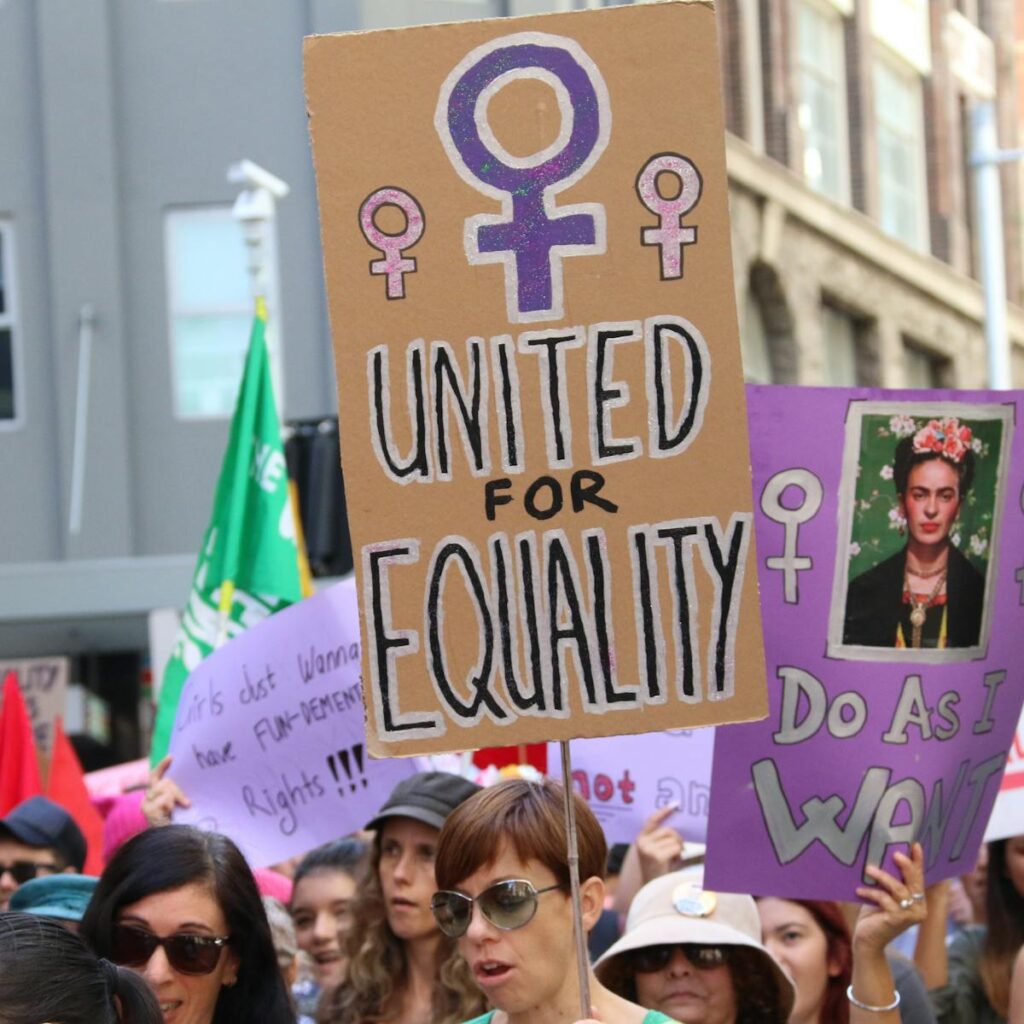
The future of feminism lies in embracing intersectionality, amplifying marginalized voices, and building coalitions across diverse communities. It requires a willingness to challenge our own biases and assumptions, to listen to and learn from those who have different experiences than our own. It demands a constant questioning of power structures and a commitment to dismantling all forms of oppression. Only then can we create a truly just and equitable world for all.
The journey of feminism is not a smooth ascent, but a winding path through treacherous terrain. It is a journey marked by triumphs and setbacks, by moments of unity and division. But through it all, the flame of resistance continues to burn, illuminating the way forward towards a future where all individuals are free to live their lives to the fullest, unburdened by the constraints of gender.
Ultimately, feminism is not a monolithic ideology, but a diverse and evolving collection of ideas and practices. It is a conversation, a debate, a struggle. It is a force for change, a catalyst for progress, a beacon of hope in a world that desperately needs it. Let us continue to weave this tapestry, thread by defiant thread, until it blankets the entire world in justice and equality.





Leave a Comment