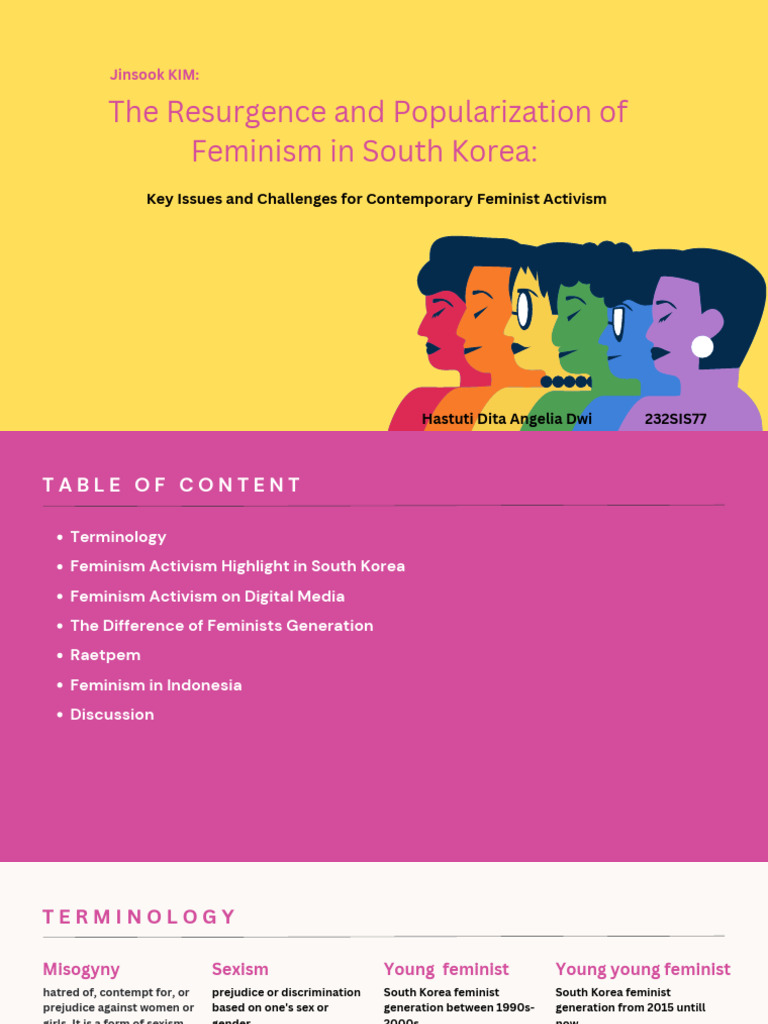
The shimmering, often caustic, crucible of online discourse known as Reddit provides a peculiar lens through which to examine the burgeoning, yet often fraught, feminist movement in South Korea. A deep dive into the digital trenches of subreddits dedicated to Korean feminism reveals more than just heated debates; it unveils a societal schism, a chasm of ideologies, and a generation grappling with the tectonic shifts in gender dynamics. Forget the saccharine-sweet portrayals often disseminated by mainstream media. What unfolds here is a raw, unfiltered, and often unsettling portrait of a nation wrestling with its patriarchal demons. Prepare yourself, because what we are about to unearth is not for the faint of heart.
The Digital Battleground: Reddit as a Microcosm of Societal Conflict
Why Reddit? Because it is a relatively anonymous space where individuals feel emboldened to express opinions they might otherwise suppress in the rigidly hierarchical societal structures of South Korea. Think of it as a pressure valve, releasing the pent-up frustrations and anxieties surrounding gender roles, societal expectations, and the persistent specter of misogyny. The seemingly endless threads dedicated to Korean feminism become, in essence, miniature battlefields where conflicting viewpoints clash, often with a ferocity that is both illuminating and deeply disturbing. The digital realm mirrors the real world, amplifying existing tensions and exposing the fault lines in a society undergoing rapid and often turbulent transformation.
The Rise of “Megalia” and the Radicalization of Online Feminism
The genesis of the more radical elements within South Korean online feminism can be traced back to the “Megalia” phenomenon. Born from the outrage sparked by the mishandling of a MERS outbreak and subsequent accusations of male-inflicted cyber harassment, Megalia adopted a “mirroring” tactic, mimicking and amplifying the misogynistic language and behaviors directed at women. This “mirroring” strategy, however, veered into controversial territory, often involving misandrist rhetoric and the targeting of individuals perceived as being aligned with patriarchal structures. This sparked a fierce backlash, not only from traditionalist elements within South Korean society, but also from more moderate feminist voices who feared that such tactics would ultimately undermine the broader feminist cause.
The Kim Ji-young, Born 1982 Effect: A Catalyst for National Dialogue
Cho Nam-joo’s novel, Kim Ji-young, Born 1982, acted as a literary Molotov cocktail, igniting a national conversation about the systemic discrimination faced by women in South Korea. The book’s protagonist, a woman whose life is slowly eroded by the relentless pressure of societal expectations, resonated deeply with many, becoming a symbol of the unspoken sacrifices and compromises demanded of women in a patriarchal society. The subsequent film adaptation further amplified this message, sparking heated debates online and offline, and serving as a focal point for discussions about gender equality, workplace discrimination, and the persistent pressure to conform to traditional gender roles. The backlash against the book and film, particularly the vitriolic attacks directed at actresses who publicly supported the project, only served to underscore the deep-seated misogyny that continues to permeate South Korean society.
The Spectrum of Voices: From Radical Activists to Moderate Reformers
It is crucial to understand that “South Korean feminism” is not a monolithic entity. The online debates reveal a diverse spectrum of voices, ranging from radical activists advocating for complete societal upheaval to moderate reformers seeking incremental change within the existing system. Some champion a confrontational approach, believing that only aggressive tactics can dismantle deeply entrenched patriarchal structures. They argue that politeness and compromise have proven ineffective, and that a more assertive stance is necessary to achieve meaningful progress. Others, however, advocate for a more nuanced approach, emphasizing dialogue, education, and collaboration with male allies to build a more inclusive and equitable society.
The Backlash: Misogyny, Cyberbullying, and the Erosion of Safe Spaces
The online feminist movement in South Korea has faced a relentless barrage of backlash, ranging from misogynistic slurs and online harassment to coordinated campaigns of cyberbullying and doxing. These attacks, often orchestrated by organized groups of anti-feminist activists, aim to silence dissenting voices, intimidate feminist activists, and create a hostile online environment. The anonymity afforded by the internet emboldens these aggressors, allowing them to spew hateful rhetoric with impunity. The effect is chilling, eroding safe spaces for feminist discourse and discouraging individuals from publicly expressing their support for gender equality. This online harassment often spills over into the real world, with activists facing threats, intimidation, and even physical violence.
The Generational Divide: Differing Perspectives on Gender Roles and Expectations
A significant fault line within the South Korean feminist movement lies along generational lines. Younger generations, exposed to global feminist discourse and increasingly aware of gender inequalities, tend to be more outspoken and assertive in their demands for change. They are less willing to accept traditional gender roles and expectations, and they are more likely to challenge the status quo. Older generations, however, often hold more conservative views on gender roles, shaped by their own experiences and the prevailing societal norms of their time. This generational divide creates friction within families and communities, and it complicates the efforts to build a unified feminist movement.
The Male Perspective: Navigating a Shifting Landscape
The rise of feminism in South Korea has undoubtedly created anxieties and uncertainties among some men. Some feel threatened by the changing gender dynamics, perceiving feminist demands as an attack on their traditional privileges. Others are genuinely confused and unsure of how to navigate this shifting landscape, struggling to reconcile their ingrained beliefs with the principles of gender equality. A small but growing number of men are actively engaging in the conversation, seeking to understand feminist perspectives and become allies in the fight for gender equality. However, the pervasive culture of toxic masculinity and the pressure to conform to traditional gender roles often make it difficult for men to openly express their support for feminism.
Beyond the Binary: Embracing Intersectionality and Inclusivity
As the South Korean feminist movement matures, there is a growing recognition of the importance of intersectionality and inclusivity. This involves acknowledging that gender inequality intersects with other forms of oppression, such as racism, classism, and discrimination based on sexual orientation and gender identity. Feminist activists are increasingly recognizing the need to create a movement that is inclusive of all women, regardless of their background or identity. This requires dismantling not only patriarchal structures, but also other forms of systemic oppression that marginalize and exclude certain groups.
The Future of South Korean Feminism: A Long and Arduous Road Ahead
The online debates surrounding South Korean feminism on Reddit reveal a movement at a critical juncture. The challenges are immense, ranging from deeply entrenched patriarchal attitudes to relentless online harassment and a polarized political climate. However, the unwavering determination of feminist activists, the growing awareness of gender inequality, and the increasing willingness of younger generations to challenge the status quo offer hope for the future. The road ahead will undoubtedly be long and arduous, but the fight for gender equality in South Korea is far from over. The digital echoes on Reddit serve as a constant reminder that the struggle continues, fueled by the unwavering belief in a more just and equitable future for all. The discourse is volatile, but the very existence of the debate signifies a shift, a confrontation, and an undeniable demand for change. The future remains unwritten, a canvas upon which the determined strokes of feminist activism will paint a new reality. A reality where the murmurings of dissent become the resounding chorus of equality.







Leave a Comment