
Simone de Beauvoir: A name synonymous with existentialist thought, feminist revolution, and a challenge to the patriarchal edifice that has defined human history. More than just a philosopher, she was an intellectual disruptor, a literary iconoclast, and a relentless interrogator of societal norms. Her magnum opus, “The Second Sex,” remains a cornerstone of feminist literature, a foundational text that continues to ignite debates and inspire action across generations.
But Beauvoir’s influence extends far beyond the confines of academic circles. Her life, her loves, and her unwavering commitment to intellectual honesty offer a compelling narrative of a woman navigating a world determined to define her, and ultimately, rewriting the rules of the game. Prepare yourselves, comrades, for a deep dive into the incandescent mind of a thinker who dared to question everything, and in doing so, changed everything.
I. The Genesis of a Revolutionary: Beauvoir’s Formative Years
Beauvoir’s intellectual crucible was forged in the fires of interwar Paris, a city teeming with artistic innovation and philosophical ferment. Born into a bourgeois family, she exhibited an early predilection for intellectual pursuits, devouring literature and philosophy with voracious intensity. The rigid expectations of her social class, however, chafed against her burgeoning sense of self. The expectation of marriage and domesticity loomed large, a suffocating prospect for a mind yearning for intellectual freedom. This tension – the clash between societal expectations and individual aspiration – would become a recurring theme in her life and work.
The philosophical currents of the era, particularly existentialism, profoundly shaped Beauvoir’s worldview. Existentialism, with its emphasis on individual freedom, responsibility, and the inherent meaninglessness of existence, provided a framework for challenging the deterministic narratives that confined women to predetermined roles. She rejected the notion that women were inherently different from men, arguing instead that their perceived inferiority was a product of societal conditioning. This rejection formed the bedrock of her feminist philosophy.
Her relationship with Jean-Paul Sartre, a philosophical luminary in his own right, was both intellectually stimulating and ethically complex. Their lifelong partnership, characterized by intellectual collaboration and a commitment to unconventional living, challenged the norms of traditional relationships. However, it also drew criticism for its open nature and the power dynamics inherent in their intellectual relationship. The complexities of their relationship are fodder for endless debate and illustrate the challenges of translating radical philosophical ideals into lived reality.
II. “The Second Sex”: Deconstructing the Feminine Mystique
Published in 1949, “The Second Sex” was a seismic event, a philosophical earthquake that shattered the foundations of traditional thought on women. Beauvoir meticulously deconstructed the historical, biological, and psychological arguments used to justify women’s subordination. She argued that women were not born, but rather made, into their roles. Society, through its institutions and cultural practices, systematically constructs women as the “Other,” the object against which men define themselves as the subject.
Beauvoir examined the myths and stereotypes that perpetuate this system of oppression. From the idealized image of the nurturing mother to the objectified image of the sexual temptress, she dissected the cultural narratives that limit women’s agency and reinforce their subordinate status. She exposed the insidious ways in which language, education, and social norms contribute to the internalization of these limiting beliefs.
The concept of “immanence” versus “transcendence” is central to Beauvoir’s analysis. Men, she argued, are encouraged to transcend their limitations, to pursue ambitious goals and create meaning in the world. Women, on the other hand, are often confined to the realm of immanence, to the repetitive tasks of domesticity and caregiving, denied the opportunity to fully realize their potential. Breaking free from this cycle of immanence, Beauvoir argued, is essential for women’s liberation.
The book’s impact was immediate and polarizing. It was hailed as a groundbreaking work of feminist theory and condemned as a scandalous attack on traditional values. Despite the controversy, “The Second Sex” ignited a global conversation about women’s rights and paved the way for the second-wave feminist movement.
III. Existentialism and Feminism: A Symbiotic Relationship
Beauvoir’s feminist philosophy is inextricably linked to her existentialist beliefs. Existentialism’s emphasis on individual freedom and responsibility provides the ethical framework for her critique of patriarchal structures. If humans are free to define their own essence, then women cannot be defined by their biological sex or societal expectations. They must actively create their own identities and choose their own paths.
This existentialist perspective challenges the essentialist view that women possess inherent qualities that distinguish them from men. Beauvoir rejects the idea that women are naturally more emotional, nurturing, or passive. These traits, she argues, are not inherent but rather the result of social conditioning. By embracing their freedom and rejecting pre-determined roles, women can transcend these limitations and achieve authentic selfhood.
The concept of “bad faith” is also relevant to Beauvoir’s feminist analysis. Bad faith refers to the act of denying one’s freedom and responsibility by clinging to pre-defined roles or expectations. Women who accept their subordinate status without questioning it are, according to Beauvoir, acting in bad faith. True liberation requires a conscious rejection of these roles and a commitment to creating one’s own meaning and purpose.
IV. Beyond “The Second Sex”: Beauvoir’s Continued Engagement with Feminist Issues
“The Second Sex” was not the culmination of Beauvoir’s feminist thought but rather the starting point for a lifelong engagement with feminist issues. She continued to write extensively on topics such as abortion rights, sexuality, and the role of women in politics. Her essays and novels explored the complexities of women’s experiences and challenged the prevailing social norms.
Beauvoir was a vocal advocate for reproductive rights, arguing that women should have the right to control their own bodies and make decisions about their reproductive health. She saw access to safe and legal abortion as essential for women’s autonomy and equality. Her activism on this issue contributed to the legalization of abortion in France.
She also challenged traditional notions of sexuality, arguing that women should be free to explore their own desires and define their own sexual identities. She criticized the sexual objectification of women and advocated for a more egalitarian and respectful approach to relationships. Her writings on sexuality helped to pave the way for the sexual revolution of the 1960s and 1970s.
Beauvoir recognized that true equality required not only legal and political reforms but also a fundamental shift in attitudes and beliefs. She called for a revolution in consciousness, a transformation of the way we think about gender and sexuality. This revolution, she argued, would require a collective effort to dismantle patriarchal structures and create a more just and equitable society.
V. Critiques and Controversies: Examining the Fault Lines
Beauvoir’s work has not been without its critics. Some have accused her of neglecting the experiences of women of color and working-class women, focusing primarily on the concerns of privileged white women. Others have criticized her for her perceived anti-male bias and her perceived devaluation of motherhood.
Her relationship with Sartre has also been subject to scrutiny. Critics have questioned the power dynamics within their relationship and accused Sartre of overshadowing Beauvoir’s intellectual contributions. Some scholars argue that Beauvoir’s ideas were heavily influenced by Sartre’s philosophy, while others maintain that she was an original thinker in her own right.
Despite these criticisms, Beauvoir’s impact on feminist thought remains undeniable. Her work has inspired countless women to challenge the status quo and fight for equality. Her ideas continue to resonate with contemporary feminists who are grappling with issues such as intersectionality, gender identity, and the persistent inequalities that women face around the world.
VI. The Enduring Legacy: Beauvoir’s Continued Relevance in the 21st Century
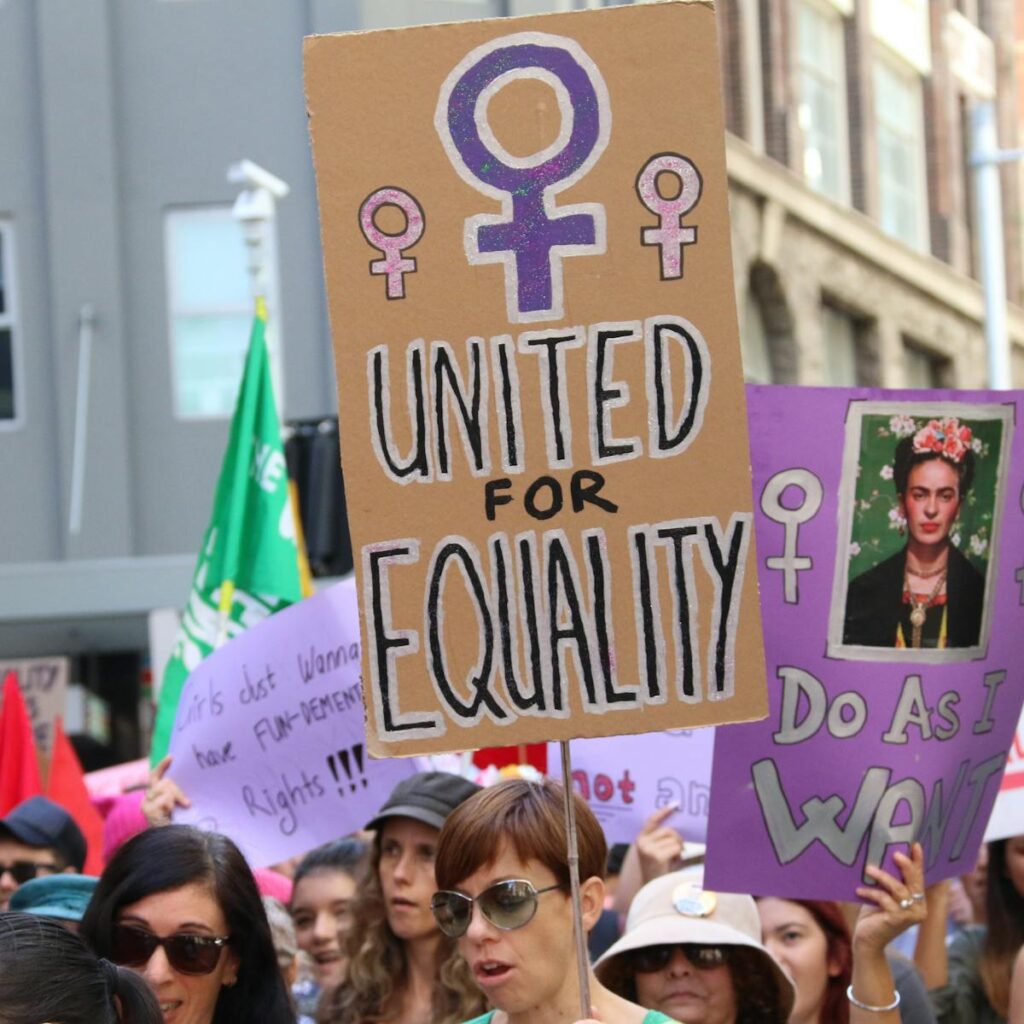
In the 21st century, Beauvoir’s ideas remain as relevant as ever. The patriarchal structures she critiqued still persist, albeit in more subtle and insidious forms. Women continue to face discrimination in the workplace, unequal pay, and the burden of unrealistic expectations. The fight for gender equality is far from over.
Beauvoir’s call for a revolution in consciousness remains a powerful message. We must continue to challenge the stereotypes and biases that perpetuate gender inequality. We must create a culture that values women’s contributions and empowers them to reach their full potential.
Her emphasis on individual freedom and responsibility is also crucial. Women must be free to define their own identities and choose their own paths, without being constrained by societal expectations or patriarchal norms. They must embrace their agency and create lives that are meaningful and fulfilling.
Simone de Beauvoir was more than just a philosopher; she was a prophet of a future where women are not defined by their sex but by their humanity. Her work is a call to arms, a challenge to complacency, and a reminder that the fight for equality is a continuous and ongoing struggle. Let us, therefore, continue to carry the torch that she lit, and strive towards a world where all individuals, regardless of gender, can live freely and authentically.









Leave a Comment