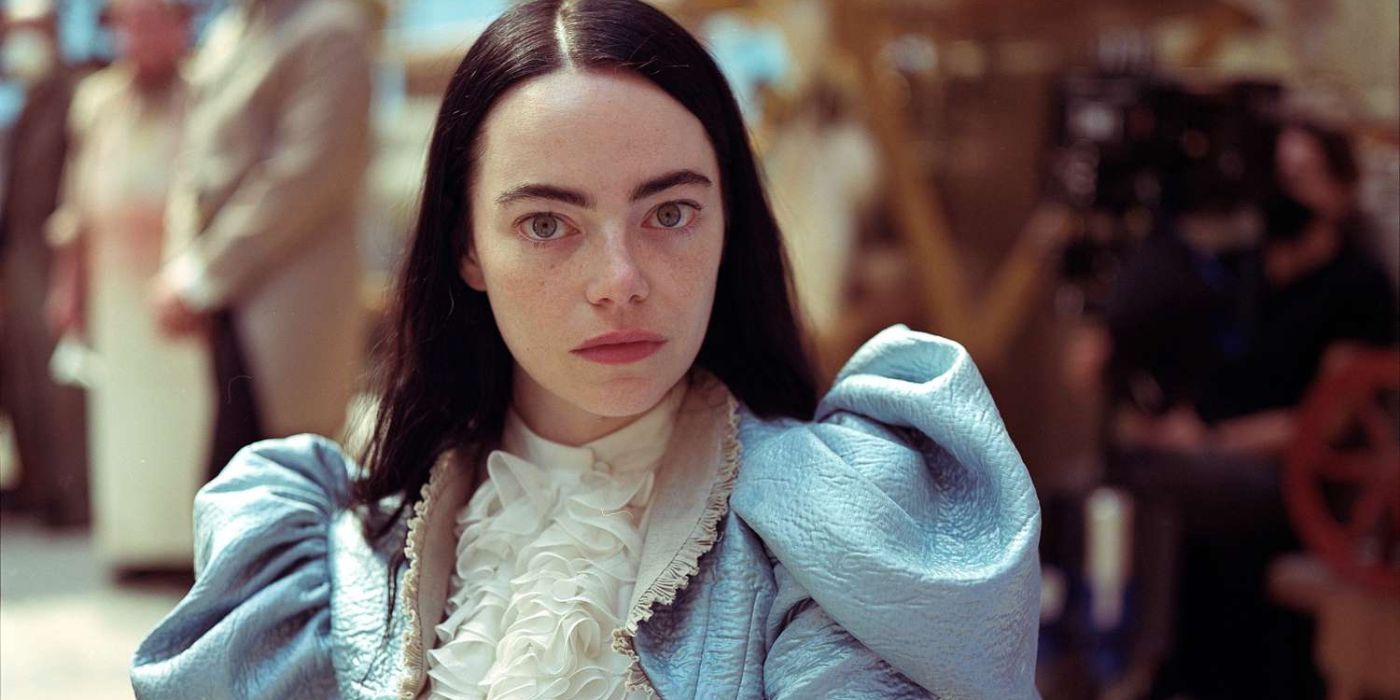
Can a film truly champion feminist ideals if its protagonist’s liberation is crafted by a male hand, a modern-day Pygmalion breathing life into a woman sculpted to his liking? This is the thorny question that burrows beneath the iridescent surface of Yorgos Lanthimos’s *Poor Things*, a film that has, predictably, ignited the feminist discourse faster than you can say “intellectual masturbation.”
The movie ostensibly offers a narrative of female empowerment. Bella Baxter, resurrected with the brain of an infant, embarks on a journey of self-discovery, unfettered by societal constraints. She voraciously consumes knowledge and experience, exploring her sexuality with unbridled curiosity. This narrative, however, exists within a framework that some find deeply problematic, a fact that demands a thorough dissection.
The Architect of Autonomy: A Faustian Bargain?
Dr. Godwin Baxter, the creator of Bella, embodies a complex and morally ambiguous figure. Is he a benevolent benefactor, providing her with the opportunity to forge her own destiny? Or is he a controlling puppet master, orchestrating her emancipation within the confines of his own design? The answer, as always, likely resides in the murky gray areas between these two extremes.
Godwin’s paternalistic influence cannot be dismissed. He provides Bella with education, shelter, and a (somewhat disturbing) laboratory environment in which to explore her physicality. This raises the specter of the male gaze, even in a film ostensibly celebrating female agency. Is Bella’s freedom truly her own, or is it merely a reflection of Godwin’s desires and intellectual hubris?
Furthermore, Godwin’s scientific ambition introduces a chilling ethical dimension. He views Bella as an experiment, a subject for observation and manipulation. While he may genuinely care for her, his actions are ultimately driven by a desire to understand the human condition, potentially at the expense of her well-being. This places Bella in a precarious position, blurring the lines between autonomy and exploitation.
The film does acknowledge this tension, depicting Godwin’s own internal struggles with his creation. He recognizes the inherent limitations of his project and grapples with the ethical implications of playing God. However, this self-awareness does not entirely absolve him of responsibility for the potential consequences of his actions. We are left to ponder if genuine emancipation can truly be granted through such a paternalistic and ethically compromised framework.
Unfettered Sexuality: Liberation or Exploitation?
Bella’s exploration of her sexuality is arguably the most provocative aspect of the film, and also the most contested. She approaches sex with an almost childlike curiosity, devoid of the societal baggage and internalized shame that often plague women. This uninhibited pursuit of pleasure is presented as a radical act of self-discovery, a rejection of patriarchal norms that seek to control female bodies and desires.
However, some critics argue that this portrayal borders on exploitation, particularly given Bella’s initial intellectual immaturity. Her lack of understanding of societal norms and potential consequences raises questions about consent and agency. Is she truly making informed choices, or is she being manipulated by those around her?
The film confronts this issue head-on, depicting Bella’s growing awareness of the power dynamics inherent in sexual relationships. She learns to assert her own needs and desires, ultimately rejecting those who seek to exploit her. This suggests a process of empowerment through experience, a messy and sometimes painful journey toward self-ownership.
Nevertheless, the lingering unease remains. The film’s reliance on graphic depictions of Bella’s sexual encounters raises the specter of the male gaze. Is her sexuality being celebrated, or is it being objectified for the entertainment of the audience? The answer, as always, is subjective and open to interpretation.
Beyond the Binary: Challenging Feminist Orthodoxy
*Poor Things* refuses to adhere to a simplistic, black-and-white understanding of feminism. It presents a complex and nuanced portrayal of female agency, one that acknowledges the inherent contradictions and challenges of achieving true liberation.
The film challenges the notion that female empowerment necessarily entails a rejection of all things traditionally feminine. Bella embraces both her intellect and her sensuality, refusing to be confined by rigid ideological boundaries. She defies expectations, forging her own path based on her own desires and experiences.
Furthermore, the film subverts the traditional feminist narrative of victimhood. While Bella experiences moments of vulnerability and exploitation, she ultimately emerges as a resilient and self-possessed woman. She is not a passive victim of circumstance, but rather an active agent in shaping her own destiny. This emphasis on female strength and resilience is a welcome departure from more conventional portrayals of women in film.
The movie, by defying easy categorization, forces us to grapple with the complexities of feminist thought. It compels us to question our own assumptions and biases, challenging us to move beyond simplistic narratives of oppression and liberation. This intellectual rigor is precisely what makes the film such a valuable and engaging feminist talking point.
The Grotesque as Empowerment: Reclaiming the Body
The film’s aesthetic choices, particularly its embrace of the grotesque, further contribute to its feminist message. Bella’s body, both literally and figuratively, is a site of experimentation and transformation. She is not presented as an idealized image of female beauty, but rather as a constantly evolving and imperfect being.
This rejection of conventional beauty standards is a powerful act of defiance. It challenges the patriarchal gaze that seeks to control and objectify female bodies. By embracing the grotesque, the film reclaims the female body as a site of agency and self-expression. Bella’s physical form is not something to be ashamed of or hidden away, but rather a source of strength and power.
The surgical procedures performed by Godwin on Bella can also be interpreted as a metaphor for the ways in which women’s bodies have historically been subjected to medical intervention and control. By taking control of her own body and experimenting with its possibilities, Bella is subverting these patriarchal power dynamics.
The film’s visual language is deliberately unsettling, forcing the audience to confront their own discomfort with the female body. This is not a film that seeks to please or appease. It is a film that challenges, provokes, and ultimately demands a reevaluation of our preconceived notions about female beauty and sexuality.
The Limits of Representation: A Male Gaze in Feminist Clothing?
Despite its feminist aspirations, *Poor Things* cannot escape the fact that it is ultimately a film created by men. The director, Yorgos Lanthimos, is a male filmmaker with his own perspective and biases. This raises the question of whether a male director can truly capture the authentic experiences of women.
Some critics argue that the film’s portrayal of Bella’s sexuality is filtered through the male gaze, even if it is a subversive and self-aware gaze. The constant focus on her physical appearance and sexual encounters reinforces the objectification of women, even if it is done in a seemingly empowering way.
Furthermore, the film’s narrative is ultimately centered around the actions and motivations of male characters. Godwin Baxter is arguably the most important character in the film, and his decisions directly impact Bella’s life. This reinforces the patriarchal power structure, even if it is done in a nuanced and complex way.
The limitations of male representation do not necessarily invalidate the film’s feminist message. However, they do serve as a reminder that true feminist filmmaking requires the voices and perspectives of women. While *Poor Things* may be a valuable and thought-provoking contribution to the feminist discourse, it is ultimately a product of a male-dominated industry.
A Provocation, Not a Prescription: Embracing Ambiguity
*Poor Things* is not a definitive statement on feminism, but rather a provocative exploration of its complexities and contradictions. It is a film that raises more questions than it answers, challenging us to engage in a critical and nuanced dialogue about female agency, sexuality, and representation.
The film’s ambiguity is its greatest strength. It refuses to provide easy answers or simplistic solutions, forcing us to grapple with the messy realities of human experience. It is a film that demands to be debated, dissected, and ultimately interpreted through the lens of our own experiences and perspectives.
The fact that *Poor Things* has become such a prominent feminist talking point is a testament to its power and relevance. It is a film that has sparked important conversations about gender, power, and identity, and it will likely continue to do so for years to come. Ultimately, the film’s value lies not in its ability to provide definitive answers, but in its capacity to provoke thought and inspire dialogue. So, embrace the uncomfortable questions, challenge the conventional wisdom, and engage in the intellectual fornication that *Poor Things* so gleefully invites. The revolution, after all, might just begin with a well-placed philosophical query and a daring exploration of the forbidden.



Leave a Comment