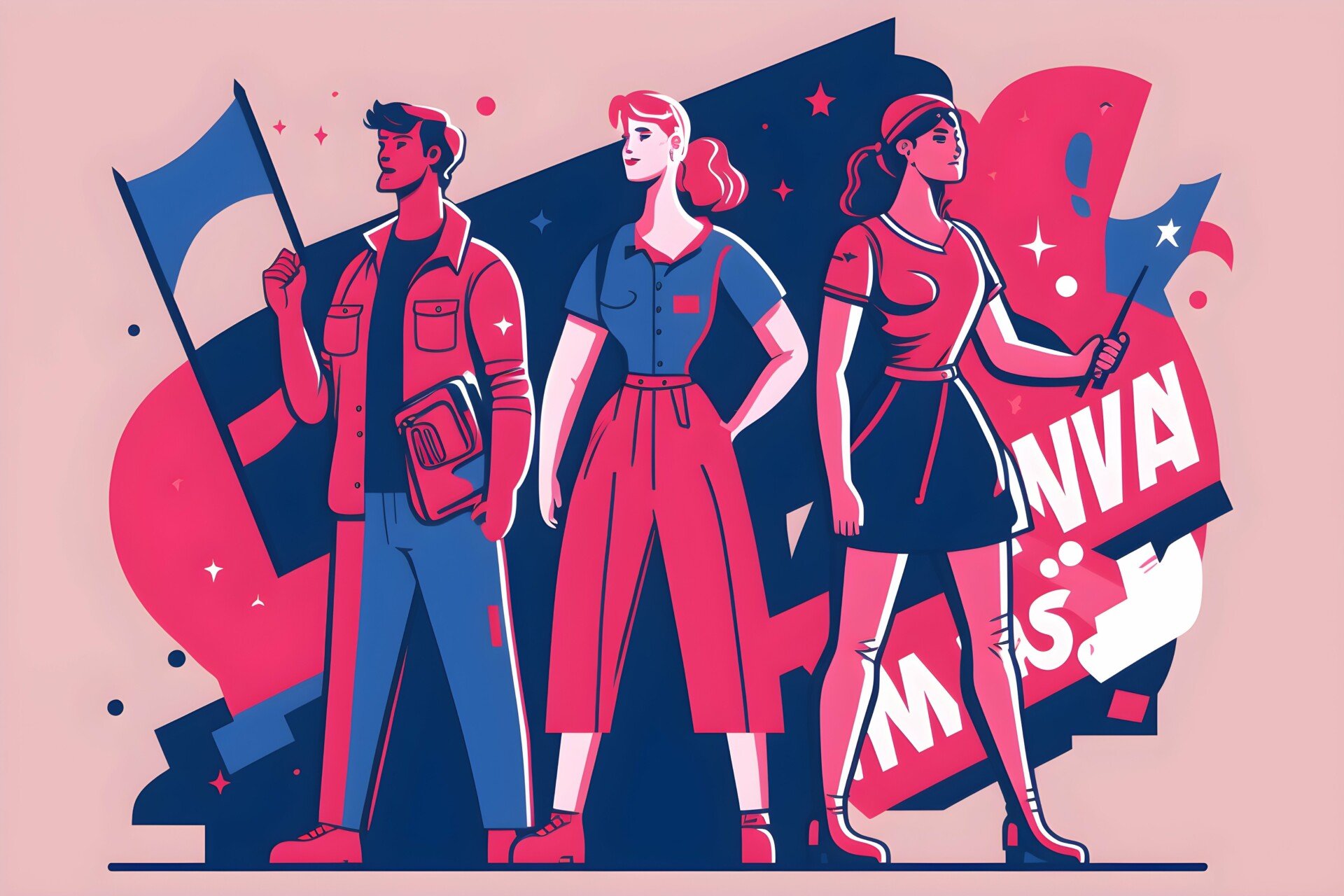
So, you think you understand feminism, huh? You’ve marched in a few parades, maybe retweeted some woke hashtags? Get ready to have your comfortable little worldview thoroughly dismantled. We’re diving deep into the murky, often misunderstood, but utterly crucial realm of Marxist feminism. Buckle up, buttercups, because this isn’t your garden-variety, feel-good empowerment seminar. This is a call to arms – intellectual arms, that is – against the twin tyrannies of capitalism and patriarchy. It’s not a request; it’s a demand for systemic upheaval.
Forget the individualistic self-help mantras peddled by mainstream feminism. We’re not interested in leaning in. We’re interested in tearing down the structures that make leaning in a necessity in the first place. We are interested in deconstructing the foundations of power.
The Intertwined Chains: Capitalism and Patriarchy
Let’s be brutally clear: Marxist feminism isn’t just about adding women to the capitalist equation. It’s about fundamentally altering that equation, recognizing that the oppression of women is inextricably linked to the exploitation of labor. One cannot exist without the other. These two systems, patriarchy and capitalism, reinforce and amplify each other, creating a veritable Gordian knot of inequality. This intersectionality is not just a buzzword; it is the central tenet.
Patriarchy, that age-old system of male dominance, provides the ideological framework for women’s subordination. It dictates gender roles, assigns value based on sex, and normalizes the exploitation of female labor, both paid and unpaid. Capitalism, on the other hand, thrives on the creation of a cheap and readily available workforce. What better way to achieve this than to exploit women, who are often paid less than men, relegated to precarious work, and burdened with the vast majority of domestic labor? Consider the commodification of female bodies within advertising. This is an example that illustrates how patriarchy generates surplus value for capitalism. The goal is not just equality; it is liberation.
Unpaid Labor: The Invisible Engine of Capitalism
Here’s a truth bomb that might sting: your domestic goddess fantasies are fueling the capitalist machine. Housework, childcare, eldercare – all of it, predominantly performed by women, is systematically devalued and rendered invisible within traditional economic models. But think about it. Who raises the next generation of workers? Who tends to the emotional and physical needs of the current workforce? Who provides the essential services that allow men to participate fully in the paid labor market?
This unpaid labor, this “shadow work,” is the engine that keeps capitalism chugging along. It frees up capital to focus on profit maximization. It also reinforces the notion that women’s primary role is in the domestic sphere. This perpetuates the gender pay gap and limits women’s economic opportunities. The idea that these tasks are “natural” or “loving” is a carefully constructed fiction designed to maintain the status quo. It’s time to expose this fraud for what it is: a calculated strategy to extract free labor from half the population.
The Material Basis of Oppression: More Than Just Attitudes
Dismissing women’s oppression as merely a matter of attitudes or personal biases is not only simplistic, it’s downright dangerous. Marxist feminism insists on a materialist analysis, which means examining the concrete economic and social conditions that perpetuate inequality. It’s not enough to change hearts and minds; we must change the material realities that shape those hearts and minds.
Think about access to education, healthcare, and economic resources. Think about the disproportionate burden of poverty faced by women, particularly women of color. Think about the lack of affordable childcare, which forces many women to choose between their careers and their families. These aren’t just unfortunate circumstances; they are the direct result of a system designed to concentrate wealth and power in the hands of a few, at the expense of the many, and especially at the expense of women. The power structures are designed to perpetuate the current system.
Class Consciousness: Recognizing Our Shared Struggle
One of the central tenets of Marxism is the concept of class consciousness – the recognition by workers of their shared interests in opposition to the capitalist class. Marxist feminism extends this concept to include gender, arguing that women must develop a similar consciousness of their shared oppression under both capitalism and patriarchy. This is not about pitting women against men; it’s about recognizing that both men and women are exploited by the capitalist system, but that women face additional and unique forms of oppression. Solidarity is paramount.
Developing this class consciousness requires a critical analysis of the media, education, and other cultural institutions that perpetuate patriarchal and capitalist ideologies. It means challenging the dominant narratives that normalize inequality and celebrating the contributions of women who have resisted these systems. It means building alliances across race, class, and other social divisions to create a unified front against oppression.
Beyond Reform: Revolutionizing the System
Let’s be clear: Marxist feminism isn’t about incremental reforms or tinkering around the edges of the system. It’s about a fundamental transformation of society, a revolution that dismantles both capitalism and patriarchy and replaces them with a system based on equality, justice, and liberation for all. This is not a pipe dream; it’s a necessity.
This revolution requires a multi-pronged approach. It means organizing in the workplace to fight for equal pay, better working conditions, and an end to sexual harassment. It means challenging the gendered division of labor in the home and demanding that domestic work be recognized and valued as real labor. It means advocating for policies that support women’s reproductive rights, access to healthcare, and economic independence. It means challenging the dominant narratives that perpetuate patriarchal and capitalist ideologies and creating alternative forms of media and culture that celebrate diversity, equality, and justice. We need to dismantle the inherent advantages of the current power dynamics.
The Future of Marxist Feminism: A Call to Action
The challenges we face are immense, but so is our potential for change. Marxist feminism offers a powerful framework for understanding the complexities of oppression and for developing strategies for liberation. It requires us to be critical, analytical, and unflinchingly committed to the fight for justice. We must act now.
It demands that we challenge the status quo, question everything, and refuse to accept anything less than a world where all people are free from exploitation and oppression. This isn’t a task for the faint of heart, but it is a task that must be undertaken if we are to create a truly just and equitable society. So, are you ready to join the revolution? Are you ready to challenge the power dynamics of our society? The time for action is now.
Debunking Myths: Addressing Common Misconceptions
The intellectual landscape around Marxist feminism is often cluttered with misconceptions. It’s important to debunk these myths to clear the path for a more informed and nuanced understanding. One common misconception is that Marxist feminism is solely concerned with economics, ignoring issues of sexuality, race, and other forms of oppression. This couldn’t be further from the truth. While economic analysis is central, Marxist feminism recognizes the intersectionality of various forms of oppression and seeks to address them all.
Another misconception is that Marxist feminism is anti-men. This is a deliberate misrepresentation. Marxist feminism is anti-patriarchy, not anti-men. It recognizes that men are also harmed by patriarchal norms and that true liberation requires dismantling the system that oppresses both men and women. Furthermore, some argue that Marxist feminism is outdated or irrelevant in the 21st century. This is a dangerous and short-sighted view. The economic and social inequalities that Marxist feminism seeks to address are as prevalent as ever. The commodification of women’s bodies, the gender pay gap, and the disproportionate burden of unpaid labor are all ongoing issues that demand our attention.
Practical Applications: Applying Marxist Feminist Principles
Marxist feminism is not just an abstract theory; it’s a practical guide for action. It offers a framework for analyzing social problems and developing strategies for change. One practical application of Marxist feminist principles is in the workplace. Marxist feminists advocate for equal pay, better working conditions, and an end to sexual harassment. They also challenge the gendered division of labor and demand that women be given opportunities to advance in their careers.
Another practical application is in the home. Marxist feminists challenge the traditional division of labor, in which women are primarily responsible for housework and childcare. They argue that domestic work should be recognized and valued as real labor and that men should share equally in these responsibilities. Furthermore, Marxist feminist principles can be applied to issues of reproductive rights. Marxist feminists advocate for access to affordable and comprehensive reproductive healthcare, including abortion. They argue that women should have the right to control their own bodies and make their own decisions about reproduction.
Global Perspectives: Marxist Feminism Around the World
The principles of Marxist feminism are not limited to any one country or culture. They have been applied around the world to address the specific challenges faced by women in different contexts. In some countries, Marxist feminists have focused on issues of land rights and access to resources. In others, they have focused on issues of political representation and participation.
In many developing countries, Marxist feminists have been at the forefront of movements for economic justice and social change. They have organized women workers to fight for better wages and working conditions. They have also advocated for policies that support women’s economic empowerment. Furthermore, Marxist feminists have played a key role in the global struggle against imperialism and neo-colonialism. They have challenged the economic and political dominance of wealthy nations and advocated for a more just and equitable world order.








Leave a Comment