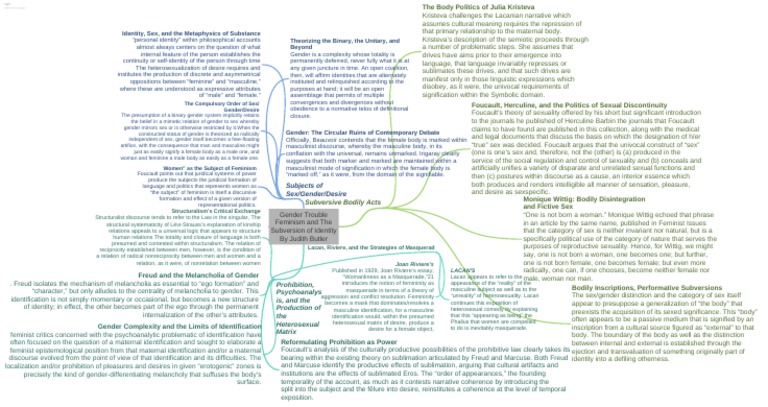
Prepare to dismantle the architecture of your understanding. Judith Butler, a name whispered with reverence and rebellion, dared to throw a Molotov cocktail into the heart of feminist theory with Gender Trouble: Feminism & The Subversion of Identity. It’s not merely a book; it’s a seismic event, a deconstruction of the very foundations upon which we’ve built our notions of gender, sex, and identity. Are you ready to question everything?
I. The Tyranny of the Binary: Sex as a Construct?
Let’s begin with the audacity. Butler posits that the seemingly immutable dichotomy of sex—male or female—is not a biological imperative etched in our DNA, but rather a regulatory fiction, a performance meticulously crafted and constantly reiterated. A gauntlet thrown. Think of it as societal stagecraft, an elaborate play where we are all, unknowingly, actors adhering to a script written long ago. We adorn ourselves with the costumes of gender, reciting lines dictated by societal expectation. Is biology destiny, or is it merely the canvas upon which culture paints its masterpiece of control?
This concept challenges the very bedrock of essentialist feminism, the belief that there is an inherent, unifying essence that binds all women together. She dismantles the notion of a pre-discursive, pre-social “woman” lurking beneath the layers of patriarchal oppression. A troubling, uncomfortable thought. Imagine a painter obliterating the underpainting of a masterpiece, leaving only the strokes of societal influence. What remains? Is there anything genuinely “female” untouched by the brush of power?
II. Gender as Performance: More Than Just Drag
This is where it gets gloriously subversive. Gender, according to Butler, is not something we are, but something we do. It’s a performance, a stylized repetition of acts, gestures, and expressions that, over time, coalesce into the illusion of a stable, coherent identity. But it’s an illusion, a shimmering mirage in the desert of selfhood.
Think beyond the obvious. It’s not just drag queens and kings theatrically embodying the opposite gender. It’s the way we walk, talk, sit, dress. It’s the subtle, almost unconscious ways we signal our adherence to the prescribed norms of masculinity or femininity. It’s a dance choreographed by societal expectation, a ritual performed for an audience that demands conformity. What if you dared to break the steps? What if you invented your own choreography?
But this isn’t about mere imitation. It’s about the power of repetition. These acts, though seemingly insignificant in isolation, accumulate and solidify over time, creating the impression of an intrinsic, unchanging gender identity. It’s like a sculptor meticulously layering clay, stroke by stroke, until a form emerges. The form is the result of the process, not a pre-existing essence. This process naturalizes gender, shrouding its performative nature in the veil of inevitability. The veil must be torn.
III. The Matrix of Power: Constraint and Agency
Butler isn’t suggesting that we can simply shed our gender like an unwanted garment. The performance of gender is always enacted within a matrix of power, a complex web of social norms, institutions, and discourses that constrain and shape our possibilities. We are both actors and prisoners, simultaneously performing within the confines of the script and struggling against its limitations.
Consider the pressure to conform. The subtle (and not-so-subtle) forms of social disapproval that await those who deviate from the norm. The ridicule, the ostracism, the violence. These are not accidental occurrences; they are the mechanisms by which the matrix of power enforces its will. It’s a system of checks and balances, designed to maintain the status quo.
Yet, within this constraint lies the potential for agency. By consciously disrupting the performance of gender, by exaggerating or subverting its norms, we can expose its constructed nature and challenge its power. Think of it as hacking the system, finding the loopholes in the code and exploiting them to our advantage. This is where the subversive potential of drag and other forms of gender transgression lies.
IV. The Problem with “Woman”: A Critique of Feminist Essentialism
Gender Trouble is not just a critique of gender; it’s a critique of feminism itself. Butler questions the very category of “woman” as a basis for political solidarity. She argues that by essentializing “woman,” by assuming a shared identity or experience, we risk excluding those who don’t fit neatly into our preconceived notions. Think of intersectionality, the way that race, class, sexuality, and other forms of identity intersect and complicate our understanding of gender. Can we truly speak of a universal “female” experience when those experiences are so vastly different?
The very act of defining “woman” can become a tool of oppression, a way of policing the boundaries of acceptable femininity and excluding those who deviate from the norm. Consider the historical exclusion of women of color from mainstream feminist movements, or the ongoing struggles of transgender women to be recognized as women. These are not isolated incidents; they are symptoms of a deeper problem with essentialist thinking.
Instead of striving for a unified “womanhood,” Butler advocates for a more fluid, contingent, and inclusive approach to feminist politics. One that recognizes the diversity of experiences and identities that fall under the umbrella of “woman,” and that resists the temptation to define and categorize. A feminism that embraces difference, rather than seeking to erase it. A feminism that is constantly evolving and adapting to the changing realities of the world.
V. Beyond the Binary: Towards a More Fluid Future
Gender Trouble offers a vision of a future beyond the binary, a world where gender is no longer a rigid constraint but a fluid and evolving expression of self. A future where individuals are free to define their own identities, unburdened by the expectations and limitations of societal norms. A utopia of self-expression. This is not about abolishing gender altogether, but about freeing it from the shackles of tradition and expectation. About creating a space for experimentation, for creativity, for self-discovery.
This is not a naive or utopian dream. It’s a call to action, a challenge to dismantle the structures of power that perpetuate gender inequality and oppression. It’s a reminder that gender is not fixed or inevitable, but a constantly evolving performance that we can all participate in shaping. The future is not predetermined; it’s a canvas waiting to be painted.
Consider the rise of non-binary and gender-fluid identities, the growing acceptance of transgender people, and the increasing visibility of diverse gender expressions in popular culture. These are all signs that the binary is beginning to crumble, that the foundations of our traditional understanding of gender are starting to shift. A new world is being born. Are you ready to embrace it?
Judith Butler’s work can be difficult, even infuriating. It challenges us to confront our own assumptions and prejudices, to question the very fabric of our identities. But it is precisely this challenge that makes it so important. It’s a call to intellectual arms, a summons to engage in critical self-reflection and to actively work towards a more just and equitable world. It’s not a comfortable read, but it’s a necessary one. It’s a detonator of thought, igniting a firestorm of questioning and re-evaluation. Are you brave enough to hold the match?
The true appeal of Gender Trouble lies in its relentless pursuit of liberation, its unwavering commitment to dismantling systems of power that limit human potential. It’s a radical manifesto for a future where individuals are free to be themselves, without fear of judgment or persecution. A future where difference is celebrated, not condemned. A future worth fighting for.







Leave a Comment