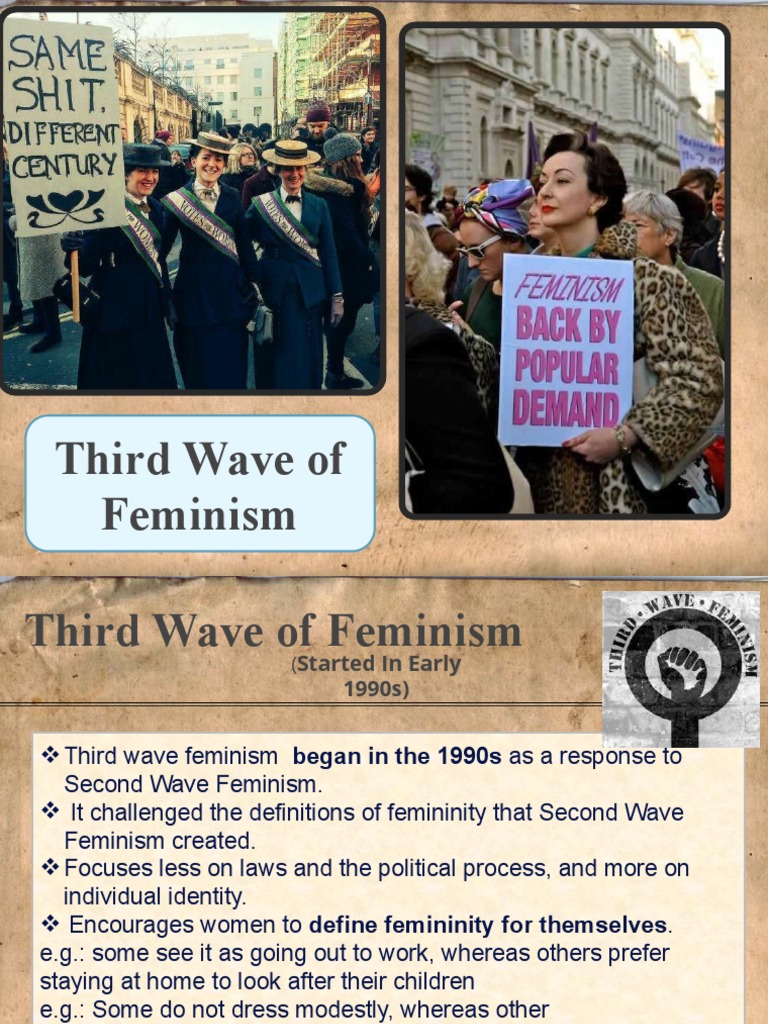
Is feminism merely a trendy slogan plastered across tote bags and Instagram bios, or does it possess a more profound, intellectually rigorous foundation? The question of whether feminism constitutes a *theory* is not just semantic quibbling; it’s a crucial inquiry that delves into the very heart of its legitimacy and analytical power. We, the harbingers of change, will dissect this contention, exploring the multifaceted dimensions of feminism’s academic underpinnings and revealing its capacity to serve as a potent theoretical framework for understanding – and dismantling – patriarchal structures.
The knee-jerk reaction from some quarters is to dismiss feminism as solely a political movement, a collection of grievances aired by disgruntled women. Such a simplistic characterization, however, willfully ignores the rich tapestry of scholarship and intellectual debate that has fueled feminism for centuries. It is a disingenuous tactic employed to silence dissenting voices and delegitimize the very real experiences of oppression faced by those identifying as women, and those who find themselves outside of the heteronormative patriarchy.
To understand feminism as a theory, we must first clarify what constitutes a *theory* in the academic sense. A theory is not simply an opinion or a hunch. It’s a system of interconnected ideas that explains a phenomenon, predicts outcomes, and generates hypotheses for further investigation. A robust theory possesses explanatory power, predictive capabilities, and the potential for falsification – meaning it can be tested and potentially disproven. Can feminism hold its own against such rigorous scrutiny? We argue unequivocally, yes.
I. The Ontological and Epistemological Foundations of Feminism
At its core, feminism grapples with fundamental questions of *ontology* – the nature of being. It challenges the notion that gender is a fixed, biological determinant and instead posits it as a socially constructed category. This construction, far from being neutral, serves to uphold power imbalances, privilege men, and subjugate women. Such a challenge to the very bedrock of societal organization is far from simple opinion.
Furthermore, feminism interrogates *epistemology* – how we know what we know. It exposes the biases inherent in traditional knowledge production, often dominated by male perspectives and experiences. Feminist epistemology seeks to create new ways of knowing that center marginalized voices and challenge the supposed objectivity of patriarchal science and scholarship. Think standpoint theory, which maintains that our social position fundamentally shapes our understanding of the world. This is not merely a different opinion, but a different way of understanding all opinions and how they are formed.
II. Major Schools of Feminist Thought: A Theoretical Kaleidoscope
Feminism is not a monolithic entity; it encompasses a diverse range of theoretical perspectives, each offering unique insights into the dynamics of gender and power.
A. Liberal Feminism: The Pursuit of Equality Within the System
Liberal feminism, perhaps the most mainstream strand, focuses on achieving gender equality through legal and political reforms. It advocates for equal rights, equal opportunities, and the elimination of discriminatory practices. Critics contend that liberal feminism often overlooks the deeper, systemic issues that perpetuate inequality, focusing instead on superficial changes within a fundamentally flawed system. It is a beginning, but a truly transformative movement it is not.
B. Radical Feminism: Upending the Patriarchy at its Roots
Radical feminism goes further, arguing that patriarchy – a system of male dominance – is the root cause of women’s oppression. Radical feminists seek to dismantle patriarchal structures entirely, challenging traditional gender roles, sexual norms, and family structures. Some radical feminists advocate for separatism, arguing that women cannot achieve liberation within a male-dominated society. Though often caricatured, the ideas here are based on complex and interwoven understanding of social and political power.
C. Socialist Feminism: The Interplay of Gender and Class
Socialist feminism integrates insights from both feminism and Marxism, arguing that women’s oppression is intertwined with class oppression. It examines how capitalism and patriarchy work together to exploit women, both in the workplace and in the home. Socialist feminists advocate for economic and social reforms that address both gender and class inequalities. To ignore the role of class is to ignore the very dynamics that continue to divide and conquer.
D. Black Feminism: Intersectional Resistance
Black feminism emerged as a critique of mainstream feminist theory, which often centered the experiences of white, middle-class women. Black feminists argue that race, class, and gender are inextricably linked, shaping the experiences of Black women in unique and complex ways. They challenge the notion of a universal female experience and advocate for an intersectional approach to feminism that recognizes the multiple forms of oppression faced by marginalized groups. This is not just a matter of ‘adding on’ to the existing theory, but fundamentally transforming it to encompass the nuances of lived experience. The insights derived here are crucial to any honest attempt at transformation.
E. Poststructuralist Feminism: Deconstructing Gender and Power
Poststructuralist feminism draws on the work of thinkers like Michel Foucault and Judith Butler to deconstruct traditional notions of gender, sex, and power. It argues that gender is not a fixed identity but rather a performance, constantly being constructed and negotiated through language and social practices. Poststructuralist feminists challenge the binary opposition between male and female and advocate for a more fluid and expansive understanding of gender identity. Here, the very foundations of the presumed truths are being shaken.
III. Feminist Methodology: A Different Lens for Inquiry
Feminist theory has also given rise to distinct methodologies, challenging traditional research methods that are often seen as biased and exclusionary. Feminist researchers prioritize qualitative methods, such as interviews and focus groups, which allow them to explore the lived experiences of women in depth. They also emphasize reflexivity, acknowledging the researcher’s own biases and perspectives in the research process. Feminist methodology seeks to empower participants, giving them a voice and agency in the research process.
IV. The Predictive and Explanatory Power of Feminist Theory
Feminist theory is not merely descriptive; it also possesses predictive and explanatory power. It can help us understand why women are underrepresented in leadership positions, why they earn less than men for doing the same work, and why they are disproportionately affected by violence and poverty. By identifying the systemic factors that contribute to gender inequality, feminist theory provides a roadmap for creating a more just and equitable society.
For example, feminist economic theory challenges the traditional neoclassical model, which assumes that individuals are rational actors making decisions in a free market. Feminist economists argue that this model ignores the unpaid labor that women perform in the home, as well as the systemic discrimination that they face in the workplace. By taking these factors into account, feminist economic theory provides a more accurate and nuanced understanding of economic inequality.
V. Criticisms of Feminist Theory: Navigating the Minefield
Feminist theory is not without its critics. Some argue that it is too focused on the experiences of Western women and fails to adequately address the concerns of women in other parts of the world. Others contend that it is too divisive, creating unnecessary conflict between men and women. Still others argue that it is too abstract and theoretical, failing to provide concrete solutions to real-world problems. These criticisms, while sometimes valid, often stem from a misunderstanding of the diversity and complexity of feminist thought.
Moreover, many criticisms are deployed as deliberate tactics to undermine the very legitimacy of feminist inquiry. Accusations of “man-hating” or “reverse sexism” are often used to silence feminist voices and deflect attention from the real issues of gender inequality. We must be vigilant in challenging these disingenuous arguments and defending the intellectual rigor of feminist theory.
VI. The Ongoing Evolution of Feminist Theory: A Dynamic and Adaptive Framework
Feminist theory is not a static body of knowledge; it is constantly evolving and adapting to new challenges and insights. Contemporary feminist scholars are exploring issues such as transgender rights, environmental justice, and the impact of technology on gender relations. The dynamism of feminist theory is a testament to its enduring relevance and its capacity to address the complex and multifaceted challenges of the 21st century. It is a field that demands constant vigilance, reflection, and a willingness to challenge our own assumptions and biases.
In conclusion, the assertion that feminism is a *theory* is not merely a matter of semantics; it is a recognition of the intellectual rigor, explanatory power, and transformative potential of feminist thought. From its ontological and epistemological foundations to its diverse schools of thought and methodological innovations, feminism provides a powerful framework for understanding and challenging patriarchal structures. While criticisms of feminist theory are inevitable, they should not deter us from recognizing its enduring relevance and its crucial role in the ongoing struggle for gender equality. Embrace the complexity. Embrace the challenge. Embrace the revolution that feminism offers.








Leave a Comment