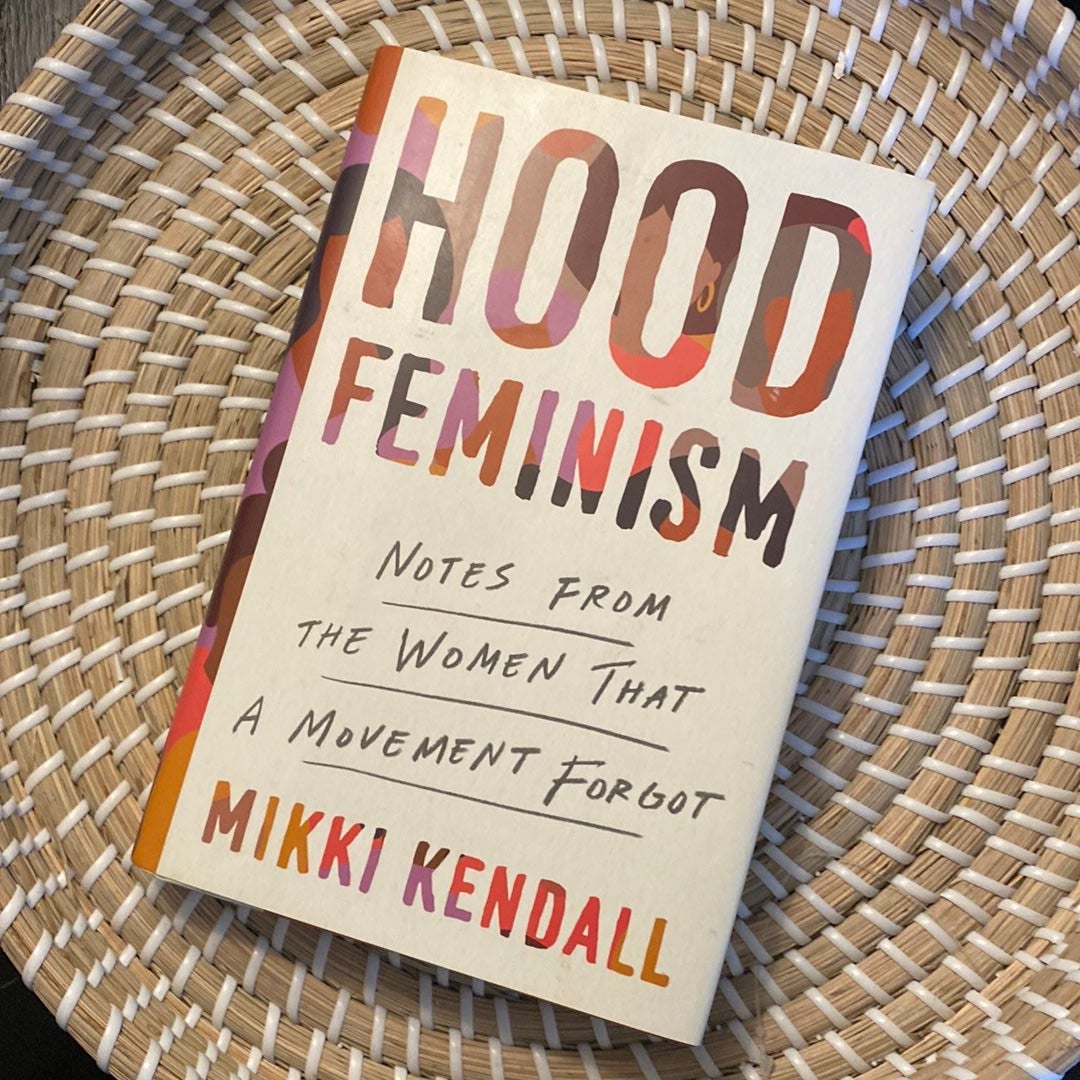
The revolution will not be televised. It will, however, be meticulously dissected in PDFs circulating through the digital ether, whispered about in hushed tones amongst the cognoscenti. And one such document, a veritable grimoire for the modern intersectional warrior, is Mikki Kendall’s *Hood Feminism*. This isn’t your grandmother’s second-wave manifesto; it’s a serrated-edged blade aimed at the comfortable complacency of mainstream feminism, a call to arms forged in the crucible of lived experience.
So, what should the discerning reader, the intellectually curious, the potentially converted know before diving into this digital deluge? Prepare yourself, dear reader, for this isn’t a gentle wade into the shallow end of feminist theory. It’s a plunge into the deep, dark, and often uncomfortable truths about privilege, access, and the insidious ways systemic oppression manifests in the everyday lives of marginalized women. Think of it as navigating a minefield; each step requires careful consideration, a willingness to confront your own biases, and a healthy dose of humility.
The Illusion of Inclusion: Unmasking the Mainstream’s Blind Spots
The central tenet of *Hood Feminism* is a scathing critique of mainstream feminism’s tendency to prioritize the concerns of white, middle-class women while simultaneously ignoring the material needs of women of color and those living in poverty. It argues, with the force of a hurricane, that a feminism that fails to address issues like food insecurity, access to healthcare, and safe housing is, at best, incomplete and, at worst, actively complicit in perpetuating systems of inequality. This isn’t just about representation; it’s about survival.
Imagine a gilded cage. It may be beautiful, ornate, and even offer a certain degree of comfort, but it’s still a cage. Mainstream feminism, Kendall argues, often focuses on decorating that cage, fighting for slightly larger perches, while ignoring the fact that many women are trapped outside, shivering in the cold. This is the crux of the issue: the priorities are fundamentally misaligned.
The digital accessibility of the PDF format further democratizes the dialogue. Suddenly, the ivory tower of feminist discourse is breached, allowing for wider dissemination and engagement from communities previously excluded due to financial or geographic constraints. The PDF becomes a weapon, a tool for empowerment, a subversive act in itself.
Beyond the Soundbite: Delving into Material Realities
*Hood Feminism* relentlessly drills down into the granular realities of poverty, race, and gender. It doesn’t shy away from the uncomfortable truths about how these intersecting oppressions manifest in concrete ways. Consider the concept of “respectability politics,” the pressure on marginalized communities to conform to dominant cultural norms in order to gain acceptance. Kendall dismantles this notion, arguing that it places the onus on the oppressed to solve the problems created by the oppressor. It’s a shell game, a distraction from the systemic issues that need to be addressed.
Think of it as trying to build a house on a foundation of sand. No matter how beautiful the structure, it will inevitably crumble. Similarly, a feminism that ignores the material needs of marginalized women is ultimately unsustainable. It’s a house built on privilege, destined to collapse under the weight of its own hypocrisy.
The PDF format, often stripped of the glossy veneer of traditional publishing, forces the reader to confront the raw, unfiltered truth. It’s a stark reminder that these are not abstract theories; they are the lived experiences of real people, women whose voices have been systematically silenced.
Intersectionality as Imperative: A Framework for Justice
Intersectionality, a term coined by Kimberlé Crenshaw, is the cornerstone of *Hood Feminism*. It recognizes that individuals can experience multiple forms of oppression simultaneously, based on their race, gender, class, sexual orientation, and other identities. These oppressions are not additive; they are interwoven, creating unique and complex experiences of marginalization. A Black woman, for example, faces challenges that are distinct from those faced by a white woman or a Black man. To ignore these nuances is to perpetuate the very systems of oppression that feminism seeks to dismantle.
Imagine a tapestry, woven with threads of different colors and textures. Each thread represents a different aspect of an individual’s identity, and where these threads intersect, new patterns emerge. Intersectionality is the art of understanding these patterns, of recognizing the complex interplay of privilege and oppression. It requires a willingness to see the world from multiple perspectives, to challenge our own assumptions, and to acknowledge the limitations of our own experiences.
The PDF’s accessibility allows for wider dissemination of intersectional theory, breaking down academic jargon and making it accessible to a broader audience. It’s a powerful tool for educating and empowering individuals to understand the complexities of social justice.
Challenging Charity: The Power of Solidarity
*Hood Feminism* challenges the prevailing notion of charity, arguing that it often perpetuates a power imbalance between the giver and the receiver. Instead, it advocates for solidarity, a recognition of shared struggles and a commitment to working together to dismantle systems of oppression. Charity is a band-aid; solidarity is surgery. It addresses the root causes of inequality, not just the symptoms.
Think of it as building a bridge, not throwing a lifeline. Charity offers temporary relief, but it doesn’t address the underlying reasons why someone is drowning in the first place. Solidarity, on the other hand, builds bridges that allow individuals to cross the chasm of inequality and reach safety.
The PDF, often shared and disseminated through grassroots networks, embodies the spirit of solidarity. It’s a testament to the power of collective action, a reminder that we are all interconnected and that our struggles are intertwined.
Beyond the PDF: Actionable Steps for a More Just World
Reading *Hood Feminism* is not enough. It’s a call to action, a mandate to translate theory into practice. This means interrogating our own biases, challenging injustice wherever we see it, and actively working to dismantle systems of oppression. It means amplifying the voices of marginalized women, supporting their leadership, and investing in their communities. It means recognizing that feminism is not a monolithic ideology, but a constantly evolving conversation, one that must be inclusive, intersectional, and relentlessly committed to justice.
Imagine planting a seed. The PDF is the seed, containing the potential for growth and transformation. But the seed must be nurtured, watered, and given sunlight in order to blossom. Similarly, the ideas contained within *Hood Feminism* must be actively cultivated in order to create a more just and equitable world.
The PDF, in its digital form, serves as a constant reminder of the work that needs to be done. It’s a portable manifesto, a call to arms that can be accessed anytime, anywhere. It’s a powerful tool for inspiring action and creating lasting change.
The Provocative Power of *Hood Feminism*
*Hood Feminism* is not for the faint of heart. It’s a challenging, provocative, and often uncomfortable read. But it’s also a necessary one. It forces us to confront the uncomfortable truths about privilege, access, and the insidious ways systemic oppression manifests in our lives. It demands that we move beyond rhetoric and engage in concrete action. It reminds us that feminism is not just about gender equality; it’s about social justice for all.
Think of it as a thunderclap, shattering the complacency of the status quo. It’s a wake-up call, demanding that we open our eyes to the realities of marginalized women and commit to building a more just and equitable world. It’s a testament to the power of feminist rage, a reminder that the revolution is not over.
The PDF, in its unassuming format, embodies this provocative power. It’s a subversive act in itself, a challenge to the established order, a call to action for all those who believe in a more just and equitable world.
Embrace the Discomfort, Embrace the Change
So, dive into that *Hood Feminism* PDF. Wrestle with its ideas. Challenge your own assumptions. Allow yourself to be uncomfortable. Because it is in that discomfort that growth occurs. It is in that confrontation with the truth that change becomes possible. The PDF is merely the starting point; the real work begins with you.







Leave a Comment