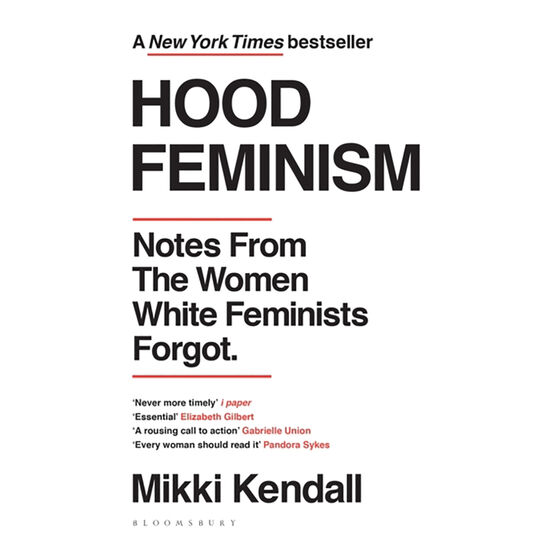
Let’s dissect this “Hood Feminism,” shall we? It’s not just another self-help manual masquerading as social commentary. It’s a visceral challenge to the monoculture of mainstream feminism, a blaring klaxon calling out the chasm between the ivory tower rhetoric and the gritty realities faced by women of color, specifically Black women. It’s a necessary corrective, a rejoinder to the well-manicured, aspirationally palatable feminism that often conveniently overlooks the intersectional complexities of oppression. Prepare yourselves. This is not your grandmother’s consciousness-raising circle. We are delving into the uncomfortable.
I. Unpacking the “Hood”: Beyond Geographic Determinism
The term “hood,” often loaded with socio-economic baggage, demands careful unpacking. It’s not merely a geographic descriptor, a pin on a map labeling areas riddled with poverty and crime. Instead, it embodies a constellation of systemic inequities: redlining’s lingering shadow, the carceral state’s disproportionate impact, and the constant barrage of microaggressions that erode mental and physical well-being. These neighborhoods, typically overlooked, are frequently incubators of resilience and survival strategies. The “hood,” in this context, becomes a powerful symbol of lived experience, a place where theoretical constructs of feminism are confronted with the harsh demands of day-to-day existence. It’s the antithesis of the sanitized narratives so frequently peddled by mainstream feminist discourse.
Consider the nuances of accessing healthcare in underserved communities. Forget the aspirational yoga retreats and organic juice cleanses. We’re talking about navigating labyrinthine bureaucratic systems, battling distrust born from historical medical malfeasance, and grappling with the reality that adequate medical care is often a luxury, not a right. This isn’t about kale smoothies; it’s about survival. It’s about facing the grim reality that life expectancy varies drastically based on zip code, a blatant indictment of systemic injustice.
II. The White Feminist Gaze: A Critique of Exclusion
The critique of “white feminism” isn’t an exercise in divisive rhetoric; it’s a necessary excavation of inherent biases. It challenges the notion that a single, universal feminist agenda can adequately address the diverse experiences of all women. Too often, the concerns of affluent, cisgender, heterosexual white women are prioritized, relegating the needs of marginalized communities to the periphery. The very definition of “feminist issues” becomes skewed, conveniently omitting conversations about state-sanctioned violence, food deserts, and environmental racism. The concept of “leaning in” rings hollow when the ladder of opportunity is structurally unsound, when the very foundations of the playing field are tilted against you.
Let’s talk about the gender pay gap. Yes, it’s a valid concern. But the discourse often fails to acknowledge that the gap widens exponentially for women of color. Furthermore, the relentless focus on corporate boardrooms often overshadows the plight of the underpaid, overworked women laboring in the service sector, the very backbone of our economy. The white feminist gaze, inadvertently or intentionally, perpetuates a hierarchy of needs, reinforcing existing power structures under the guise of gender equality.
III. Intersectionality in Practice: Weaving a More Inclusive Tapestry
Intersectionality, a term coined by Kimberlé Crenshaw, isn’t just a trendy buzzword; it’s the bedrock of meaningful feminist praxis. It acknowledges the interconnected nature of social categorizations such as race, class, gender, and sexual orientation, recognizing that these identities create overlapping systems of discrimination or disadvantage. To ignore intersectionality is to engage in a form of intellectual dishonesty, to perpetuate the very inequalities we claim to dismantle.
Imagine the experience of a Black, queer woman navigating the healthcare system. She’s not just facing sexism; she’s battling racism, homophobia, and potentially classism simultaneously. Her concerns may be dismissed or minimized, her experiences rendered invisible within a framework that prioritizes singular axes of oppression. Intersectionality demands that we acknowledge the complexity of her situation, that we tailor our approaches to meet her specific needs.
IV. Reclaiming Agency: Resistance and Resilience in the Face of Adversity
“Hood Feminism” isn’t just about highlighting oppression; it’s about celebrating the remarkable resilience of women who navigate these challenges daily. It’s about recognizing the inherent agency that exists even within seemingly disempowering circumstances. The act of survival itself becomes a form of resistance, a defiant refusal to be silenced or erased.
Consider the ingenuity of informal economies in marginalized communities. The braiding circles, the pop-up shops, the collective childcare arrangements – these are all acts of self-determination, a testament to the power of community organizing in the face of systemic neglect. These initiatives, often dismissed as “unconventional,” represent a profound assertion of autonomy, a rejection of the notion that economic success must conform to a narrow, capitalist framework.
V. Beyond Representation: Amplifying Marginalized Voices
Merely “representing” marginalized voices isn’t enough. Tokenism is a shallow substitute for genuine empowerment. The goal is to amplify these voices, to create platforms where they can articulate their own experiences, define their own agendas, and challenge the dominant narratives.
Think about the importance of community-based media outlets, the independent blogs and podcasts that provide a counter-narrative to the mainstream media’s often skewed portrayals of marginalized communities. These platforms offer a space for authentic storytelling, a place where lived experiences are validated and amplified. They disrupt the echo chamber of privilege, forcing us to confront uncomfortable truths.
VI. Challenging Respectability Politics: Embracing Authenticity
Respectability politics, the idea that marginalized groups must conform to dominant norms in order to gain acceptance, is a insidious trap. It places the onus of responsibility on the oppressed, demanding that they “earn” their rights by adhering to a predetermined set of behaviors and appearances. “Hood Feminism” actively challenges this notion, celebrating authenticity and rejecting the pressure to assimilate.
Consider the policing of Black hair, the constant scrutiny of clothing choices, the subtle (and not-so-subtle) messages that dictate how Black women should present themselves in order to be deemed “professional” or “acceptable.” This is a form of cultural subjugation, an attempt to erase identity and enforce conformity. Embracing natural hair, celebrating cultural traditions, and rejecting the pressure to conform are all acts of defiance, a powerful assertion of self-worth.
VII. Towards a More Equitable Future: Moving Beyond Performative Allyship
Allyship isn’t a passive identity; it’s an active practice. It requires a willingness to listen, to learn, and to challenge one’s own biases. It means using one’s privilege to amplify marginalized voices, to advocate for systemic change, and to hold institutions accountable.
Forget the empty gestures of solidarity. Donate time, money, and resources to organizations that are working on the ground to address systemic inequalities. Support Black-owned businesses, amplify the voices of Black artists and activists, and challenge racist policies in your own communities. True allyship requires a sustained commitment, a willingness to engage in difficult conversations, and a recognition that the fight for justice is a collective responsibility.
The journey towards a more equitable future demands a radical re-imagining of feminism, one that centers the experiences of the most marginalized and challenges the very foundations of systemic oppression. It demands a willingness to listen to the voices that have been silenced, to amplify the stories that have been ignored, and to confront the uncomfortable truths that lie at the heart of our society. Only then can we begin to build a truly inclusive and just world. Now, get to work.






Leave a Comment