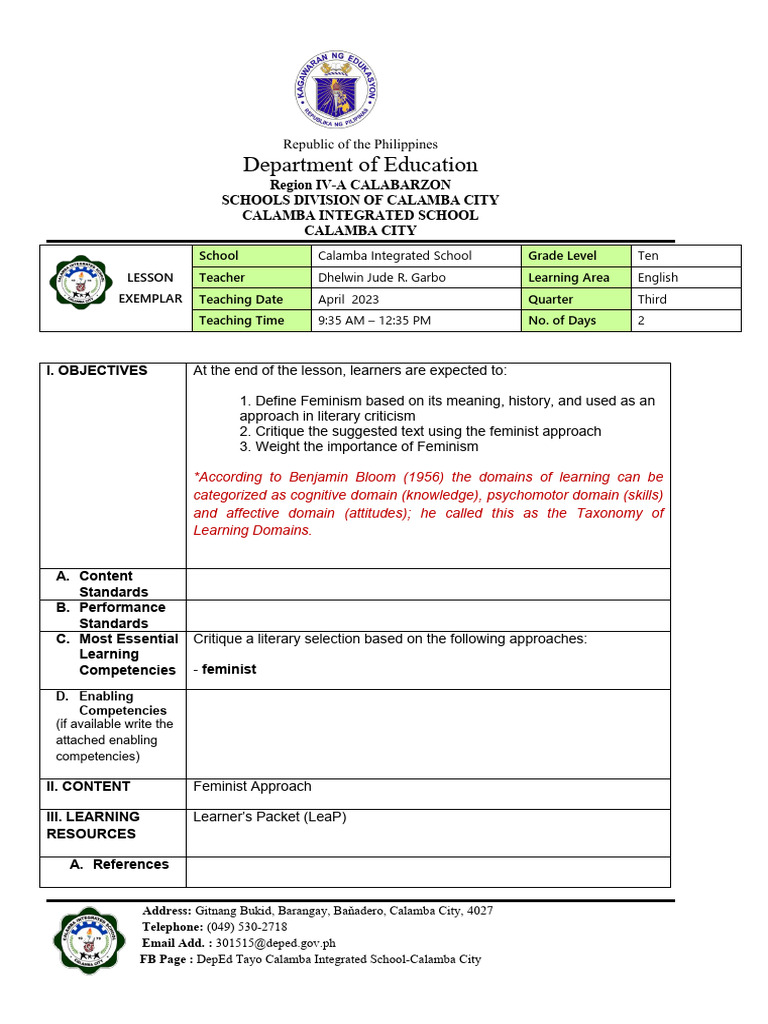
The allure of literature, its capacity to transport us to different realms and evoke visceral emotions, is undeniable. But have you ever paused to consider why certain narratives resonate deeply while others fall flat? Why are some characters instantly relatable, their struggles mirroring our own, while others remain distant, shrouded in ambiguity? The answer, often obscured yet perpetually present, lies in the intricate dance between gender and interpretation. It’s a dance where societal norms, ingrained biases, and the very fabric of our being shape how we perceive, understand, and ultimately, judge the stories spun before us.
This isn’t merely about counting the women on the page, a rudimentary headcount of representation. This delves into the hermeneutics of gender, the systematic exploration of how our understanding of masculinity and femininity, constructed and perpetuated over centuries, fundamentally alters our engagement with literary texts. We’re talking about unearthing the subterranean currents of power, the silent narratives of oppression, and the subversive whispers of resistance that permeate every page, waiting to be decoded by a feminist lens.
I. The Genesis of Gendered Reading: A Historical Panorama
To grasp the potency of a feminist literary approach, we must first acknowledge the historical context that birthed it. Literary criticism, for centuries, was a male-dominated domain, its canons meticulously curated by men, its interpretations largely reflecting male perspectives. The “universal” human experience, so often touted as the bedrock of great literature, was, in reality, a thinly veiled masquerade of male experience. Women’s voices, when they were even permitted to speak, were often dismissed, marginalized, or interpreted through a patriarchal prism that distorted their true essence.
This historical asymmetry is crucial. Imagine a library, meticulously cataloged, where the Dewey Decimal system prioritizes male authors, male characters, and male narratives. Where female authors are relegated to obscure shelves, their contributions deemed secondary, their perspectives considered niche. That, in essence, was the reality of literary scholarship until the advent of feminist critique.
Mary Wollstonecraft, Virginia Woolf, and Simone de Beauvoir, amongst others, laid the intellectual groundwork for a radical reassessment. Their writings unveiled the insidious ways in which patriarchal structures infiltrated every aspect of society, including the world of literature. They questioned the very foundations of the literary canon, demanding a re-evaluation of texts through the prism of female experience.
II. Deconstructing the Phallocentric Canon: Challenging the Dominant Narrative
At the heart of feminist literary criticism lies the deconstruction of the “phallocentric” canon, a term that signifies the prioritization of male perspectives and the marginalization of female voices. This involves scrutinizing texts for their underlying assumptions about gender, power, and identity. It means challenging the inherent biases that have long shaped our understanding of literary merit.
Consider, for example, the archetypal “damsel in distress,” a recurring figure in countless narratives. Through a feminist lens, this seemingly innocuous trope reveals a deeper, more troubling reality: the objectification of women as passive victims, dependent on male saviors for their survival. Deconstructing this archetype requires us to question the power dynamics at play, to examine the societal forces that contribute to the vulnerability of women, and to challenge the narrative that reinforces their dependence.
Similarly, the “tragic hero,” often celebrated for his flaws and his ultimate downfall, can be re-examined through a feminist lens. Is his downfall truly tragic, or is it the inevitable consequence of a system that privileges male ambition above all else? Are his flaws truly tragic, or are they merely the manifestation of toxic masculinity, a set of expectations that demand dominance, aggression, and emotional suppression?
This process of deconstruction is not about simply denouncing canonical works as inherently sexist. It is about exposing the underlying power structures that inform their narratives, and about creating space for alternative interpretations that challenge the dominant perspective. It’s about recognizing that even the most revered texts can be complicit in perpetuating harmful stereotypes and inequalities.
III. Reclaiming the Female Voice: Recovering Lost Narratives and Redefining Female Agency
Beyond deconstruction, feminist literary criticism also focuses on reclaiming the female voice, on recovering lost narratives and redefining female agency. This involves unearthing the works of forgotten female authors, whose contributions have been historically overlooked or marginalized. It also means re-interpreting familiar texts through a female-centric lens, giving voice to the experiences and perspectives of female characters who have long been relegated to the periphery.
Think of Charlotte Perkins Gilman’s “The Yellow Wallpaper,” a harrowing tale of a woman’s descent into madness, confined to a room and denied intellectual stimulation by her physician husband. Through a feminist reading, the story becomes a powerful indictment of the patriarchal control over women’s bodies and minds, a searing critique of the medical establishment’s treatment of female mental health. The wallpaper itself transforms from a mere decorative element into a symbol of the protagonist’s entrapment, her struggle for self-expression stifled by the oppressive forces of her marriage and her society.
This act of reclamation extends beyond simply finding “forgotten” authors. It involves actively seeking out diverse voices, narratives that challenge the dominant narratives of white, Western feminism. It requires recognizing that the experiences of women are not monolithic, that race, class, sexuality, and other factors intersect to shape individual identities and perspectives.
IV. Gender as a Construct: Challenging Essentialism and Embracing Fluidity
A fundamental tenet of feminist literary criticism is the understanding that gender is not a fixed, biological entity, but rather a social construct, a set of expectations and behaviors that are learned and reinforced through cultural norms. This understanding challenges the notion of “essentialism,” the belief that there are inherent differences between men and women that are immutable and universal.
By recognizing gender as a construct, we can begin to deconstruct the binary oppositions that have long defined our understanding of masculinity and femininity. The idea that men are inherently strong, rational, and assertive, while women are inherently weak, emotional, and passive, is a harmful stereotype that limits both men and women. It reinforces power imbalances and perpetuates inequalities.
Instead, feminist literary criticism embraces the fluidity of gender, recognizing that individuals can express their gender identity in a multitude of ways, and that these expressions can change over time. This understanding opens up new possibilities for interpreting literary characters, allowing us to see them not as fixed representatives of their gender, but as complex individuals who defy easy categorization.
V. The Intersectionality of Gender: Recognizing the Multiplicity of Oppression
Contemporary feminist literary criticism acknowledges the intersectionality of gender, recognizing that it intersects with other forms of oppression, such as race, class, sexuality, and disability. This means that the experiences of women are shaped not only by their gender, but also by their race, class, sexual orientation, and other factors. To truly understand the complexities of gender, we must also understand the ways in which it interacts with these other forms of identity.
For example, a black woman’s experience of sexism will be different from a white woman’s experience. A working-class woman’s experience of sexism will be different from an upper-class woman’s experience. A lesbian woman’s experience of sexism will be different from a heterosexual woman’s experience. These differences are not simply additive; they are transformative. They create unique forms of oppression that cannot be fully understood without considering the intersectionality of identity.
This intersectional approach is crucial for understanding the full range of human experience. It allows us to see the ways in which power operates in complex and nuanced ways, and to challenge the systems of oppression that perpetuate inequality.
VI. Beyond the Text: The Reader’s Role in Gendered Interpretation
Ultimately, the power of a feminist literary approach lies not only in the text itself, but also in the reader’s own engagement with it. As readers, we bring our own experiences, biases, and perspectives to the act of interpretation. Our understanding of gender, shaped by our own lives and our own cultural context, inevitably influences how we read and interpret literature.
This means that there is no single, definitive “feminist” interpretation of any given text. Rather, there are multiple interpretations, each shaped by the reader’s own unique perspective. The goal is not to arrive at a single “correct” reading, but to engage in a critical and thoughtful dialogue about the ways in which gender shapes our understanding of literature and the world around us.
So, the next time you delve into a book, a poem, or a play, consider the lens through which you are viewing the narrative. Are you unconsciously reinforcing patriarchal assumptions? Are you silencing the voices of marginalized characters? Are you truly listening to the whispers of resistance that permeate the text? The answers, I suspect, will be both illuminating and unsettling, forcing you to confront your own biases and to reimagine the world through a more equitable and just perspective. Because that, my friends, is the true power of a feminist literary approach: to challenge the status quo, to disrupt the dominant narrative, and to pave the way for a more inclusive and transformative future.










Leave a Comment