Literature, that vast and verdant landscape of human imagination, has long served as both a mirror reflecting society’s norms and a crucible forging its transformation. But let’s be frank: for centuries, this mirror was warped, reflecting a world predominantly through the lens of the patriarchy. Women were relegated to supporting roles, their voices muted, their experiences marginalized. The pen, mightier than the sword, was often wielded to perpetuate, not dismantle, the very structures that oppressed us.
But then, the literary landscape began to shift. A seismic tremor, a slow but inexorable revolution, rippled through the pages. Writers, often women themselves, dared to challenge the established order, to reclaim their narratives, and to illuminate the multifaceted reality of female existence. This, my friends, is the saga of feminism in literature – a continuing battle cry against the insidious forces of sexism and a vibrant testament to the power of words to ignite change. This isn’t just about writing stories; it’s about rewriting the world. Prepare to have your preconceived notions challenged.
I. The Genesis of Feminist Literary Critique: Unveiling the Patriarchal Text
Before we could even begin to construct a feminist literature, we had to deconstruct the existing canon. This required a critical lens, a sharp and unforgiving gaze that could dissect the ingrained sexism within seemingly innocuous texts. This initial phase, often termed “feminist literary critique,” was a necessary act of intellectual arson. We needed to burn down the old structures before we could build anew.
A. Exposing the Male Gaze: Seeing Beyond the Surface
The “male gaze,” a concept popularized by Laura Mulvey, describes how women are often depicted in literature and art from a masculine, heterosexual perspective. They are objects of desire, passive recipients of action, their identities defined by their relationship to men. Think of countless literary heroines, their sole purpose seemingly to be admired, desired, or rescued.
Feminist critique exposes this insidious objectification, demanding that we see beyond the surface, beyond the superficial beauty, and recognize the dehumanization inherent in such representations. It calls for a rejection of the voyeuristic pleasure derived from the objectification of women.
B. Deconstructing Gender Stereotypes: Shattering the Archetypes
Literature is rife with harmful gender stereotypes. The “Madonna-whore complex,” the “hysterical woman,” the “evil stepmother” – these archetypes have been perpetuated for centuries, shaping our perceptions of women and limiting their potential. Consider, for instance, the tragic Ophelia in Hamlet, driven to madness by her unrequited love. Is she truly mad, or is she a victim of societal pressures and patriarchal control?
Feminist critics challenge these limiting stereotypes, revealing their artificiality and exposing their damaging consequences. They demand nuanced portrayals of women, acknowledging their complexities, contradictions, and individual agency.
C. Recovering Lost Voices: Reclaiming the Literary Heritage
For centuries, countless women writers were silenced, ignored, or dismissed. Their works were relegated to obscurity, their contributions erased from the literary canon. Feminist scholars have undertaken the arduous task of recovering these lost voices, rediscovering forgotten masterpieces, and rewriting literary history to include the perspectives of women. This is not just about adding women to the list; it’s about fundamentally altering our understanding of what constitutes “great” literature.
II. The Emergence of Feminist Literature: Writing Women into Existence
Once the groundwork of feminist critique had been laid, a new wave of feminist literature began to emerge. These writers, armed with a profound understanding of patriarchal structures, sought to create alternative narratives, to give voice to the experiences of women, and to imagine a world free from gender oppression.
A. Challenging Traditional Narratives: Subverting the Status Quo
Feminist writers often challenge traditional narrative structures, subverting the conventional plots and character arcs that reinforce patriarchal norms. They may, for example, rewrite classic fairy tales from a feminist perspective, giving the princess agency and challenging the damsel-in-distress trope.
Consider Angela Carter’s “The Bloody Chamber,” a collection of short stories that reimagines classic fairy tales with a distinctly feminist sensibility. These stories are dark, unsettling, and often violent, but they offer a powerful critique of patriarchal power and sexual objectification.
B. Exploring Female Subjectivity: Giving Voice to Inner Lives
One of the most significant contributions of feminist literature is its exploration of female subjectivity. These writers delve into the inner lives of their characters, exploring their thoughts, feelings, desires, and experiences with unprecedented depth and honesty. They give voice to the complexities of female identity, challenging the simplistic and often stereotypical representations of women in traditional literature.
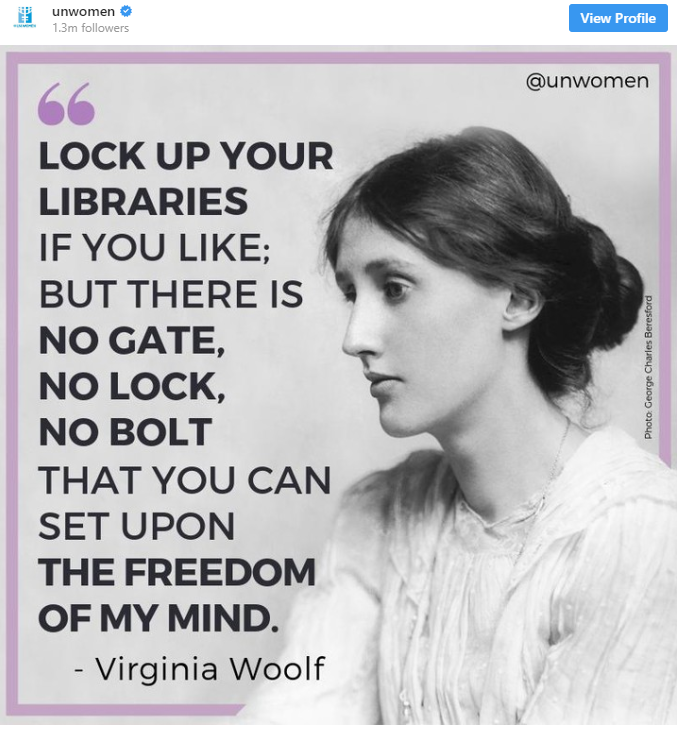
Think of Virginia Woolf’s “Mrs. Dalloway,” a groundbreaking novel that delves into the inner life of a middle-aged woman, exploring her memories, anxieties, and aspirations. Woolf’s use of stream-of-consciousness allows readers to access Clarissa Dalloway’s thoughts and feelings in a way that was unprecedented in literature at the time.
C. Addressing Social and Political Issues: Confronting Injustice
Feminist literature often tackles social and political issues directly, confronting injustice and advocating for social change. These writers address issues such as sexism, racism, classism, homophobia, and violence against women. They use their writing to raise awareness, to challenge oppressive systems, and to inspire activism.
Margaret Atwood’s “The Handmaid’s Tale” is a chilling dystopian novel that explores the dangers of religious fundamentalism and the subjugation of women. The novel depicts a totalitarian regime in which women are stripped of their rights and forced into sexual servitude. It is a powerful warning against the erosion of women’s rights and a call to resist all forms of oppression.
III. The Evolution of Feminist Themes: Intersectional Perspectives and Beyond
Feminist literature is not a monolithic entity. It has evolved over time, incorporating new perspectives and addressing a wider range of issues. In recent decades, there has been a growing emphasis on intersectionality, recognizing the interconnectedness of various forms of oppression and the importance of centering the experiences of marginalized women.
A. Embracing Intersectionality: Recognizing Multiple Identities
Intersectionality, a concept developed by Kimberlé Crenshaw, recognizes that individuals can experience multiple forms of oppression based on their race, gender, class, sexual orientation, and other identities. Feminist writers are increasingly embracing intersectionality, exploring the complex ways in which these identities intersect and shape women’s experiences.
Authors like Alice Walker, Toni Morrison, and Audre Lorde have been instrumental in bringing intersectional perspectives to feminist literature. Their works explore the unique challenges faced by Black women, highlighting the intersection of racism and sexism.
B. Challenging Gender Norms: Expanding the Definition of Womanhood
Feminist literature is also challenging traditional gender norms, expanding the definition of womanhood to encompass a wider range of identities and experiences. This includes exploring the experiences of transgender women, non-binary individuals, and women who defy traditional expectations of femininity.
Authors like Leslie Feinberg and Kate Bornstein have paved the way for more inclusive representations of gender in literature. Their works challenge the binary understanding of gender and celebrate the diversity of human experience.
C. Exploring New Forms of Activism: Beyond the Page
Feminist literature is not just about writing books; it’s about inspiring action and creating social change. Feminist writers are increasingly using their platforms to engage in activism, to raise awareness about social issues, and to advocate for justice. This can include participating in protests, organizing campaigns, and using social media to amplify marginalized voices. The pen, after all, is just one tool in the feminist arsenal.
IV. The Future of Feminism in Literature: A Call to Action
The journey of feminism in literature is far from over. There is still much work to be done to challenge patriarchal norms, to amplify marginalized voices, and to create a more just and equitable world. We must continue to support feminist writers, to read their works, and to engage in critical conversations about the issues they raise.
We need literature that dares to question, to provoke, to challenge the status quo. We need literature that reflects the complexities of human experience, that acknowledges the power of intersectionality, and that inspires us to fight for a better future. The revolution will not be televised; it will be written. So, pick up your pens, sisters. The world awaits. Let us wield the power of words to reshape our reality and to forge a future where all voices are heard, all experiences are valued, and all individuals are free to live their lives to the fullest potential. The time for polite discourse is over. The time for radical reimagining is now.










Leave a Comment