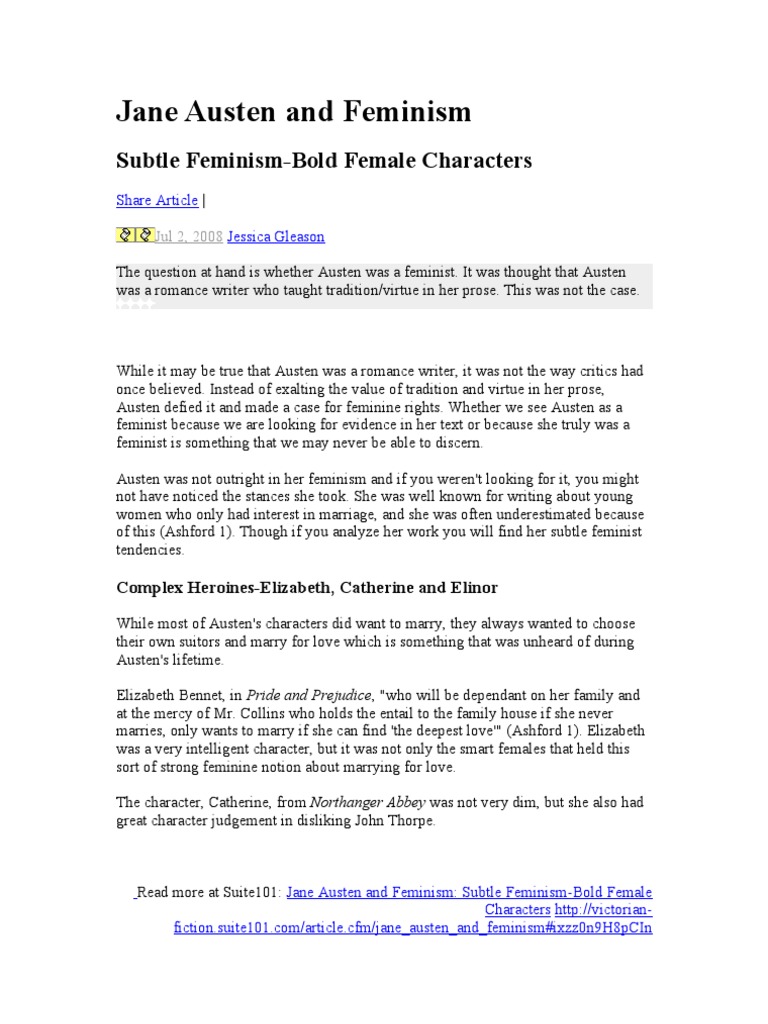
Jane Austen: a name synonymous with polite society, dances, and the pursuit of advantageous marriage. But to dismiss her as merely a chronicler of Regency romance is to fundamentally misunderstand the subversive currents that ripple beneath the surface of her seemingly placid narratives. Let’s dismantle the patriarchal edifice that attempts to contain Austen within the saccharine confines of popular perception. Let’s unearth the radical feminist consciousness pulsating within her prose.
The saccharine sweetness? A deceptive veneer, a carefully constructed facade. It camouflages a nuanced, devastating critique of the societal strictures imposed upon women, a critique delivered with the rapier wit of a seasoned polemicist. Austen’s genius lies not just in observing the inequities of her time, but in dissecting them with the precision of a surgeon, exposing the raw nerve endings of female subjugation. We will dissect Austen’s literary body, a project in reclaiming her true significance in the landscape of feminist thought.
I. The Corset of Societal Expectations: A Critical Confinement
The opening gambit in our feminist exegesis must be an examination of the suffocating societal expectations that define the lives of Austen’s heroines. Marriage, for these women, is not merely a matter of love; it is an economic imperative, a transaction dictated by the iron fist of patriarchal capitalism. A woman’s worth is quantified by her dowry, her connections, her ability to secure a suitable match. This system, predicated on female economic dependence, renders women vulnerable, powerless, and ultimately, voiceless.
Consider the plight of the Dashwood sisters in Sense and Sensibility. Bereft of their inheritance, they are cast adrift in a society that values them only for their potential as wives. Their agency is circumscribed by their financial precariousness. Marianne’s passionate nature, her vulnerability, becomes a liability in a world that prizes pragmatism and self-preservation. Elinor, the embodiment of “sense,” internalizes societal expectations, suppressing her own desires in the name of propriety. This is not strength; it is a survival tactic born of systemic oppression.
II. Wit as a Weapon: The Power of Subversive Discourse
Denied the traditional avenues of power – political influence, economic independence – Austen’s women wield wit as their weapon of choice. Dialogue becomes a battleground, a space where they can challenge patriarchal norms, expose hypocrisy, and assert their intellectual superiority. The barbed repartee between Elizabeth Bennet and Mr. Darcy in Pride and Prejudice is a prime example. Their verbal sparring is not mere flirtation; it is a clash of ideologies, a struggle for intellectual dominance. Elizabeth’s refusal to be intimidated by Darcy’s social standing, her willingness to challenge his arrogance, is a defiant act of female empowerment.
Austen’s satirical voice, often channeled through her heroines, eviscerates the pretensions of the upper classes, exposing their moral bankruptcy and intellectual vacuity. Characters like Mrs. Bennet, with her relentless pursuit of advantageous matches for her daughters, are not merely comic figures; they are cautionary tales, illustrating the corrosive effects of a system that reduces women to commodities. This comedic edge should not blind us to the serious social critique that underpins her humor.
III. The Silent Rebellion: Acts of Quiet Resistance
Feminist resistance does not always manifest in grand pronouncements or public demonstrations. Often, it takes the form of subtle acts of defiance, quiet rebellions against the constraints of patriarchal society. Austen’s heroines, while conforming to the outward expectations of their time, often carve out spaces of autonomy within their own minds and lives. They read, they write, they observe, they form their own opinions, even when those opinions contradict the prevailing wisdom.
Emma Woodhouse, in Emma, despite her privileged position and initial arrogance, undergoes a process of self-discovery that leads her to question the limitations imposed upon women. Her attempts to manipulate the lives of those around her, while misguided, reveal a desire for agency, a yearning to exert some control over her own destiny. Even in her mistakes, Emma embodies a spirit of independence that challenges the passive ideal of female obedience.
IV. Beyond Romance: The Complexities of Female Relationships
To reduce Austen’s novels to mere romance is to ignore the complex and nuanced portrayal of female relationships that forms a central theme in her work. Sisterhood, friendship, and rivalry are all explored with remarkable depth and sensitivity. Austen’s women are not simply defined by their relationships with men; they have their own lives, their own aspirations, and their own connections to one another.
The bond between Elizabeth Bennet and her sister Jane is a testament to the power of female solidarity. They support each other, confide in each other, and navigate the treacherous waters of courtship together. Their relationship is not without its challenges, but their shared experiences as women in a patriarchal society bind them together. Similarly, the rivalry between Emma Woodhouse and Jane Fairfax highlights the societal pressures that pit women against one another in the competition for male attention. Austen exposes the insidious ways in which patriarchy can undermine female solidarity.
V. The Unspoken: Exploring Themes of Female Sexuality and Desire
While Austen’s novels adhere to the conventions of her time in terms of depicting female sexuality, a careful reading reveals subtle hints of unspoken desires and suppressed emotions. The intense feelings that Marianne Dashwood experiences for Willoughby, for example, suggest a level of passion that is rarely acknowledged in public discourse. Austen, through her use of suggestion and implication, acknowledges the existence of female sexual desire, even while remaining within the bounds of propriety.
Furthermore, the anxieties surrounding female virginity and reputation are ever-present in Austen’s novels. A woman’s value is inextricably linked to her perceived sexual purity, and any transgression, real or imagined, can have devastating consequences. This constant pressure to conform to patriarchal standards of female sexuality is a recurring theme in Austen’s work, highlighting the ways in which women are policed and controlled by societal expectations.
VI. A Legacy of Resistance: Austen’s Enduring Feminist Relevance
Jane Austen’s novels continue to resonate with contemporary readers because they speak to the enduring challenges faced by women in a patriarchal world. The issues she explored – economic inequality, societal expectations, the limitations of marriage – remain relevant today. While the specific circumstances may have changed, the underlying power dynamics remain largely the same. To that end, Austen’s work serves as a reminder of the ongoing struggle for gender equality and the importance of challenging patriarchal norms.
Therefore, Austen’s legacy transcends the confines of historical romance. She is a proto-feminist, a subversive voice whispering from the past, urging us to question the status quo, to challenge injustice, and to fight for a world where women are valued for their intellect, their agency, and their contributions to society. Reject the watered-down, palatable version of Austen presented to you. Embrace the radical, the subversive, the feminist fire that burns within her words. It is time we heed her call.
The real question, then, is not whether Austen was a feminist, but rather, how will we continue her fight? The game is afoot. Will you join the hunt?










Leave a Comment