Feminism, in its sociological articulation, transcends the simplistic understanding often peddled by the mainstream. It’s not merely about equal pay or boardroom representation, though those are undeniably components. Feminism, at its core, is a rigorous analysis of power, specifically how power is structured along lines of gender, creating systemic inequalities that permeate every facet of human existence. We’re talking about a fundamental rethinking of societal structures, a dismantling of deeply entrenched hierarchies. Consider it a vivisection of the patriarchal beast.
This inquiry, this unflinching gaze into the abyss of gendered power dynamics, promises a shift in perspective, a radical alteration of the lens through which we view the world. It compels us to question the very foundations upon which our social reality is constructed, demanding a reckoning with the historical baggage that shapes our present. Ready to be challenged? Good.
Unveiling the Gendered Architecture of Power
The sociological understanding of feminism rests on the understanding that gender is not a natural, immutable category. Rather, it is a social construct, a product of cultural norms, expectations, and institutions. These constructs, relentlessly reinforced through socialization processes, dictate how individuals are expected to behave, dress, and even think, based solely on their assigned sex at birth. This is where the insidious nature of gendered power begins to reveal itself. It’s not just about ‘men versus women’; it’s about the very frameworks that define what it *means* to be a man or a woman, and the implications of those definitions. Think of it as a societal stage, where everyone is handed a script based on their perceived gender, and deviation is met with social sanction.
Gender Stratification: A Hierarchy of Being
The construction of gender inevitably leads to gender stratification, the hierarchical ranking of individuals and groups based on their gender identity or expression. This stratification manifests in myriad ways, from the wage gap to the underrepresentation of women in leadership positions, to the prevalence of gender-based violence. It is a pervasive system of inequality that operates at both the micro (individual) and macro (societal) levels. This isn’t merely happenstance; it’s the direct result of power structures meticulously crafted and maintained over centuries.
Consider the concept of hegemonic masculinity, the culturally idealized form of masculinity that legitimizes male dominance and subordinates other expressions of masculinity, as well as femininity. This ideal, often portrayed in media and reinforced through social interactions, sets an impossible standard for men to live up to, while simultaneously perpetuating harmful stereotypes about women. This insidious standard is not just a reflection of societal values; it actively *shapes* them.
The Intersectional Lens: Beyond Binary Thinking
No discussion of feminism in sociology would be complete without acknowledging the crucial concept of intersectionality. Coined by Kimberlé Crenshaw, intersectionality recognizes that gender is not experienced in isolation. Instead, it is intertwined with other social categories such as race, class, sexuality, disability, and nationality, creating unique and overlapping systems of discrimination and oppression. A Black woman, for example, faces challenges distinct from those faced by a white woman or a Black man, due to the intersection of racism and sexism. To ignore these intersections is to fundamentally misunderstand the complexities of power and inequality. Intersectionality demands that we move beyond simplistic binary thinking and embrace a nuanced understanding of how multiple forms of oppression converge to shape individual experiences. It is a call for solidarity, not homogenization.
Patriarchy: The Systemic Engine of Oppression
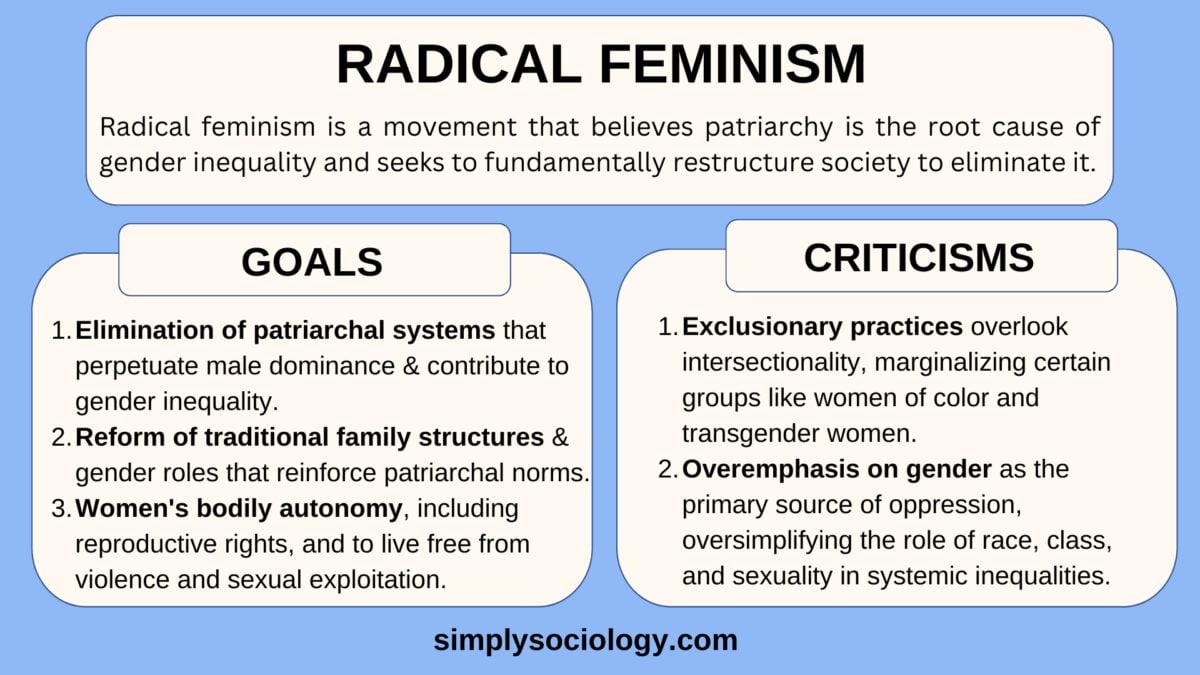
At the heart of feminist sociological analysis lies the concept of patriarchy, a system of social structures and practices in which men hold primary power and predominate in roles of political leadership, moral authority, social privilege, and control of property. Patriarchy is not simply about individual men being sexist; it is a systemic phenomenon that operates at the institutional level, shaping laws, policies, and cultural norms. It is the water we swim in, so ubiquitous that we often fail to recognize its presence. Critiques of patriarchy often expose the ways it normalizes male violence, restricts women’s autonomy, and perpetuates harmful gender stereotypes. It’s a system that benefits some at the expense of others, and its dismantling requires a radical restructuring of societal power dynamics. Patriarchy thrives on the myth of male superiority and female inferiority, a myth meticulously crafted and relentlessly reinforced.
Challenging the Status Quo: Feminist Methodologies
Feminist sociology is not just a theoretical framework; it is also a methodological approach that challenges traditional research methods and epistemologies. Feminist researchers prioritize the experiences and perspectives of marginalized groups, employing methods such as qualitative interviewing, ethnography, and participatory action research to amplify their voices and challenge dominant narratives. They strive to create research that is not only informative but also transformative, empowering participants and contributing to social change. Traditional research often claims objectivity, but feminist methodologies recognize that all knowledge is situated and influenced by the researcher’s own biases and experiences. They actively seek to acknowledge and address these biases, striving for a more reflexive and ethical research practice.
The Micropolitics of Gender: Everyday Resistance
While discussions of gendered power often focus on macro-level structures and institutions, it is crucial to recognize the significance of micro-level interactions and everyday acts of resistance. These seemingly small acts of defiance, from challenging sexist jokes to subverting gendered expectations in the workplace, can have a profound impact on challenging and dismantling patriarchal norms. They are the seeds of revolution, sown in the fertile ground of everyday life. Consider the simple act of a woman refusing to apologize for taking up space, both literally and figuratively. Or a man challenging his peers to hold each other accountable for sexist behavior. These micro-level acts of resistance, when multiplied across communities and generations, can create a powerful wave of social change.
Reimagining Social Institutions: A Feminist Vision
Feminist sociology offers a powerful critique of existing social institutions, from the family to the workplace to the legal system, revealing how they perpetuate gender inequality. But it also offers a vision for reimagining these institutions in ways that promote gender equality and social justice. This might involve implementing policies that support parental leave and affordable childcare, challenging gender stereotypes in education, and reforming laws that discriminate against women. The goal is not simply to integrate women into existing institutions, but to fundamentally transform those institutions to create a more equitable and just society for all. This requires a willingness to challenge deeply ingrained assumptions and power structures, and to embrace innovative solutions that prioritize the needs of marginalized groups.
Beyond Gender: Towards a More Just World
Ultimately, the feminist sociological project extends beyond the issue of gender to encompass a broader vision of social justice. By challenging power structures and promoting equality, feminism contributes to the dismantling of all forms of oppression. It is a movement for human liberation, striving to create a world where everyone can thrive, regardless of their gender, race, class, sexuality, or any other social category. This is not just a utopian dream; it is a goal worth fighting for, a future worth building. The promise of feminism is not simply equality between men and women, but a fundamental transformation of society, creating a world where everyone has the opportunity to reach their full potential. Let us dare to envision and create that world.
So, are you ready to abandon the comforting illusions and embrace the messy, challenging, and ultimately liberating power of feminist sociological thought? The revolution, darling, is now.










Leave a Comment