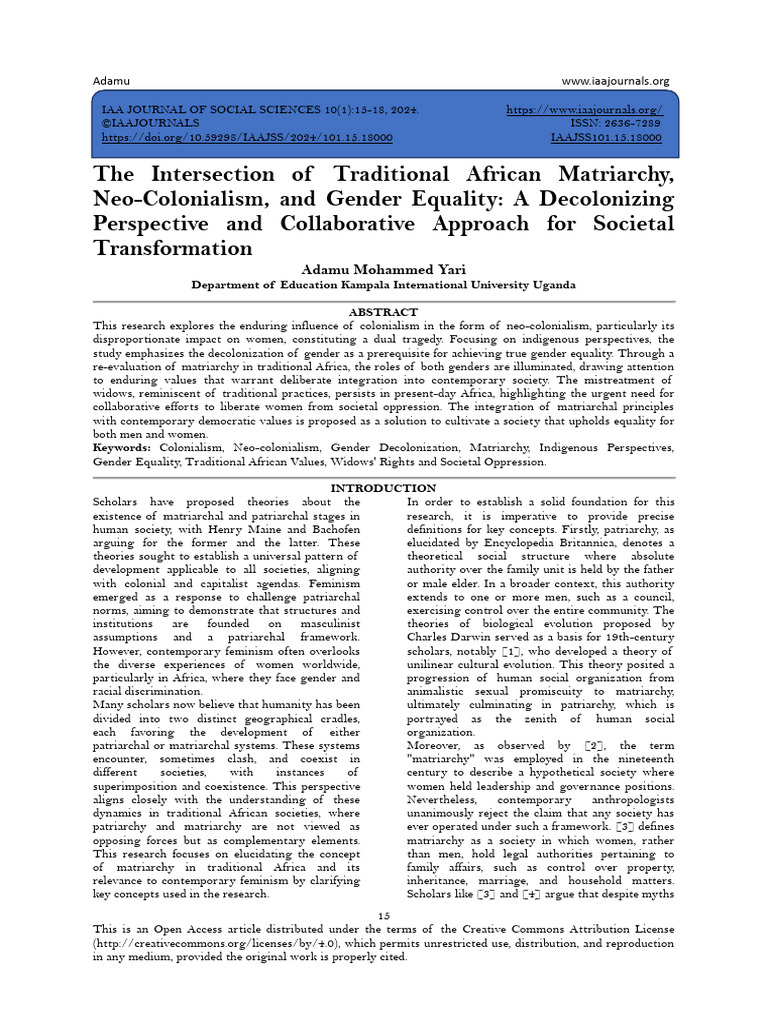
The allure of the “strong African woman,” a figure seemingly impervious to the slings and arrows of patriarchal oppression, resonates powerfully across diverse ideological spectrums. Is it mere romanticism, a yearning for a simpler, more equitable past? Or does this fascination veil a more complex interplay of historical trauma, neo-colonial aspirations, and the ongoing struggle to decolonize gender narratives? We must delve deeper than superficial admiration and excavate the bedrock upon which these perceptions are built.
The convenient mythology of pre-colonial African societies as bastions of matriarchal power conveniently glosses over the nuanced realities of gender relations. It is a dangerous oversimplification. To truly understand the complexities of feminism and postcolonialism, we must first dismantle this romanticized, often Eurocentric, vision. We need to be able to see what it obscures.
I. Unpacking the Myth of the African Matriarchy: A Critical Deconstruction
A. Deconstructing the “Matriarchy” Narrative: Challenging Eurocentric Projections
1. Chieftaincies vs. Matriarchy: While some African societies exhibited matrilineal descent or female chieftaincies, these structures should not be misconstrued as outright matriarchies. Power dynamics were far more intricate and rarely replicated the inverse of patriarchal dominance. Some women held power. That is correct. However, that does not mean that it was a perfect mirror of patriarchal structures. To think otherwise would be reductive.
2. Western Ideologies and the “Noble Savage” Trope: The persistent fascination with “matriarchal” African societies often stems from a Western desire to locate a “pure,” untainted origin point, mirroring the “noble savage” trope. This projection ignores the internal complexities and historical trajectories of African societies, imposing Western frameworks onto vastly different cultural contexts.
B. Analyzing the Nuances of Gender Roles in Pre-Colonial Africa: Beyond Binary Oppositions
1. The Fluidity of Gender Roles: Many African cultures possessed more fluid understandings of gender, with roles and responsibilities varying based on age, lineage, and spiritual calling. Transgender identities existed and were, in many cases, accepted.
2. Women’s Economic and Political Power: Women often held significant economic power through agriculture, trade, and craft production. They also wielded political influence through councils of elders, secret societies, and spiritual leadership. These avenues of influence existed, but were not always considered equal to men’s.
C. Recognizing the Limitations and Contradictions: Patriarchy’s Presence in Pre-Colonial Societies
1. The Existence of Patriarchy: To deny the existence of patriarchal elements in pre-colonial African societies is intellectually dishonest. While structures differed from European models, gender inequality still existed in various forms, including control over reproduction, inheritance laws, and social hierarchies.
2. Internal Hierarchies and Power Dynamics: Within pre-colonial societies, hierarchies based on age, lineage, and ethnicity often intersected with gender, creating complex power dynamics that disadvantaged certain groups of women. Not all women were equal, nor were all lineages considered equal.
II. Colonialism and the Disruption of Gender Orders: Imposition and Resistance
A. Colonial Policies and the Erosion of Women’s Power
1. Land Ownership and Economic Marginalization: Colonial land policies often dispossessed women of their traditional land rights, disrupting their economic independence and relegating them to subordinate roles in the colonial economy. This had ripple effects throughout the social and economic structures.
2. The Imposition of Western Legal Systems: The introduction of Western legal systems, often based on patriarchal assumptions, undermined indigenous laws and customs that had previously protected women’s rights and interests. Consider how this would affect property rights or inheritance laws.
B. Women’s Resistance to Colonial Rule: Agency and Activism
1. Active Participation in Anti-Colonial Movements: Women actively participated in anti-colonial movements, challenging colonial authority through protests, boycotts, and armed resistance. Their contributions were vital, yet often minimized in historical accounts.
2. Reclaiming Traditional Roles as a Form of Resistance: Women often utilized traditional roles and institutions to resist colonial encroachment, preserving cultural practices and challenging the imposition of Western values. This was a subtle, but vital, form of resistance.
C. The Creation of New Gendered Identities Under Colonialism: Hybridity and Negotiation
1. The “Educated Woman” as a Site of Contestation: The emergence of the “educated woman” became a contested space, with colonial authorities and indigenous communities holding conflicting views on the role of women in society. What was the proper place for a woman in this new world order?
2. Negotiating Traditional and Modern Identities: Women navigated the complex terrain of colonialism by negotiating traditional and modern identities, adapting to changing circumstances while preserving elements of their cultural heritage. This required adaptability and resilience.
III. Postcolonial Feminism: Reclaiming Agency and Decolonizing Discourse
A. Critiques of Western Feminism: Addressing Universalism and Colonial Legacies
1. Challenging Western Feminist Assumptions: Postcolonial feminists critique the universalizing tendencies of Western feminism, arguing that its focus on Western experiences and concerns often neglects the specific challenges faced by women in postcolonial contexts. Western feminism’s lens is simply too narrow.
2. The Dangers of “Saving” Brown Women: Critiques of the “white savior” complex highlight the dangers of Western feminists imposing their agendas on postcolonial women, perpetuating a neo-colonial power dynamic. The “white savior” complex is inherently problematic, erasing the agency of those it purports to help.
B. Centering Indigenous Knowledge and Experiences: Reclaiming Narratives of Resistance
1. Amplifying Indigenous Voices and Perspectives: Postcolonial feminism emphasizes the importance of amplifying indigenous voices and perspectives, allowing women to define their own identities and articulate their own struggles. It’s vital to ensure that people can define their own issues.
2. Reclaiming Traditional Knowledge and Practices: Reclaiming traditional knowledge and practices, including indigenous healing methods, farming techniques, and governance structures, becomes a form of resistance against neo-colonial forces. This reclamation is vital for cultural preservation and empowerment.
C. Addressing Neo-Colonialism and Globalization: New Forms of Exploitation and Resistance
1. The Impact of Globalization on Women’s Labor: Globalization has created new forms of exploitation for women in the Global South, particularly in the garment industry and other export-oriented sectors, perpetuating economic inequalities and reinforcing neo-colonial power dynamics. We must examine the ethics of “fast fashion” and its impact on marginalized communities.
2. Resisting Neo-Colonial Violence and Environmental Degradation: Postcolonial feminists actively resist neo-colonial violence, including resource extraction, land grabbing, and environmental degradation, which disproportionately affect women and their communities. Their resistance extends to environmental justice issues.
IV. The Ongoing Struggle: Towards a Decolonized Feminist Future
A. Building Solidarity Across Borders: Fostering Intersectional Coalitions
1. Creating Transnational Feminist Networks: Building transnational feminist networks allows women from different regions to share their experiences, strategize together, and challenge global power structures. These alliances can amplify voices and mobilize resources more effectively.
2. Addressing Intersectional Oppressions: Recognizing the intersectional nature of oppression, postcolonial feminists work to address the interconnected systems of power that marginalize women based on race, class, sexuality, and other identities. Oppression is rarely experienced in isolation; it’s a complex web of interconnected systems.
B. Challenging Dominant Narratives: Promoting Critical Consciousness
1. Deconstructing Stereotypes and Misrepresentations: Challenging dominant narratives and deconstructing stereotypes about postcolonial women is crucial for promoting critical consciousness and fostering a more nuanced understanding of their experiences. The media plays a crucial role in perpetuating harmful stereotypes.
2. Promoting Education and Awareness: Education and awareness-raising initiatives can empower individuals to challenge oppressive systems and advocate for social justice. An informed populace is essential for enacting meaningful change.
C. Reimagining Gender Relations: Towards Equitable and Sustainable Futures
1. Revaluing Care Work and Reproductive Labor: Revaluing care work and reproductive labor, which are often disproportionately performed by women, is essential for creating more equitable and sustainable societies. These essential contributions are often undervalued in economic analyses.
2. Promoting Gender Equality in All Spheres of Life: Achieving gender equality in all spheres of life, including education, employment, politics, and culture, is crucial for building a more just and equitable world for all. Gender equality is not just a “women’s issue;” it benefits everyone.
The decolonization of gender narratives is not a singular event, but an ongoing process – a continual challenging of ingrained biases, a re-evaluation of historical power dynamics, and a commitment to creating a more just and equitable future. It demands a constant vigilance against the seductive allure of simplified narratives and a dedication to amplifying the diverse voices of women whose stories have been historically marginalized. Only then can we move beyond mere fascination and toward genuine solidarity and transformative change.






Leave a Comment