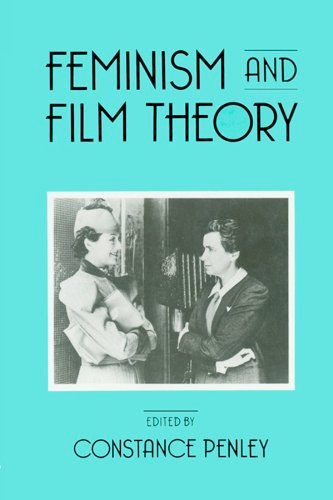
Hollywood. The dream factory. A shimmering mirage built on celluloid, glitter, and the commodification of human stories. But whose stories are being told? And, more importantly, through whose gaze? For decades, feminists have cast a critical eye on this behemoth, dissecting its narratives, deconstructing its power structures, and demanding a radical reimagining of representation. This isn’t mere nitpicking; it’s a deeply ingrained struggle against the patriarchal forces that have shaped and continue to shape the cinematic landscape. Our analysis will traverse the multifaceted terrain of feminist film theory, exploring how it illuminates the biases and inequalities embedded within Hollywood’s very DNA. Brace yourselves, because we are about to dive deep into the celluloid swamp.
I. The Male Gaze: A Foundational Critique
Laura Mulvey’s seminal essay, “Visual Pleasure and Narrative Cinema,” laid the groundwork for much of feminist film theory. Her concept of the “male gaze” – the idea that the camera inherently positions the audience to view women from a masculine, heterosexual perspective – remains chillingly relevant. Think about it. How often are female characters objectified, their bodies fragmented and presented for the visual consumption of the presumed male viewer? It’s not just about nudity; it’s about the way the camera lingers, the way the narrative prioritizes male desires, and the way female characters are often reduced to their physical attributes or their relationships with male protagonists. This cinematic scopophilia, this pleasure in looking, is deeply gendered, perpetuating a power imbalance that reinforces patriarchal norms. The male gaze isn’t just an aesthetic choice; it’s a political statement, silently but powerfully affirming the dominance of men in both the fictional world and the real one.
We’re talking about a systemic issue. Consider the prevalence of “fridging,” a trope where female characters are killed, raped, or otherwise traumatized solely to motivate the male protagonist. This is not character development; it is lazy storytelling steeped in misogyny. It reduces women to plot devices, disposable pawns in the hero’s journey. Think of countless action films where the female love interest is kidnapped, threatened, or injured, providing the impetus for the male hero to embark on his quest for revenge. The woman is not an individual with her own agency; she is merely a catalyst for male action. This cinematic necropolitics, this power over life and death, is wielded disproportionately against female characters, reinforcing the idea that their lives are less valuable than those of their male counterparts.
II. Beyond Objectification: The Spectrum of Representation
Feminist film theory is not monolithic. It encompasses a wide range of perspectives and approaches, moving beyond the initial focus on objectification to explore the complexities of female representation in all its forms. For instance, intersectional feminism recognizes that gender is not a singular category but is intertwined with other axes of identity, such as race, class, sexuality, and disability. This means that the experiences of women of color, queer women, working-class women, and disabled women are often marginalized or erased in mainstream Hollywood cinema. When these stories are told, they are often filtered through a white, cisgender, able-bodied lens, perpetuating harmful stereotypes and reinforcing existing power hierarchies.
Consider the “strong female character” trope. Often touted as a sign of progress, this archetype frequently falls flat, simply replicating male characteristics and behaviors in a female body. A woman who is good at fighting, emotionally detached, and career-driven is not necessarily a feminist icon. In fact, she may simply be reinforcing the idea that women must emulate men to be considered powerful or worthy. True feminist representation requires more than just swapping genders; it requires challenging the very definition of strength and exploring the diverse ways in which women can be empowered.
Moreover, we must critically examine the portrayal of female relationships. How often do we see genuine female friendships on screen, relationships that are not defined by competition over men or by petty squabbles? Hollywood often pits women against each other, perpetuating the myth that there is only room for one woman at the top. This is a deliberate strategy to divide and conquer, preventing women from forming alliances and challenging the patriarchal status quo. Genuine female solidarity, the kind that is based on mutual respect, shared experiences, and a commitment to collective liberation, is rarely depicted on screen.
III. Disrupting the Narrative: Feminist Filmmaking and Alternative Visions
While critiquing mainstream Hollywood is essential, feminist film theory also celebrates the work of feminist filmmakers who are actively disrupting the dominant narrative. These filmmakers are not simply adding female characters to existing storylines; they are reimagining the cinematic language itself, challenging the male gaze, and creating alternative visions of female subjectivity.
Consider the work of directors like Agnes Varda, Chantal Akerman, and Barbara Loden, pioneers of feminist filmmaking who explored the complexities of female experience with unflinching honesty and formal experimentation. Their films often eschewed traditional narrative structures, prioritizing subjective experience over plot, and giving voice to the silences and unspoken desires of women. They experimented with documentary techniques, blurring the lines between fiction and reality, and challenging the notion of objective truth. Their work serves as a powerful reminder that there are many ways to tell a story, and that the dominant narrative is not the only one possible.
Contemporary feminist filmmakers are continuing this tradition, pushing the boundaries of cinematic language and challenging the status quo. They are exploring issues of race, class, sexuality, and disability with greater nuance and complexity, and they are creating space for marginalized voices to be heard. From independent films to streaming series, these filmmakers are proving that there is a growing audience for stories that center female experiences and challenge patriarchal norms. They are not simply making films; they are building a movement, a collective effort to transform the cinematic landscape and create a more equitable and just world.
IV. The Bechdel Test: A Minimalist Metric with Maximal Impact
The Bechdel Test, while a simple metric, has become a powerful tool for highlighting the lack of meaningful female representation in film. To pass the test, a film must have at least two named female characters who talk to each other about something other than a man. This seemingly low bar is surprisingly difficult for many films to clear, revealing the extent to which female characters are often relegated to the sidelines, their stories and relationships secondary to the male narrative. While the Bechdel Test is not a perfect measure of feminist content, it serves as a valuable starting point for analyzing the gender dynamics of a film and for raising awareness about the need for more complex and nuanced female characters.
But let’s be clear: passing the Bechdel Test is not a guarantee of feminist virtue. A film can pass the test and still be deeply problematic in other ways, perpetuating harmful stereotypes or reinforcing patriarchal power structures. The test is simply a starting point, a tool for sparking conversation and encouraging critical thinking about the representation of women in film. We need to move beyond simply counting the number of female characters on screen and focus on the quality and depth of their representation. We need to ask ourselves: are these characters fully realized individuals with their own agency and desires? Are their stories being told with sensitivity and respect? Are they challenging the dominant narrative or simply reinforcing it?
V. The Future of Feminism in Film: A Call to Action
The struggle for feminist representation in film is far from over. While there have been some positive changes in recent years, with more female directors, writers, and actors gaining recognition, the industry still has a long way to go. We need to continue to challenge the male gaze, to demand more diverse and complex female characters, and to support the work of feminist filmmakers who are pushing the boundaries of cinematic language.
This requires a multi-pronged approach. We need to support independent film festivals and organizations that are dedicated to showcasing the work of female filmmakers. We need to amplify the voices of female critics and scholars who are analyzing and critiquing the representation of women in film. We need to boycott films that perpetuate harmful stereotypes or reinforce patriarchal power structures. And, most importantly, we need to continue to have these conversations, to educate ourselves and others about the importance of feminist representation, and to demand a more equitable and just cinematic landscape.
The future of feminism in film depends on our collective action. We must continue to challenge the dominant narrative, to demand more diverse and complex female characters, and to support the work of feminist filmmakers who are reimagining the cinematic landscape. Only then can we create a truly inclusive and representative film industry, one that reflects the diversity and complexity of human experience.








Leave a Comment