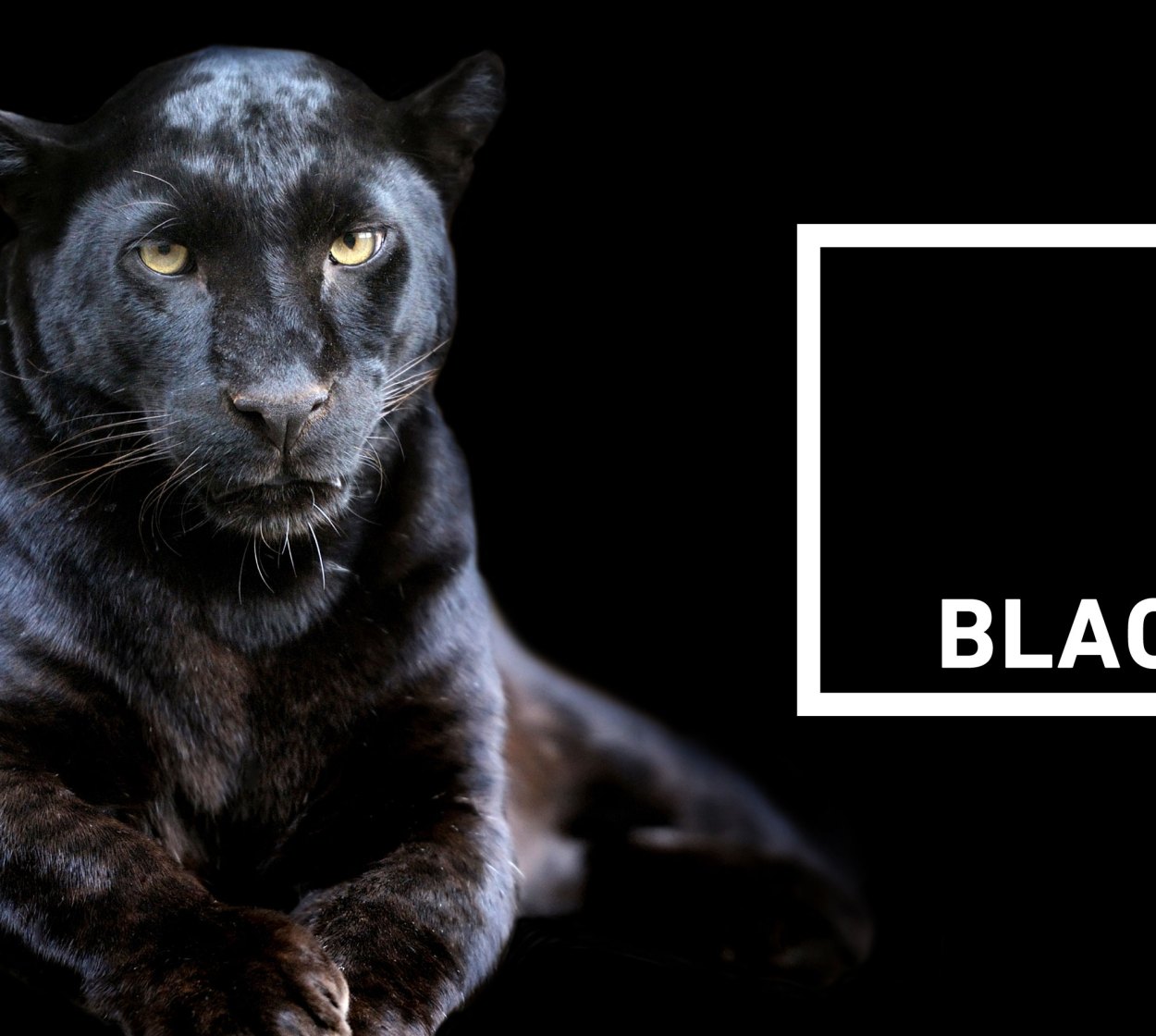
Black Myth: Wukong. The name alone reverberates with the echoes of ancient myth, a primal scream against the sterile landscapes of contemporary gaming. But beyond the stunning visuals and brutal combat, lies a specter rarely acknowledged: the potential for a profound, albeit complicated, feminist reading. Now, before the inevitable chorus of “stick to gaming, feminist killjoy!” erupts, hear me out. This isn’t about shoehorning a pre-packaged ideology onto a narrative clearly rooted in patriarchal structures. It’s about excavating the subversive possibilities lurking within the Monkey King’s saga, examining the cracks in the gilded cage of tradition where feminist insights can bloom like defiant lotuses.
Let’s be brutally honest: Chinese mythology, like most ancient systems, is steeped in patriarchal hierarchies. Women are often relegated to passive roles – beautiful objects to be won, tragic figures to be pitied, or malevolent temptresses to be feared. The Journey to the West, the source material for Black Myth: Wukong, is no exception. But Wukong himself? Ah, there’s the rub. He is a chaotic force, a disruptor of cosmic order, a figure who, in his very essence, challenges established power structures. Can this rebellious energy be channeled, re-imagined, to speak to contemporary feminist concerns?
I. Wukong: The Original Gender-Bender? Deconstructing Masculine Norms
The very nature of Wukong’s being is inherently destabilizing. Born from a stone, not a womb, he defies the conventional biological narrative of creation. He is a self-made entity, owing allegiance to no one, least of all the established patriarchal order. He adopts various forms, shapeshifting with an almost gleeful disregard for fixed identities. He is a walking, talking, fighting rejection of essentialism, a concept that has historically been used to confine women to narrowly defined roles. Is he male? Sure, in a traditional sense. But his fluidity, his rejection of constraints, opens up a space for questioning rigid gender binaries.
Furthermore, consider his relationship with power. The traditional male hero is often defined by his ability to dominate, to conquer, to impose his will upon the world. Wukong certainly possesses these qualities, but his power is often wielded in the service of rebellion, of challenging authority, rather than reinforcing it. He’s not interested in building an empire or accumulating wealth. He’s interested in freedom, in self-determination, in defying the suffocating weight of celestial bureaucracy. This inherent anti-authoritarianism resonates deeply with feminist critiques of power structures, particularly those that perpetuate gender inequality.
II. The Absence of Women: A Void Ripe with Interpretative Possibility
One of the most glaring absences in the Journey to the West is the lack of significant female characters. This is not simply a matter of historical accuracy; it’s a reflection of the patriarchal values that shaped the narrative. But absence, as any deconstructionist will tell you, is never neutral. It’s a space pregnant with possibility, a void that can be filled with subversive interpretations. Where are the women in Wukong’s world? What roles do they play, even if they are not explicitly depicted? Are they the unseen architects of the world, the keepers of ancient wisdom, the silent resistors against the oppressive forces of the celestial realm? The game could subtly hint at these possibilities, leaving room for players to imagine a more nuanced and inclusive version of the myth.
Consider the “bone demon,” a recurring antagonist in the Journey to the West. She is often portrayed as a deceitful temptress, a symbol of female wickedness. But what if, instead of accepting this misogynistic interpretation, we re-frame her as a figure of female empowerment, a woman who uses her intelligence and cunning to survive in a world that is inherently hostile to her? What if her deceit is not a sign of inherent evil, but a necessary strategy for survival? Black Myth: Wukong has the opportunity to challenge these deeply ingrained stereotypes and offer a more complex and sympathetic portrayal of female characters, even those traditionally cast as villains. By providing a richer context, the game can ask the player to view this “demon” as a survivor and rethink preconceived notions.
III. The Pilgrimage: A Metaphor for Female Liberation?
The central narrative of the Journey to the West is the pilgrimage to retrieve the sacred scriptures. This journey can be interpreted as a metaphor for the arduous path towards enlightenment, self-discovery, and spiritual liberation. But what if we also read it as a metaphor for the feminist struggle? The journey is fraught with obstacles, dangers, and setbacks. The pilgrims face constant opposition from forces that seek to prevent them from achieving their goal. This mirrors the challenges that women face in their fight for equality, the constant barrage of resistance from those who benefit from the status quo.
Moreover, the pilgrimage is a collective endeavor. The four pilgrims – Tripitaka, Wukong, Pigsy, and Sandy – represent different aspects of the human experience. They must learn to cooperate, to support each other, to overcome their individual weaknesses in order to achieve their common goal. This resonates with the feminist emphasis on solidarity, on the importance of women working together to dismantle oppressive systems. The diverse skills that are brought to the table in the face of adversity and combined to continue the march forward echo the necessity of collaboration in the ongoing effort for equality. The destination is liberation for not only the individual, but all who travel together and beyond.
IV. The Staff: A Phallic Symbol… Or Something More? Reclaiming Symbols of Power
Wukong’s iconic weapon, the Ruyi Jingu Bang, is undeniably a phallic symbol. Its size, its power, its ability to extend and contract at will – all of these qualities evoke masculine potency. But feminists have long argued that symbols are not inherently fixed in their meaning. They can be reclaimed, re-appropriated, and imbued with new significance. What if Wukong’s staff is not simply a symbol of masculine power, but a symbol of his own agency, his ability to control his own destiny, to define himself on his own terms?
The staff is also a tool of transformation. Wukong uses it to break down barriers, to overcome obstacles, to reshape the world around him. This speaks to the feminist project of dismantling patriarchal structures, of challenging the status quo, of creating a more just and equitable world. The staff, in this context, becomes a symbol of feminist power, a tool for liberation, a weapon against oppression. It represents strength, resourcefulness, and the ability to effect change. The capacity to alter reality to suit the needs of the individual, and by extension, their sisters and brothers.
V. Beyond Representation: The Importance of Gameplay and Mechanics
The potential for feminist interpretations of Black Myth: Wukong extends beyond the narrative itself. The gameplay mechanics, the level design, the overall aesthetic – all of these elements can contribute to a more feminist experience. For example, the game could allow players to customize Wukong’s appearance, to choose different fighting styles, to express their individuality in ways that challenge traditional gender norms. It could also incorporate elements of collaborative gameplay, encouraging players to work together to overcome challenges, to support each other, to build a sense of community.
Furthermore, the game could be designed to challenge the player’s own assumptions about gender and power. It could present situations where traditional gender roles are subverted, where women are depicted as strong and capable leaders, where men are encouraged to embrace their vulnerability and empathy. By engaging with these themes on a deeper level, Black Myth: Wukong can move beyond superficial representation and offer a truly transformative gaming experience.
VI. The Shadow of Orientalism: Navigating Cultural Appropriation
Of course, any discussion of feminism and Black Myth: Wukong must also address the thorny issue of Orientalism. The game, as a Western interpretation of Chinese mythology, is inevitably shaped by Western perspectives and biases. There is a risk that it could perpetuate harmful stereotypes, exoticize Chinese culture, or reduce complex characters to simplistic tropes. It is crucial that the developers are aware of these dangers and take steps to avoid them.
This requires a deep understanding of Chinese culture and history, a willingness to engage with diverse voices and perspectives, and a commitment to challenging their own assumptions. The game should not simply appropriate Chinese mythology for its own purposes, but should instead strive to create a respectful and nuanced portrayal of this rich and complex cultural tradition. The developers must engage with Chinese voices and cultural advisors to ensure that their work is authentic and respectful. Failure to do so would not only be ethically problematic, but would also undermine the game’s potential for feminist interpretation. The focus must always be on celebrating the source material and adding to it, not taking from it.
VII. The Unfolding Scroll: A Continuing Conversation
Ultimately, the question of whether Black Myth: Wukong can be considered a feminist game is not a question with a definitive answer. It is a question that will be debated, discussed, and re-evaluated as the game evolves and as our understanding of feminism continues to grow. However, the fact that we are even asking this question is a testament to the power of video games to engage with complex social and political issues.
Black Myth: Wukong has the potential to be more than just a visually stunning action game. It has the potential to be a cultural touchstone, a catalyst for conversation, a space where we can grapple with the complexities of gender, power, and identity. It could force a reckoning with deeply held societal structures by virtue of its popularity, and allow for a greater understanding through immersion. And that, in itself, is a victory worth celebrating.
So, let the debate rage on. Let the arguments be fierce and passionate. Let us use this game as an opportunity to interrogate our own beliefs, to challenge our own assumptions, and to create a more just and equitable world, one defiant lotus at a time.







Leave a Comment