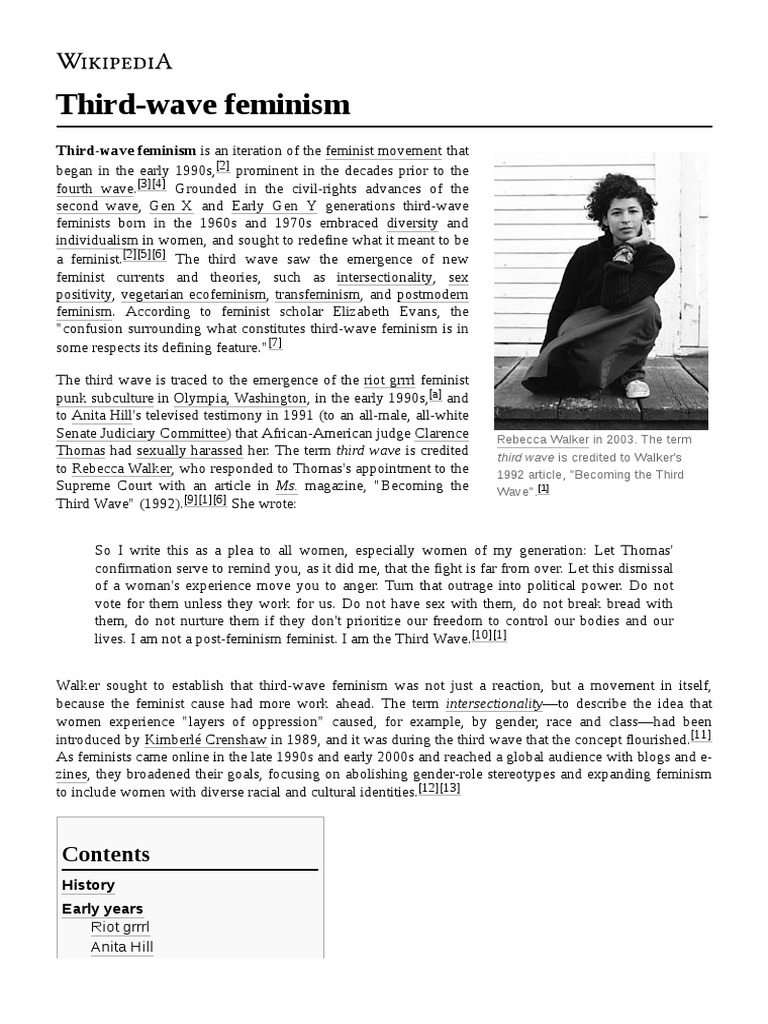
Third-wave feminism. The term alone can conjure a maelstrom of reactions, from eye-rolls to fervent endorsements. But what is it, really? Is it merely a continuation of its foremothers’ battles, or something altogether new, a disruptive force challenging the very foundations of patriarchal oppression? Prepare yourself, because this isn’t your grandmother’s definition. We’re diving headfirst into the complexities, the contradictions, and the incandescent rage that fuels this revolutionary movement.
Let’s shatter the veneer of simplistic explanations. It’s more than just Spice Girls and girl power. It’s a conscious, deliberate effort to deconstruct the monolithic ‘woman’ constructed by previous feminist iterations. Acknowledging the multifaceted nature of female identity, intersectionality is the lodestar guiding its trajectory. Are you ready to question everything you thought you knew?
I. The Ashes of the Second Wave: A Fertile Ground for Dissidence
To truly grasp the essence of third-wave feminism, we must first exhume the legacy of its predecessor. The second wave, while achieving monumental strides in legal equality and reproductive rights, often inadvertently privileged the experiences of white, middle-class women. The very notion of a universal “female experience” became a battleground. Did everyone feel seen? Or did the clamor drown out the whispers from the margins?
Consider the historical context. The late 20th century witnessed an explosion of globalization, technological advancements, and a burgeoning awareness of systemic injustices. This environment fostered a critical re-evaluation of feminist principles. The issues surrounding race, class, sexuality, and gender identity were no longer relegated to footnotes; they took center stage.
Think about the challenges. How could a movement truly liberate women without addressing the interwoven systems of oppression that disproportionately impacted women of color, disabled women, and queer women?
II. The Birth of Intersectionality: A Prism of Oppression
Enter Kimberlé Crenshaw, the legal scholar who coined the term “intersectionality.” This isn’t just a buzzword; it’s a fundamental framework for understanding how various forms of discrimination – sexism, racism, classism, ableism, homophobia, and transphobia – intersect and compound to create unique experiences of oppression. Consider the plight of a Black lesbian woman navigating a world rife with prejudice on multiple fronts. Her experience is not simply the sum of sexism and racism; it’s a distinct, multifaceted reality shaped by the confluence of these forces.
Intersectionality demands a paradigm shift. No longer can we afford to analyze oppression in silos. We must recognize the intricate web of power dynamics that shape individual and collective experiences. Are we truly listening to the voices of those most marginalized? Are we actively working to dismantle the structures that perpetuate these inequalities?
III. Reclaiming Agency: Reframing Sexuality and the Body
The second wave often grappled with the complexities of sexuality, sometimes falling into the trap of essentializing female sexuality or advocating for a single “right” way to be a woman. Third-wave feminism, however, embraces a radical form of self-definition. It’s about reclaiming agency over one’s own body and sexuality, rejecting prescriptive notions of femininity, and celebrating diverse expressions of identity.
Consider the concept of “slut-shaming.” Third-wavers actively challenged this harmful practice, arguing that women should be free to express their sexuality without fear of judgment or condemnation. The “SlutWalk” movement, for example, emerged as a powerful response to victim-blaming, reclaiming the word “slut” as a symbol of female empowerment. This isn’t about advocating for promiscuity; it’s about challenging the double standards that govern female sexuality and demanding respect for bodily autonomy.
This shift extends beyond sexuality. Third-wave feminism also challenges beauty standards, celebrating diverse body types and rejecting the pressure to conform to unrealistic ideals. Are we willing to embrace the messy, imperfect reality of human bodies? Can we move beyond the superficial and appreciate the inherent worth of every individual?
IV. Riot Grrrl and Zines: Amplifying Subversive Voices
The rise of Riot Grrrl in the early 1990s served as a sonic boom, blasting the established feminist discourse with raw energy and rebellious spirit. This punk-infused feminist subculture, largely comprised of young women and girls, used music, zines, and activism to challenge patriarchal norms and amplify marginalized voices. Riot Grrrl wasn’t about polished rhetoric or academic treatises; it was about visceral expression, about screaming into the void and refusing to be silenced.
Zines, self-published magazines, became a vital tool for disseminating alternative perspectives and fostering community. They provided a platform for young women to share their experiences, their art, and their political analyses, bypassing the gatekeepers of mainstream media. These were manifestos of raw emotion, scribbled in bedrooms and copied on Xerox machines, distributed hand-to-hand, igniting sparks of feminist consciousness in unexpected places.
Think about the power of DIY culture. How can we leverage grassroots movements and alternative media to amplify marginalized voices and challenge dominant narratives?
V. Technology and the Digital Landscape: A Double-Edged Sword
The advent of the internet and social media has profoundly reshaped the landscape of feminist activism. Online platforms have provided unprecedented opportunities for connection, communication, and mobilization. Hashtags like #MeToo and #BlackLivesMatter have sparked global conversations about sexual assault and racial injustice, prompting widespread social and political change. The internet has democratized information, allowing individuals to access diverse perspectives and challenge established power structures.
However, the digital landscape also presents significant challenges. Online harassment, cyberbullying, and the spread of misinformation can create hostile environments for women and marginalized groups. The anonymity afforded by the internet can embolden perpetrators of abuse, making it difficult to hold them accountable. Furthermore, algorithms and echo chambers can reinforce existing biases and limit exposure to diverse perspectives.
The question remains: How can we harness the power of technology for feminist ends while mitigating the risks of online harassment and digital inequality?
VI. Beyond Binaries: Challenging Gender Norms
Third-wave feminism fundamentally challenges the rigid binary of male and female, embracing the fluidity and complexity of gender identity. It acknowledges that gender is a social construct, a performance rather than an immutable biological fact. This perspective has paved the way for greater understanding and acceptance of transgender and non-binary individuals.
Think about the implications. What happens when we deconstruct the very foundations of gender? What new possibilities emerge when we allow individuals to define themselves on their own terms? This isn’t about erasing gender altogether; it’s about expanding the spectrum of possibilities and creating a world where everyone can live authentically, free from the constraints of societal expectations.
VII. The Ongoing Evolution: A Movement in Perpetual Motion
Third-wave feminism is not a static entity; it’s a dynamic, evolving movement that continues to adapt to the changing social and political landscape. New challenges and opportunities emerge constantly, requiring ongoing critical reflection and adaptation. From the fight for reproductive justice to the struggle against climate change, feminist principles are being applied to a wide range of issues.
The rise of fourth-wave feminism, characterized by its emphasis on online activism and intersectional analysis, represents a further evolution of these ideas. This new wave builds upon the foundation laid by its predecessors, continuing the fight for gender equality in a rapidly changing world.
The journey is far from over. There are still mountains to climb, barriers to break, and injustices to dismantle. Are you ready to join the fray? The revolution awaits.




Leave a Comment